
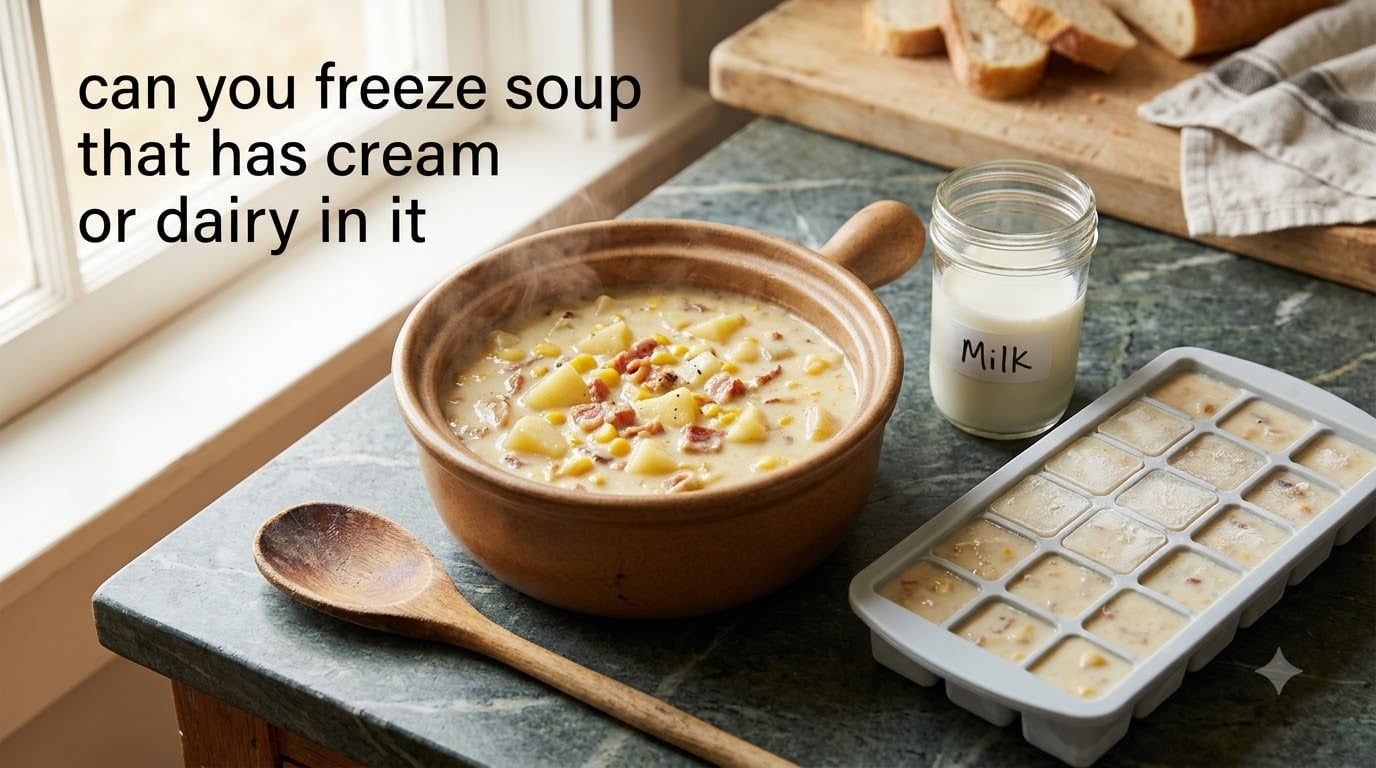
If you have ever pulled a container of leftover chowder from the freezer only to find a greasy cap of fat floating over grainy, broken liquid, you already know why this question matters. Cream and dairy transform a humble pot of soup into something silky and comforting, but the freezer is their worst enemy. The short answer: yes, you can freeze soup with cream or dairy in it, but the dairy almost always separates or curdles when thawed. The smartest method is to freeze the base first and stir the dairy in when you reheat.
This guide walks through the food science behind why dairy breaks, the practical “defer the dairy” technique I use in our kitchen, how to rescue soup that has already gone grainy, and which soups behave well frozen and which do not. I have also included a freezer-storage time chart and a plant-based dairy section for coconut, oat, and cashew cream.
Table of Contents
Quick Answer: Can You Freeze Soup With Cream or Dairy in It?
Yes, you can freeze soup with cream or dairy in it, and it is safe to do so at 0°F (-18°C) or below. Expect visible separation and a grainy or curdled texture once thawed, especially with milk, half-and-half, or cream cheese. Heavy cream freezes more reliably than milk. The best method is the “defer the dairy” approach: freeze the broth-based soup without the dairy, then stir in cream, milk, or cheese when you reheat.
Why Cream and Dairy Don’t Freeze Well
Cream, milk, half-and-half, and cream cheese are emulsions. An emulsion is a stable suspension of fat droplets inside water, held together by milk proteins that act like a bridge between the two phases. When you freeze the soup, the water portion turns into sharp ice crystals that pierce those protein bridges and break the emulsion apart.
Once broken, the fat separates from the watery base. On thawing you see the classic signs: a thick yellow layer of solid fat floating on top, with thin, watery soup underneath. Milk proteins also denature during freezing and release a slightly sour or “off” flavor that gets stronger the longer the soup sits frozen. Whole milk and low-fat milk separate worst because they have the most water. Heavy cream has less water and more fat, so it survives the freezer with less obvious damage, though it still loses some of its original silken body.
Roux-based and bechamel soups have a similar problem. A roux is a cooked paste of butter and flour used to thicken soup; bechamel is milk thickened with a roux. When frozen, the starch granules in the flour absorb water, swell, and rupture, which makes the soup either gluey or thin and watery on the other side.
The Defer the Dairy Method
The single best technique for freezing cream-based soup is to skip the dairy entirely until you reheat. Cook your soup all the way through the broth and vegetable stage, season it, then cool and freeze that base. On the day you want to serve it, thaw the base, bring it to a gentle simmer, and stir in the cream, milk, half-and-half, or cream cheese at the end.
This is exactly what most restaurant cooks do for chowders and bisques on their make-ahead menus. The finished pot tastes fresher because the dairy was never frozen, and the texture stays perfectly smooth.
Step-by-step for the deferred-dairy method:
- Make your soup up to the point just before adding any dairy (milk, cream, half-and-half, sour cream, yogurt, cream cheese, or cheese).
- If your recipe uses a roux or bechamel, hold off on that too, or include a lighter roux in the base and adjust thickness when reheating.
- Cool the soup quickly: an ice bath in the sink brings a hot pot from 180°F to under 70°F in about 30 minutes, which protects both flavor and food safety.
- Ladle into freezer-safe containers, leaving 1 inch of headroom for expansion.
- Label with the date and the dairy you still need to add (for example: “add 1 cup heavy cream + 1 cup cheddar”).
- On serving day, thaw overnight in the fridge, reheat on the stove over medium-low, and stir in the dairy during the last 5 minutes.
How to Fix Already-Frozen Cream Soup
Already froze the soup with the dairy in it? Do not throw it out. Most separated soups can be rescued with one of three techniques.
Method 1: Whisk hard. Sometimes vigorous whisking over low heat brings the emulsion back together, especially if the soup was only slightly frozen and you caught it early. This works best for cream-based soups where the dairy was added late.
Method 2: Use an immersion blender. A stick blender pulled through the warming soup can re-emulsify fat and water, especially with the addition of a small knob of cold butter at the end. The lecithin in butter helps stabilize the broken sauce. This is the technique I reach for most often.
Method 3: Add an arrowroot slurry. Mix 1 tablespoon of arrowroot powder (or cornstarch) into 2 tablespoons of cold water, then whisk the slurry into the simmering soup. Arrowroot is gentler than flour and gives a glossy finish without cloudiness. Agar agar works the same way for a vegan version.
For soups with a congealed fat cap, lift off the solid fat first, reheat the soup, then proceed with one of the methods above. The fat can be saved for frying eggs or roasting potatoes, by the way, so do not pour it down the sink.
Best Containers for Freezing Soup
The container you choose affects both texture and freezer space. Here is how the most common options stack up.
Souper Cubes silicone trays. These 1-cup silicone trays with lids are my top pick for freezing soup base. You pour the cooled soup into the wells, freeze until solid, pop the cubes out, and bag them. They freeze fast (smaller volume means quicker freezing, which means smaller ice crystals and less damage), stack flat, and thaw in minutes in a saucepan.
Freezer-safe zip-top bags. Lay bags flat on a sheet pan to freeze, then stack them like books. Flat bags freeze fast, thaw fast, and store efficiently. Squeeze out air before sealing to limit freezer burn.
Hard plastic deli containers. Yogurt tubs, cottage cheese tubs, and takeout containers are free and usually freezer-safe. Leave 1 inch of headroom because liquids expand as they freeze, and a tight lid prevents freezer burn.
Glass mason jars. Wide-mouth pint and quart jars work but only if you leave 1.5 inches of headroom and use jars specifically labeled for freezing. Regular thin-walled jars crack easily. Never freeze soup in a jar with a narrow neck.
What to avoid: Thin disposable plastic bags leak. Foil-lined cardboard cartons (like the kind broth comes in) split at the seams. Anything that cannot handle -4°F without cracking.
How to Thaw and Reheat Frozen Cream Soup
Slow and gentle wins every time. Thawing and reheating too aggressively is what turns a slightly grainy soup into an oily mess.
Step-by-step for the best texture:
- Move the frozen container to the fridge 12 to 24 hours before you plan to eat. This slow thaw protects the dairy and gives proteins time to rehydrate gently.
- If you forgot to thaw, drop the sealed freezer bag in a bowl of cold water for 30 to 60 minutes. Change the water once.
- Pour the thawed soup into a saucepan over medium-low heat. Do not rush with high heat; hot spots scorch the dairy proteins.
- Stir frequently with a wooden spoon or whisk as the soup warms.
- If the dairy was added before freezing, finish with a small knob of butter and a brief immersion-blender pulse to re-emulsify.
- If using the deferred-dairy method, stir the cream, milk, or cheese in during the last 5 minutes and heat just until steaming.
Avoid microwaving cream soups if you can. Microwaves heat unevenly, and the spots that get hot first will curdle the dairy long before the center of the bowl is warm. If you must microwave, do it in 30-second bursts at 50 percent power and stir between each.
Soup-by-Soup: How Each Creamy Variety Freezes
Not all creamy soups behave the same way in the freezer. Here is the practical guide I share with our line cooks.
New England clam chowder. Freezes OK with the deferred-dairy method. The potatoes will soften on reheating, so undercook them by 2 minutes when you make the base. Add the cream and any clams or bacon at the end.
Broccoli cheddar soup. Freezes well as a base. Cheese melts better when added fresh at the end, so hold the cheddar back. Frozen cheese gets grainy and clumpy, which is the most common complaint I hear about this soup.
Loaded baked potato soup. Freezes well, but potato-heavy soups turn gummy without intervention. Cut potatoes into larger chunks (about 1 inch) and undercook slightly. Add sour cream, cheese, and chives fresh when reheating.
Tomato bisque. Freezes reasonably well even with dairy, because the tomato base is acidic and the acidity helps stabilize the proteins. Expect a little separation; an immersion blender brings it right back.
Corn chowder. Freezes well. Corn holds its texture better than potato. Freeze the base, add cream when reheating.
Cream of mushroom. Freezes acceptably with the deferred-dairy method. Mushrooms release a lot of water as they thaw, so strain or boil off excess liquid before freezing the base.
Cream of asparagus. Freezes OK. Puree tends to thin on thawing; thicken with a small arrowroot slurry when reheating.
French onion soup. No dairy in the soup itself, so it freezes beautifully. Top with bread and broil with cheese fresh.
Plant-Based Dairy: Coconut, Oat, and Cashew Cream
Plant-based dairy behaves the same way as dairy in the freezer, which surprises most home cooks. The good news is that the workarounds are identical: defer the plant milk or cream until reheating, then stir it in.
Coconut milk. Splits and separates exactly like dairy cream because of its high fat content. Full-fat canned coconut milk freezes best; carton coconut milk has more water and breaks more dramatically. Reheat with fresh coconut milk stirred in at the end for Thai-style soups and curries.
Oat milk. Oat milk is mostly water with oats and oil, so it separates heavily and can go slimy. Always use the deferred method for oat milk cream soups. Barista-blend oat milk holds up better than plain.
Cashew cream. Cashew cream freezes well in plain form (it is mostly fat), but in a soup the cashew particles can go gritty. Strain through a fine sieve or blend smooth after reheating.
If you cook for a vegan or lactose-intolerant household, the deferred method works exactly the same way; just swap the dairy for your plant milk of choice when you reheat.
How Long Does Cream Soup Last in the Freezer
Freezer times below assume a constant 0°F and a well-sealed container. Once thawed, eat the soup within 3 to 4 days.
| Soup type | Freezer life (best quality) | Freezer life (still safe) |
|---|---|---|
| Broth-based soups (no dairy) | 4 to 6 months | Up to 9 months |
| Cream soups, deferred-dairy method | 3 to 4 months | Up to 6 months |
| Cream soups with dairy already added | 2 to 3 months | Up to 4 months |
| Heavy cream-heavy soups | 2 to 3 months | Up to 4 months |
| Plant-based cream soups | 2 to 3 months | Up to 4 months |
| Stock and broth | 6 to 12 months | Indefinite (safe, quality drops) |
Label every container with the date. A piece of masking tape and a Sharpie is the simplest system that actually works.
Signs Your Frozen Soup Has Gone Bad
Food stored at constant 0°F stays safe indefinitely in theory, but quality and texture degrade. After about 3 to 4 months, watch for these signs:
- Ice crystals larger than a grain of rice on the surface of the soup or inside the container mean the soup has been thawed and refrozen, often because the freezer door was left ajar or the container is not sealed well.
- A dull, gray, or oxidized color on top of the cream layer.
- Rancid or “tallow” smell once thawed, which means the fat has oxidized.
- Slimy or sticky texture after reheating, a sign of bacterial activity from a partial thaw.
When in doubt, throw it out. Cream soups are not worth a bout of food poisoning.
Frequently Asked Questions
Can I freeze a soup that has cream in it?
Yes. Cream soup is safe to freeze at 0°F or below, but the cream typically separates and the texture becomes grainy when thawed. The deferred-dairy method, where you freeze the broth base and stir in the cream when reheating, gives the smoothest result.
Can you freeze food that has cream in it?
Dairy-heavy foods like cream soups, custards, and cream sauces freeze safely but often lose their smooth texture once thawed. The fat and water phases separate, leaving a grainy or curdled appearance. For best results, freeze the base and add the cream when you reheat.
Can you freeze soups with dairy in them?
Yes, but expect texture changes. Milk, half-and-half, and cream cheese freeze worse than heavy cream because they contain more water. For soups with cheese, add the cheese fresh when reheating; frozen cheese turns grainy and clumpy.
What soups should you not freeze?
Avoid freezing cream soups with already-added dairy if texture matters to you, pasta soups (the pasta turns to mush), and rice soups for the same reason. Pureed soups with dairy also suffer; an immersion blender can rescue them on reheating. Broth-based soups with vegetables, beans, or meat freeze very well.
Do soups with dairy freeze well?
Most do not freeze as well as broth-based soups. Heavy cream freezes better than milk or half-and-half. The single best workaround is to freeze the soup base without the dairy and stir in the cream, milk, or cheese when you reheat the soup for serving.
Does soup with cream freeze well?
Heavy cream freezes better than milk but still loses some of its silky body. A frozen cream soup will often show separated fat on top and a thinner, watery base below. You can fix this with an immersion blender, a knob of butter, or an arrowroot slurry stirred in during reheating.
Can I freeze soup that has milk in it?
Yes. Soup with milk freezes safely but separates more dramatically than cream-heavy soup because milk has more water. Use the deferred-dairy method for best results: freeze the broth base and stir the milk in when you reheat the soup on the stove.
The Bottom Line
Yes, you can freeze soup with cream or dairy in it, and the soup will be safe to eat. The texture often suffers, especially with milk and half-and-half, but the deferred-dairy method and a quick rescue with an immersion blender solve almost every problem. Freeze the broth base without the dairy, label it with what to add back, and stir the cream in during the last five minutes of reheating for a pot of soup that tastes like you just made it.