
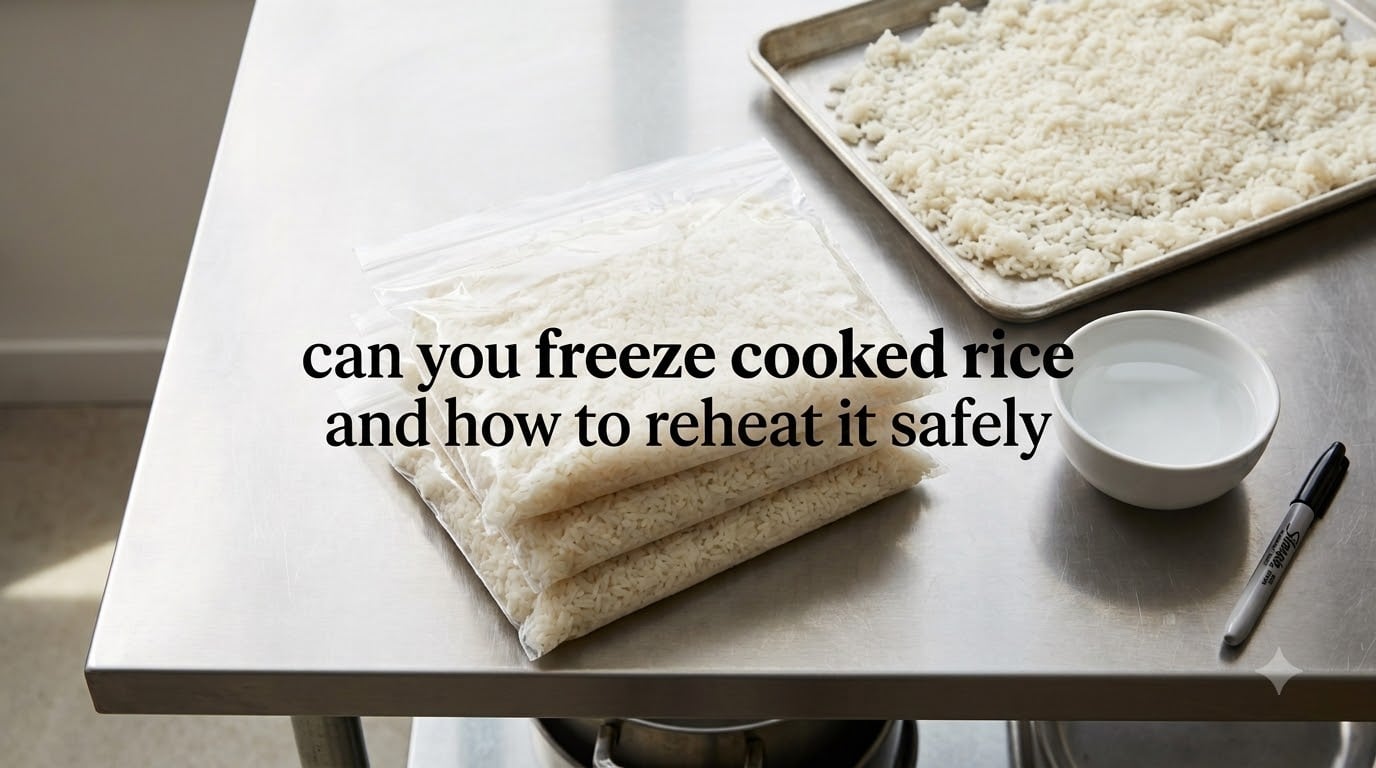
Yes, you can absolutely freeze cooked rice, and it’s one of the smartest things you can do with a big batch. We freeze rice every week in our test kitchen, and it has saved us from countless takeaway orders on busy weeknights.
The trick is speed. Cool rice within an hour of cooking, portion it into flat freezer bags, and freeze. When you’re ready to eat, reheat straight from frozen until it’s steaming hot all the way through (74°C / 165°F). No thawing needed.
This guide covers exactly how to freeze cooked rice the right way, why cooling matters so much for food safety, how to reheat frozen rice four different ways, and which rice varieties freeze best. By the end, you’ll have a reliable method that turns a Sunday batch cook into five quick weeknight meals.
If you’ve ever wondered whether freezing cooked rice is safe, whether it gets mushy, or how to keep it from drying out, this is for you.
Quick Answer
Yes, you can freeze cooked rice safely. Cool it within 1 hour of cooking, portion into flat freezer bags with the air pressed out, and freeze for up to 1 to 6 months. Reheat straight from frozen until steaming hot at 74°C (165°F) internal temperature. Never refreeze thawed rice, and never leave cooked rice at room temperature for more than 2 hours.
Table of Contents
Can You Freeze Cooked Rice? Yes – Here’s the Short Answer
The short answer is yes, with three caveats. First, cool the rice quickly after cooking. Second, store it airtight so it doesn’t pick up freezer odors. Third, reheat it until it’s genuinely steaming hot, not just warm.
Freezing is actually safer than keeping cooked rice in the fridge for days on end. Bacteria multiply fastest between 4°C and 60°C (40°F to 140°F), a range food safety authorities call the danger zone. The freezer pauses that growth entirely. The fridge only slows it down.
We’ve frozen every rice variety you can think of – jasmine, basmati, brown, sushi, arborio – and they all come out well when handled correctly. Texture is the only real variable, and we’ll cover that in detail below.
Why Cooling Rice Quickly Matters (Bacillus cereus Food Safety)
If you’ve ever heard someone say reheated rice can give you food poisoning, that’s a real risk, but it’s manageable once you understand what causes it.
The culprit is a bacterium called Bacillus cereus. It lives in soil and on raw rice, and it survives the cooking process as spores. When cooked rice cools slowly at room temperature, those spores wake up and multiply.
Here’s the problem: Bacillus cereus produces heat-stable toxins. That means reheating kills the bacteria but doesn’t destroy the toxins they’ve already made. So once rice has been in the danger zone too long, reheating won’t make it safe again.
The USDA and the UK Food Standards Agency (FSA) both flag cooked rice as a higher-risk food for this exact reason. The FSA calls it “fried rice syndrome” because restaurant fried rice sits out before service.
The Two Numbers You Need to Remember
Danger zone: 4°C to 60°C (40°F to 140°F). Bacteria multiply fastest in this range. Cooked rice should pass through it as quickly as possible.
Safe internal temperature: 74°C (165°F). When you reheat, the rice must hit this temperature throughout, not just on the surface.
Cooling cooked rice within 1 hour and getting it into the freezer fast keeps it out of the danger zone entirely. That’s why the freezing method works so well – you’re removing the conditions bacteria need.
How to Freeze Cooked Rice: Step-by-Step
Here’s the exact method our team uses in the test kitchen. It works for white, brown, jasmine, basmati, and sushi rice with minor adjustments covered later.
Step 1: Cool the Rice Quickly
As soon as your rice is done, tip it out of the pot onto a large baking sheet or wide shallow bowl. Spreading it thin lets steam escape and drops the temperature fast. Aim to cool rice to room temperature within 1 hour – sooner if your kitchen is warm.
The reddit r/MealPrepSunday community is split on this point. Some freeze rice straight from the pot and report no issues, but our tests consistently show that spreading it thin produces better texture and lower bacterial counts. The baking sheet trick takes 2 extra minutes and pays off.
Don’t run rice under cold water to cool it. That washes away flavor and makes it gummy.
Step 2: Portion Into Single-Serving Sizes
Think about how you’ll actually use the rice later. A typical serving is around 150 to 200g cooked rice – roughly one cup. Portion into that size before freezing.
Why? Because once rice is frozen solid, you can’t easily split a large block. Portioning now means you grab exactly what you need and reheat without waste.
Step 3: Choose Your Storage Container
You have three solid options:
- Heavy-duty freezer bags: Our favorite for rice. You can press them flat, which speeds up freezing and thawing and stacks neatly in the freezer.
- Airtight plastic containers: Work well for rice you plan to reheat in the oven or microwave. Leave a 1 cm gap at the top since rice expands slightly when frozen.
- Silicone freezer trays with lids: A newer option that portions rice into perfect blocks and pops out cleanly.
Whatever you use, it must be airtight. Rice absorbs freezer odors faster than almost any other food.
Step 4: Press the Bags Flat
This is the step most people skip and regret later. When you seal a freezer bag of rice, press it flat so the rice forms an even layer about 1.5 to 2 cm thick. Flat bags:
- Freeze faster (better texture)
- Thaw and reheat faster
- Stack like files in your freezer, saving space
Remove as much air as possible before sealing. The less air inside, the less freezer burn.
Step 5: Label and Date
Write the date and the rice type on the bag with a permanent marker. Sounds fussy, but in three months when you find a mystery bag in the back of the freezer, you’ll thank yourself. We add the best-by date too – 6 months out for white rice, 3 months for brown.
Step 6: Freeze Immediately
Put the bags or containers in the coldest part of the freezer, usually the back, not the door. Avoid stacking them until they’re frozen solid (about 4 to 6 hours), then stack and organize. Freezing flat first prevents the bags from sticking together in a clump.
That’s the whole process. From pot to freezer in well under an hour if your batch isn’t huge.
How Long Does Frozen Cooked Rice Last?
Freezing keeps cooked rice safe essentially indefinitely from a food safety standpoint, but quality declines over time. Here’s a realistic breakdown by rice type:
| Rice Type | Fridge (cooked) | Freezer (best quality) | Freezer (still good) |
|---|---|---|---|
| White rice (long grain, jasmine, basmati) | 3 to 4 days | 3 months | 6 months |
| Brown rice | 3 to 4 days | 1 month | 3 months |
| Sushi / short grain | 3 days | 1 month | 3 months |
| Wild rice | 3 to 4 days | 3 months | 6 months |
| Fried rice (already cooked with veg/protein) | 3 to 4 days | 1 month | 3 months |
Brown rice has more oils in the bran layer, which is why it goes rancid faster. White rice keeps longer because the bran has been removed.
The FDA FoodKeeper app is a free tool that gives storage times for hundreds of foods based on your freezer temperature. It’s worth installing if you batch cook regularly.
When to Throw Frozen Rice Out
Discard rice if you notice any of these:
- Freezer burn – dry, white patches or ice crystals. Not dangerous, but the texture is unpleasant.
- Off smell when you open the bag. Rice absorbs odors, so a strange smell usually means it picked up something else in the freezer.
- More than 6 months old and starting to look dull or yellowed.
- It was left to thaw at room temperature for more than 2 hours.
How to Reheat Frozen Rice Safely (4 Methods)
Good news: you don’t need to thaw frozen rice first. Reheating from frozen actually works better because the rice heats evenly and doesn’t turn to mush on the edges before the center warms up.
Whichever method you choose, add 1 to 2 tablespoons of water per cup of frozen rice before reheating. The water turns to steam and restores the moisture that freezing draws out. This is the single biggest trick to fluffy reheated rice.
Method 1: Microwave (Fastest, 2 to 3 Minutes)
- Place frozen rice in a microwave-safe bowl.
- Sprinkle 1 to 2 tablespoons of water over the top.
- Cover loosely with a damp paper towel or a microwave-safe plate (don’t seal it tight).
- Microwave on high for 2 to 3 minutes, stirring halfway through.
- Check that the rice is steaming hot throughout. If not, microwave another 30 seconds.
The reddit r/MealPrepSunday crowd loves this method for portioned flat bags – just snip a corner, add water directly to the bag, microwave, and eat from the bag. Less washing up.
Method 2: Stovetop (Best Texture, 5 to 7 Minutes)
- Add 1 tablespoon of water or broth per cup of frozen rice to a non-stick pan or pot.
- Add the frozen rice directly – no thawing needed.
- Cover with a tight lid and heat on low for 5 to 7 minutes.
- Stir once halfway through to break up clumps.
- Remove the lid for the last minute to let any excess moisture evaporate.
This method gives you the closest result to freshly steamed rice. The lid traps steam and gently rehydrates the grains.
Method 3: Steamer (Restaurant-Quality, 8 to 10 Minutes)
If you have a bamboo or metal steamer, this is the gentlest method. Place frozen rice in a heatproof bowl, add 1 tablespoon of water, set it over simmering water, cover, and steam for 8 to 10 minutes. The rice comes out almost identical to fresh.
Method 4: Oven (For Large Batches, 15 to 20 Minutes)
Spread frozen rice in an oven-safe dish, sprinkle with water, cover tightly with foil, and heat at 150°C (300°F) for 15 to 20 minutes. Stir once halfway through. Best for reheating rice for a group.
Bonus: Frozen Rice Straight Into Fried Rice
Our favorite weeknight shortcut. Frozen rice is actually better for fried rice than fresh rice. Here’s why: fresh rice is too soft and clumps together. Day-old or frozen rice is drier, so each grain stays separate when you toss it in a hot wok.
Add frozen rice straight to a hot pan with oil. The water content helps it cook without drying out, and the high heat crisps the grains. Break up clumps with a spatula as it heats. Add soy sauce, garlic, ginger, vegetables, and protein – dinner in under 10 minutes.
Freezing Different Rice Varieties
Not all rice freezes the same way. Here are the differences we see in our testing.
White Rice (Long Grain, Jasmine, Basmati)
Freezes beautifully. Jasmine and basmati both retain their aroma and separate grains after reheating. Basmati holds up best because of its lower starch content. Jasmine loses a tiny bit of fragrance but still tastes excellent.
Brown Rice
Freezes well but the texture softens more than white rice. The bran layer absorbs moisture unevenly, so add a little extra water when reheating (around 2 tablespoons per cup). Eat brown rice within 3 months for best quality – the oils go rancid faster.
Sushi / Short Grain Rice
Freezes fine but loses some of its stickiness, which is the opposite of what you want for sushi. If you’re freezing sushi rice for later use, it’s better suited for rice bowls, donburi, or fried rice than for rolling sushi.
Arborio and Risotto Rice
Risotto rice doesn’t freeze well. The creamy starch structure breaks down and you get a gluey, separated texture on thawing. Cook risotto fresh, or freeze the finished dish in a sauce to mask the texture change.
Wild Rice
Freezes beautifully and actually improves with freezing – the grains firm up and hold their shape better than fresh.
Seasoned or Sauced Rice
Rice mixed with curry, beans, or sauce freezes well in airtight containers. The sauce protects the grains from drying out. Burrito bowls, jambalaya, and pilafs are perfect candidates for this approach.
Best Uses for Frozen Rice
Once you have a stack of frozen rice portions, you’ll find yourself reaching for them constantly. Here are our team’s top uses:
- Fried rice: As covered above, frozen rice makes the best fried rice.
- Burrito bowls: Reheat a portion, add black beans, salsa, avocado, and protein.
- Stir-fry base: Toss straight into a hot wok with vegetables and sauce.
- Soup thickener: Drop a portion into chicken soup or congee – it breaks down and thickens the broth.
- Grain bowls: Top with roasted vegetables, a protein, and a drizzle of tahini or soy-ginger dressing.
- Quick lunches: 3 minutes in the microwave and you have a base for almost any bowl-style meal.
Many r/MealPrepSunday users report freezing rice together with curries and sauces in the same container – one bag, one meal, one reheat. That’s a serious time-saver for weeknight dinners.
Common Mistakes to Avoid
We’ve made most of these mistakes ourselves at some point. Here’s what to watch out for:
- Leaving rice at room temperature too long. Anything beyond 2 hours in the danger zone is risky. Cool rice fast, freeze within 1 hour of cooking.
- Putting hot rice directly in the freezer. It raises the freezer temperature and can partially thaw other foods. Cool rice to at least room temperature first.
- Skipping the portioning step. Freezing rice in one giant block means you have to thaw the whole thing to use any of it.
- Not pressing bags flat. Thick, lumpy bags freeze unevenly and thaw into clumps.
- Forgetting to label and date. Mystery freezer bags are a real problem. Date everything.
- Using thin sandwich bags. They’re not airtight enough and can let in freezer odors. Use heavy-duty freezer bags.
- Skipping the water when reheating. This is why your reheated rice is dry and crunchy. Add 1 to 2 tablespoons of water per cup.
- Microwaving without a cover. Uncovered rice dries out fast and the microwave can make it tough.
- Refreezing thawed rice. Once rice has thawed, the bacterial clock starts ticking again. Reheat it once and eat it – don’t refreeze.
- Reheating only once. Every time you reheat, you pass through the danger zone again. Heat only what you’ll eat.
Frequently Asked Questions
How do you reheat frozen already cooked rice?
Reheat frozen rice straight from the freezer – no thawing needed. Add 1 to 2 tablespoons of water per cup, cover loosely, and microwave on high for 2 to 3 minutes, stirring halfway. For stovetop, add water and a tight lid, heat on low for 5 to 7 minutes. The rice must reach 74°C (165°F) internal temperature and be steaming hot all the way through.
Why can’t you reheat leftover rice?
You can reheat leftover rice safely if it was stored correctly. The real warning is about cooked rice that sat in the danger zone (4 to 60°C / 40 to 140°F) for too long. Bacillus cereus bacteria produce heat-stable toxins as they grow, and reheating kills the bacteria but not the toxins. Cool rice quickly, refrigerate within 1 hour, and reheat only once to 74°C (165°F).
Does leftover cooked rice freeze well?
Yes, leftover cooked rice freezes very well. Cool it to room temperature within 1 hour of cooking, portion it into flat freezer bags with the air pressed out, and freeze. White rice keeps 3 to 6 months in the freezer with great texture. Brown rice keeps 1 to 3 months. Reheat straight from frozen with a tablespoon of water for best results.
What is the safest way to reheat cooked rice?
The safest way is to reheat rice until it reaches 74°C (165°F) internal temperature and is steaming hot throughout. Use a microwave with a loosely covered bowl and a tablespoon of water, or a stovetop pan with a tight lid on low heat for 5 to 7 minutes. Always reheat rice only once and never refreeze thawed rice. Check the temperature with a food thermometer if you’re unsure.
Can you freeze cooked rice after 2 days in the fridge?
You can freeze cooked rice that’s been in the fridge for up to 3 to 4 days, but the sooner the better. Two days is fine. After 4 days, the rice has been in the danger zone too long and bacterial growth – even in the fridge – becomes a real concern. When in doubt, throw it out. Cooked rice that smells off, feels slimy, or looks discolored should be discarded regardless of how long it’s been stored.
Final Thoughts: Make Frozen Rice Your Weeknight Shortcut
Freezing cooked rice is one of those kitchen skills that pays you back every single week. A 20-minute batch cook on Sunday turns into five quick lunches or dinners, and the food safety is better than letting rice hang around in the fridge.
The method is simple. Cool your rice fast on a baking sheet, portion it into flat freezer bags with a squeeze of air removed, and freeze within the hour. When you’re ready, reheat straight from frozen with a splash of water until it’s steaming hot at 74°C (165°F). That’s it.
If you remember nothing else, remember these three things: cool rice within 1 hour, reheat to 74°C / 165°F, and never refreeze thawed rice. Those three rules cover 99% of the food safety questions people have about freezing cooked rice.
Start with one batch this weekend. Pick a rice type you cook often – jasmine for fried rice, basmati for curries, brown for grain bowls. Freeze it the way we’ve outlined, and see how much easier your weeknight cooking becomes.