
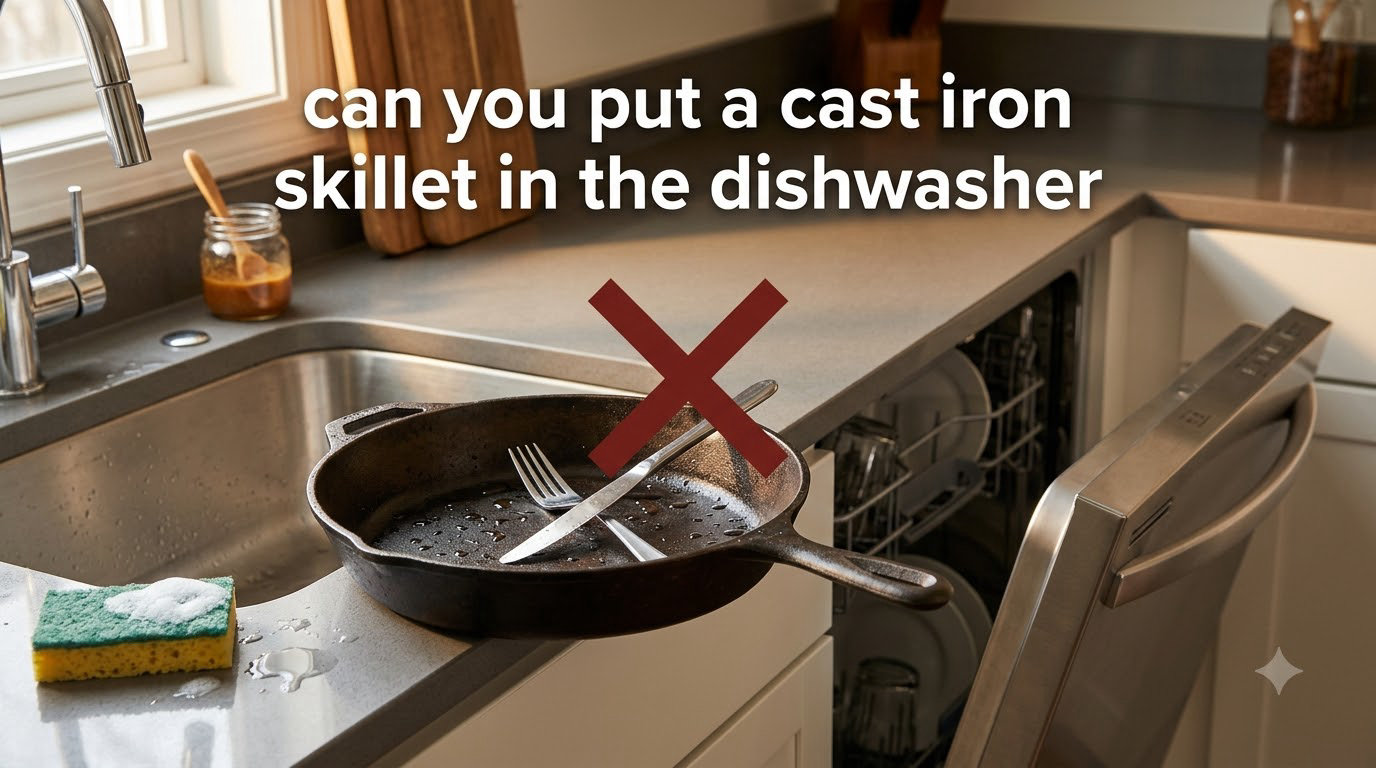
If you’re asking can you put a cast iron skillet in the dishwasher, here is the straight answer our kitchen team gives every new cook who walks through our doors: no, never. The dishwasher strips the polymerized seasoning that makes cast iron non-stick, and the prolonged moisture will rust the bare iron underneath. Even one cycle is enough to leave dull grey patches, and two or three cycles will visibly damage most pans. Hand wash with hot water, dry on the stove, and rub a thin coat of oil — that 90-second routine keeps a cast iron skillet cooking beautifully for decades.
Table of Contents
Can You Put a Cast Iron Skillet in the Dishwasher?
No. A cast iron skillet should never go in the dishwasher, and that rule applies whether the pan is brand new, fully seasoned, or twenty years old.
The dishwasher combines three things cast iron cannot survive: prolonged water exposure, harsh alkaline detergent, and high heat during the drying cycle. Together they strip the seasoning, expose the iron, and start the rust clock within hours. Lodge, Le Creuset, Smithey, Field Company, and every other manufacturer we trust say the same thing in their care guides.
If you’ve already put your pan through the dishwasher, don’t panic — a single cycle rarely ruins a pan. Scroll to the rescue guide below for the exact steps to bring it back.
Why the Dishwasher Damages Cast Iron
Three forces inside a dishwasher attack cast iron at the same time, and that combination is what makes it so unforgiving compared to hand washing.
First, the cycle lasts 60 to 120 minutes. Bare cast iron sitting in that much water will oxidize, even through a good layer of seasoning. Second, dishwasher detergent is highly alkaline — typically pH 10 to 12 — and that alkalinity dissolves polymerized oil. Third, the heated drying cycle bakes any remaining moisture onto the iron surface, which speeds up rust formation.
On our restaurant line, we have seen a single commercial dishwasher cycle strip a skillet completely. Residential machines are a little gentler, but the chemistry is the same. The “I forgot it overnight in soapy water” panic that fills the cast iron subreddit is the same mechanism, just slowed down.
What Seasoning Actually Is
Seasoning is not a coating that sits on top of the pan. It is a layer of polymerized oil — fat that has been baked onto the iron until its molecules link together into a hard, smooth, food-safe film. That film is what makes a cast iron skillet naturally non-stick.
When you cook with oil, butter, or animal fat, a thin layer bonds to the iron. Over months of regular use, those layers build into a deep black patina. Dishwasher detergent dissolves that polymer the same way oven cleaner dissolves baked-on grease — by breaking the chemical bonds apart.
What Happens to the Seasoning Layer
The visible signs of damage show up fast. Most home cooks spot trouble within 24 hours of a dishwasher cycle.
- The pan looks dull, grey, or splotchy instead of its usual deep black.
- Food starts sticking the way it did when the pan was brand new.
- Orange or reddish-brown spots appear on the surface or around the rim — that is iron oxide, otherwise known as rust.
- In a few cases, food picks up a faint metallic taste, especially with acidic dishes like tomato sauce.
Reddit’s r/castiron community has thousands of posts showing these exact symptoms after a partner, roommate, or babysitter unknowingly ran the pan. The good news: the seasoning is repairable. The bad news: every dishwasher cycle sets the pan back further than a hand wash ever would.
How to Clean a Cast Iron Skillet the Right Way
A proper hand wash takes under two minutes. Our cooks do it between every service, and the pans only get better with age.
- Wash while still warm. Run the pan under hot water as soon as you’re done cooking. A few drops of mild dish soap are fine — modern soap will not strip a well-seasoned pan.
- Scrub stuck food with kosher salt. Pour a tablespoon of coarse kosher salt into the pan with a little oil, then scrub with a paper towel or cloth. The salt acts like a gentle abrasive and lifts fond without harming the seasoning.
- Skip the soaking. Never leave a cast iron pan sitting in water. Ten minutes is the absolute maximum, and even that is pushing it.
- Dry on the stovetop. Place the pan on a burner over low heat for 30 to 60 seconds. All the moisture evaporates and the pan comes off the stove bone-dry.
- Oil while warm. Rub a few drops of neutral oil — grapeseed, canola, or flaxseed — over the cooking surface with a paper towel. The pan should look lightly glistening, not greasy.
That last oil step is the one most home cooks skip, and it is the reason pans rust in storage. A whisper-thin coat of oil is the only barrier between bare iron and humid kitchen air.
Rescue Guide: How to Save a Pan That Went Through the Dishwasher
If your skillet just came out of the dishwasher, the damage is usually cosmetic, not fatal. Take a breath and follow these steps before you decide to retire the pan.
- Inspect the surface. Look for grey patches, sticky spots, or orange rust freckles. If the seasoning is just dull but intact, you may only need a light re-oil.
- Scrub off any rust. Use a stainless steel scrubber or fine steel wool with a little oil. Scrub until the rust is gone and you see bare grey metal underneath.
- Wash with hot water and mild soap. This strips the remaining dishwasher residue and any loose seasoning flakes.
- Dry immediately and thoroughly. Towel dry, then finish on a low burner for one minute. Any moisture left in the pan will flash back into rust overnight.
- Re-season in the oven. Rub a thin coat of flaxseed or grapeseed oil over the entire pan — inside, outside, handle. Place it upside down on a sheet pan in a 450°F oven for one hour. Let it cool in the oven.
- Repeat the oven seasoning two or three times if the pan looks pale or feels rough. Each round builds the polymer layer back up.
- Cook fatty foods for the first few uses. Bacon, fried eggs in butter, seared pork chops — every fatty meal adds another thin seasoning layer as a bonus.
Most rescued pans come back stronger than they were before the dishwasher. The pan is rarely the problem; the dishwasher cycle is.
The Enameled Cast Iron Exception
Enameled cast iron — Le Creuset, Staub, and similar brands — plays by different rules. The vitreous enamel coating protects the iron underneath, so there is no seasoning to strip and no bare iron to rust.
Le Creuset’s official care guide says enameled cast iron is dishwasher safe, though they still recommend hand washing to keep the finish looking new for longer. The same applies to Staub. In our restaurant, we run enameled braisers through the commercial dishwasher routinely.
Carbon steel, on the other hand, follows the exact same rule as bare cast iron: no dishwasher. Carbon steel is just thinner cast iron, and the seasoning on a carbon steel pan is even more delicate than on a heavy skillet.
Can Cast Iron Go in the Dishwasher Once?
Reddit has this debate every week, and the consensus from longtime cast iron owners is consistent: one cycle will probably not destroy your pan, but it will dull the seasoning and may leave small rust spots that you will need to scrub out.
Two or three cycles is where most users start reporting visible damage and noticeably worse non-stick performance. Commercial dishwashers — the kind in restaurants, cafeterias, and old apartment buildings — run hotter and use harsher chemicals, so a single cycle on one of those can strip a pan completely. In our kitchen, we have watched it happen to a brand-new skillet in under 90 seconds.
If you live with family members or roommates who treat the dishwasher as a magic box for every dirty dish, the simplest fix is to store your cast iron somewhere obvious but out of reach. The pan survives almost any mistake except repeated dishwasher exposure.
Frequently Asked Questions
What happens if you put a cast iron skillet in the dishwasher?
The dishwasher strips the polymerized seasoning and exposes the bare iron underneath. Within 24 to 48 hours, the pan usually shows dull grey patches, sticky spots, or orange rust freckles. The pan is rarely ruined after one cycle, but food will start sticking and the surface will feel rough until you re-season it.
Why can’t you put cast iron in the dishwasher?
Dishwasher detergent is highly alkaline and dissolves the polymerized oil layer that makes cast iron non-stick. The 60 to 120 minute wash cycle also keeps the pan wet long enough for the exposed iron to oxidize, which is what causes rust.
Can cast iron go in the dishwasher once?
One residential cycle will probably not destroy a well-seasoned pan, but it will dull the seasoning and may leave small rust spots that need scrubbing. Two or three cycles will visibly damage most pans. Commercial dishwashers are hot and harsh enough to strip a pan in a single cycle.
How do you clean a cast iron skillet?
Wash the pan by hand under hot running water while it is still warm. A few drops of mild dish soap are fine. Scrub stuck food with a tablespoon of kosher salt and a little oil, dry on a low burner, then rub a thin coat of neutral oil over the surface while the pan is still warm.
Will a cast iron skillet rust if it goes in the dishwasher?
Yes. The combination of prolonged water exposure, alkaline detergent, and the heated dry cycle will cause rust to form on any spot where the seasoning has been stripped. Most cooks see orange freckles within 24 to 48 hours of a dishwasher cycle.
How do you fix a cast iron skillet after the dishwasher?
Scrub off any rust with steel wool and a little oil, wash with hot water and mild soap, dry thoroughly on a low burner, then re-season in a 450 degree oven for one hour. Repeat the oven seasoning two or three times if the pan looks pale, then cook a few fatty meals to rebuild the patina.
Is cast iron dishwasher safe?
No. Bare cast iron is not dishwasher safe under any brand or price point. Enameled cast iron from Le Creuset or Staub is generally considered dishwasher safe by the manufacturers, though hand washing still gives the longest-lasting finish.
Can you put enameled cast iron in the dishwasher?
Yes. Enameled cast iron from Le Creuset and Staub is dishwasher safe according to the manufacturers. The enamel coating protects the iron from rust and there is no seasoning to strip, so the dishwasher will not damage the pan the way it damages bare cast iron.
The Bottom Line
If you only remember one thing about cast iron care in 2026, make it this: keep the skillet out of the dishwasher. Hand wash with hot water, dry it on the stove, and finish with a thin coat of oil. That 90-second routine is the entire cast iron care plan.
If the pan has already been through a cycle, the rescue guide above will bring it back. Scrub the rust, dry it thoroughly, and re-season in a hot oven. Within a few meals the patina rebuilds and the pan is usually better than before.
For anyone cooking in our restaurant or at home, cast iron rewards the smallest habits. A pan that is hand washed, dried, and oiled after every use will outlast every non-stick coating on the market. The dishwasher is the one shortcut that costs more time than it ever saves.