
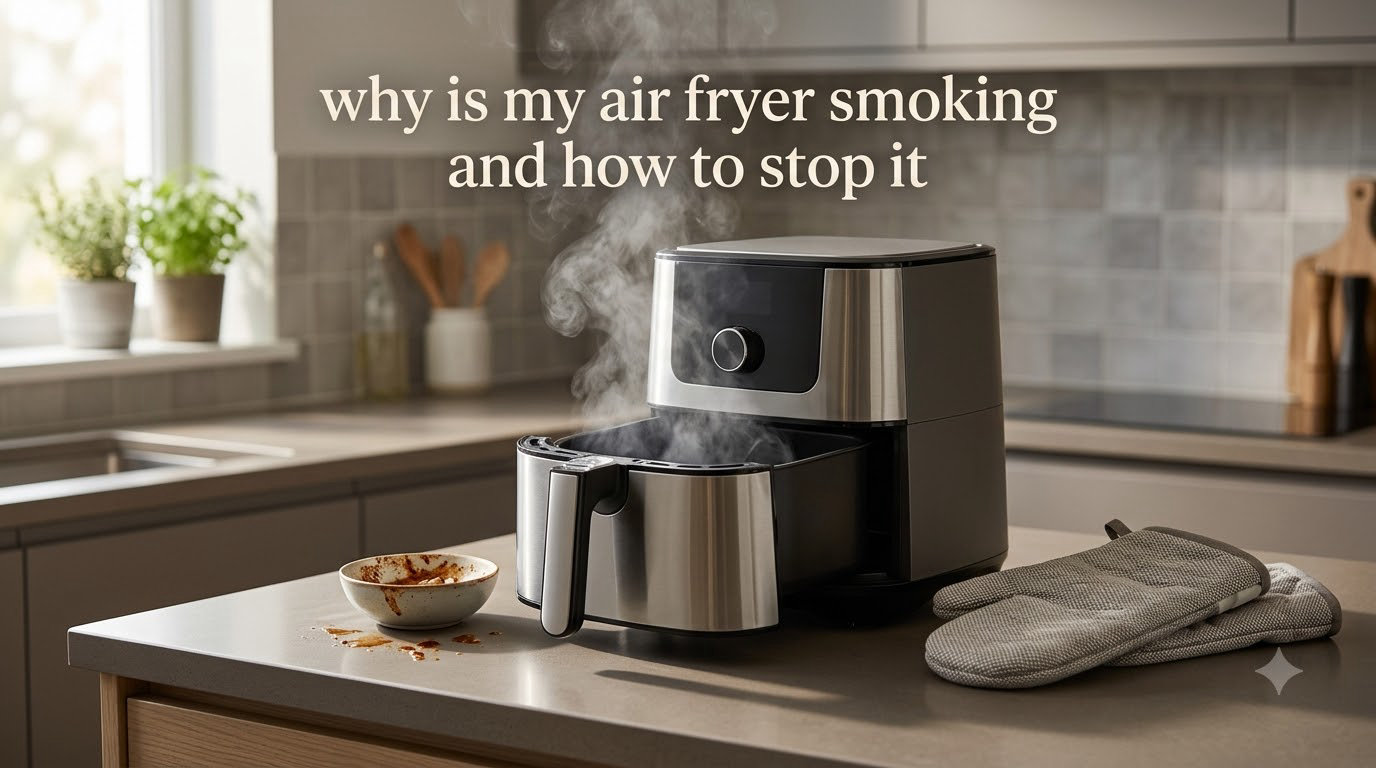
If your air fryer is smoking right now, here’s the quick fix: turn it off, unplug it, and let it cool completely. The most common reason air fryers smoke is grease or food particles burning on the heating element above the basket.
I’ve been there myself. Last month I cooked chicken thighs at 400°F and my entire kitchen filled with smoke within minutes. The fix was simple once I understood what was happening.
This guide covers every common cause of air fryer smoking, the exact steps to stop it, and how to prevent it from happening again. You’ll learn what makes your Ninja, Philips, or Cosori smoke more than other brands, and how to tell the difference between normal steam and dangerous smoke.
Table of Contents
Why Is My Air Fryer Smoking? The Quick Answer
Your air fryer is smoking because grease, oil, or food particles are burning on the heating element inside the unit. When fatty foods cook at high temperatures, the rendered fat splatters up onto the hot heating coil and burns instantly.
This is the most common cause, accounting for roughly 80% of air fryer smoking cases based on troubleshooting threads. Other causes include leftover food debris from previous cooks, overcrowding the basket, or using oils with a low smoke point.
Here’s what to do right now to stop it:
- Turn off and unplug the air fryer immediately if smoke is heavy
- Remove the basket and drip tray once cool enough to handle
- Soak up excess grease from the bottom with paper towels
- Clean the heating element gently with a damp cloth once fully cooled
- Ventilate your kitchen by opening windows and turning on exhaust fans
If smoke persists after cleaning, the issue may be a malfunctioning thermostat or damaged heating element. Stop using the unit and contact the manufacturer.
7 Common Causes of Air Fryer Smoking
Understanding why your air fryer smokes helps you prevent it. Here are the seven most common causes, ranked by how often they occur.
1. Grease and Fat Buildup (Most Common Cause)
Fatty meats like bacon, chicken thighs, sausages, and hamburgers release grease as they heat. This grease drips down into the drip tray, but some splatters upward onto the heating element above the basket.
The heating element runs at 350°F to 400°F during cooking. When grease hits that surface, it vaporizes instantly and produces white smoke. Reddit users in r/airfryer report this happens most often with bacon and chicken thighs with the skin on.
One user described cooking bacon in their Ninja and having the smoke detector go off in the next room. The fix was simple: pour out the accumulated fat and wipe down the heating element after every greasy cook.
2. Food Particles Burning on the Heating Element
Bread crumbs, marinade bits, and small food pieces get caught in the air circulation. The fan blows these particles upward where they land on the heating element and burn.
Breaded foods are the biggest offender here. The loose coating flakes off during cooking, and those flakes turn to carbon on the hot element. This produces both smoke and a burning smell.
I’ve found that shaking the basket halfway through cooking reduces this significantly. The dislodged particles fall into the drip tray instead of getting caught in the airflow.
3. Overcrowded the Basket
Stuffing too much food into the basket blocks airflow. The circulating hot air can’t move properly, so moisture and grease stay trapped around the food instead of escaping through the vent.
This trapped moisture then drips back down onto the heating element, creating steam that looks like smoke. It also causes uneven cooking, with the top burning while the bottom stays raw.
The rule of thumb: fill the basket no more than 75% full. Cook in batches if you need to feed a crowd.
4. Wrong Oil or Low Smoke Point
Every oil has a smoke point, the temperature at which it starts to burn and produce smoke. Using an oil below its smoke point inside an air fryer guarantees smoke.
Extra virgin olive oil smokes at around 375°F. If you’re air frying at 400°F, that oil will smoke before your food even crisps up. Butter burns even lower, around 350°F.
Use avocado oil (smoke point 520°F) or refined peanut oil (450°F) for high-temperature air frying. Save the olive oil for drizzling after cooking.
5. First-Use Smoking from a New Air Fryer
Brand new air fryers often smoke or smell strange during the first few uses. This is the factory coating, oils, or residues burning off the heating element and interior surfaces.
Manufacturers recommend running the air fryer empty at 400°F for 10 to 15 minutes before first use. This burns off the manufacturing residues in a controlled way. Do this outdoors or with maximum ventilation, because the smoke and smell can be intense.
If your new air fryer is smoking after 5+ uses, something else is wrong. Check for packaging stickers that may have fallen behind the heating element, or residue from the factory that didn’t fully burn off.
6. Dirty Drip Tray and Basket
Leftover grease from yesterday’s chicken wings sits in the drip tray and re-burns the next time you cook. Even if the basket looks clean, the tray underneath may have hours of accumulated fat.
Empty and wipe the drip tray after every single use. This is the single most effective prevention step. It takes 30 seconds and eliminates most repeat smoking incidents.
7. Marinade and Sauce Drippings
Wet marinades, barbecue sauce, and glazes drip off food during cooking. These sugary, sticky liquids burn quickly on the heating element and produce thick smoke.
Pat food dry before air frying if you’ve marinated it. For saucy dishes like wings, toss the sauce on after cooking instead of during. This gives you the same flavor without the smoke problem.
How to Stop Your Air Fryer from Smoking: Step-by-Step
When smoke starts billowing out of your air fryer, you need to act fast. Here’s exactly what to do in order.
Immediate Emergency Steps
Step 1: Turn off the air fryer and unplug it. Don’t just hit the power button. Pull the plug to eliminate any electrical risk.
Step 2: Open windows and turn on your kitchen exhaust fan. If the smoke is heavy, open doors to other rooms too. Air fryer smoke can set off smoke detectors throughout your home.
Step 3: Let the unit cool for 10 to 15 minutes. Do not try to move it or open the basket while hot. The heating element stays extremely hot even after the unit is off.
Step 4: Remove the basket and drip tray. Pour out any pooled grease into a heat-safe container (not down the drain, where it solidifies).
Step 5: Wipe down the heating element with a damp cloth once cool. Don’t use spray cleaners directly on the element. A damp microfiber cloth works best.
The Bread Slice Trick
This old kitchen hack actually works. Drop a slice of plain white bread into the basket during the last 3 to 5 minutes of cooking. The bread absorbs excess grease floating in the air before it can hit the heating element.
Use cheap, plain bread. Whole grain or seeded bread will burn and make the smoke worse. White sandwich bread works best.
I tested this with chicken thighs at 400°F. The bread came out golden brown and crispy, and there was zero smoke compared to my usual thick cloud. It also catches loose crumbs and bits from breaded food.
The Water in the Bottom Trick
Adding a tablespoon or two of water to the drip tray catches grease drippings before they can splatter up to the heating element. The water cools the grease instantly and prevents it from burning.
Be careful not to overfill. You want just enough water to cover the bottom of the tray. Too much water can boil over and create a different mess.
This trick works especially well for rotisserie chicken, which produces enormous amounts of grease. One Facebook user in an air fryer group reported this single change eliminated smoking completely during whole chicken cooks.
Using Parchment Paper Correctly
Parchment paper with holes (air fryer-specific liners) catches grease and prevents it from reaching the heating element. Frigidaire support recommends this method in their official troubleshooting.
Never put parchment paper in a preheated air fryer without food on top. The lightweight paper can fly up into the heating element and ignite. Always weigh it down with food before preheating.
Cut parchment to fit only the bottom of the basket. Keep the sides clear so air can circulate properly. Blocking the sides reduces airflow and creates a different smoking problem.
Lower Temperature and Adjust Cooking Time
If smoke keeps appearing, try dropping your temperature by 25°F. Chicken thighs that smoke at 400°F often cook perfectly at 375°F with just a few extra minutes of cooking time.
You can also add a teaspoon of water to the drip tray as insurance, even when using parchment paper. Redundant protection helps when cooking high-fat foods like pork belly or lamb chops.
Smoke vs Steam: How to Tell the Difference
Air fryers produce both smoke and steam, and they look similar at first glance. Knowing the difference matters because one is normal and the other signals a problem.
Steam is white, wispy, and disappears within seconds. It smells like the food you’re cooking. Steam is normal during air frying, especially with frozen foods, vegetables, or any moist food.
Smoke is thicker, more visible, and lingers in the air. It has a sharp, acrid, or burnt smell. Smoke means something is burning that shouldn’t be, usually grease or food particles on the heating element.
If you’re seeing white wisps that smell like chicken, that’s steam. Relax, everything is fine. If you’re seeing thick clouds that make your eyes water and smell like something is burning, you have a smoke problem.
Quick visual test: steam rises straight up and dissipates. Smoke tends to billow and spread horizontally before dissipating. Steam clears your kitchen within 30 seconds of opening the lid. Smoke sticks around for much longer.
Brand-Specific Troubleshooting: Ninja, Philips, and Cosori
Different air fryer brands have different smoking tendencies. Here’s what users report for the three most popular brands.
Ninja Air Fryer Smoking Issues
Ninja air fryers are the most commonly mentioned in smoking complaints on Reddit. The heating element sits very close to the basket, which means less distance for grease to travel before burning.
Reddit users report that Ninja Dual Zone and Ninja Foodi models smoke more than competitors when cooking fatty foods. The solution is consistent: empty the drip tray before every cook and use the bread slice trick.
If your Ninja is smoking on first use, run it empty at 400°F for 15 minutes. The factory residue is heavier on Ninja units than other brands based on user reports.
Philips Air Fryer Troubleshooting
Philips air fryers use a different air circulation design. The heating element is shielded, which reduces direct contact with grease. However, users still report smoking, especially with marinated foods.
One user in a Philips community reported their brand new unit smoking after only 4 uses despite cleaning after each cook. The fix turned out to be a piece of plastic packaging stuck behind the heating element shield. Always check for missed packaging material.
Philips units benefit from the water-in-bottom trick more than other brands because the shielded element traps grease against it longer.
Cosori Air Fryer Common Problems
Cosori air fryers have a removable heating element in some models. This makes deep cleaning easier. If your Cosori is smoking, remove the element (once completely cool) and wipe it down thoroughly.
Users report that Cosori units run slightly hotter than the display shows. If you’re following a recipe and getting smoke, drop the temperature by 25°F from what the recipe recommends.
When Smoking Means Your Air Fryer Is Going Bad
Sometimes smoking signals a real problem, not just a maintenance issue. Here are the warning signs that your air fryer needs repair or replacement.
The unit smokes even when empty and clean. This points to a failing thermostat or damaged heating element. Stop using the air fryer immediately.
You smell burning plastic or electrical components, not just food. This is a serious safety issue. Unplug the unit and contact the manufacturer.
The air fryer smokes, then quits working. A Reddit user reported their Geek Chef started smoking heavily, then died within a week. This indicates grease reached the motor or electronics, causing permanent damage.
Smoke comes from the back or bottom of the unit, not the top. This means internal components are overheating. Stop using it right away.
If your air fryer is under warranty and showing these signs, contact the manufacturer before troubleshooting further. Most brands will replace units that fail within the first year.
Prevention and Long-Term Maintenance
A few minutes of care after each cook prevents 99% of smoking problems. Here’s the routine I follow with my own air fryer.
After every cook, I remove the basket and drip tray while still slightly hot (not cold). Warmed grease wipes off much more easily than solidified grease. I use paper towels to soak up the fat, then wash the parts in hot soapy water.
Once a week, I do a deep clean. I remove the heating element if my model allows it. I wipe down the interior with a paste of baking soda and water. For stubborn grease, I spray with white vinegar, let it fizz for 30 seconds, then wipe clean.
The drip tray gets a baking soda scrub once a month. Built-up grease in the tray is the main cause of repeat smoking, so this monthly step matters most.
Check the heating element visually every few weeks. If you see dark spots or carbon buildup, gently scrape it with a wooden spatula. Never use metal tools, which can damage the coating.
Quick Prevention Checklist
- Empty drip tray before every cook
- Don’t overcrowd the basket (75% max)
- Use high smoke point oils for temperatures above 375°F
- Pat wet marinated food dry before cooking
- Add water or bread slice for high-fat foods
- Run new units empty at 400°F for 15 minutes before first use
- Deep clean the heating element monthly
Frequently Asked Questions
Is it normal to have smoke coming out of an air fryer?
A small amount of smoke is normal during the first few uses of a new air fryer as factory residues burn off. After that, smoke usually means grease or food particles are burning on the heating element. This is preventable with regular cleaning and proper cooking techniques.
How do you know if your air fryer is going bad?
Your air fryer may be failing if it smokes when empty and clean, smells like burning plastic or electronics, or quits working shortly after smoking episodes. Smoke coming from the back or bottom of the unit also signals internal problems. Stop using the unit and contact the manufacturer if you notice these signs.
Is it okay if my air fryer is steaming?
Yes, steam is completely normal when air frying moist foods like vegetables, frozen items, or chicken. Steam is white, wispy, and disappears within seconds. It smells like the food you’re cooking. Steam is not the same as smoke, which is thicker, lingers longer, and has a burning smell.
Does an air fryer cause smoke?
Air fryers themselves don’t cause smoke under normal use. Smoke happens when grease, oil, or food particles reach the heating element and burn. Proper cleaning, avoiding overcrowding, using high smoke point oils, and removing excess fat before cooking will prevent almost all smoking incidents.
Final Thoughts on Air Fryer Smoking
Air fryer smoking is almost always preventable with simple maintenance. Empty the drip tray before every cook, avoid overcrowding the basket, and use oils with high smoke points. If smoke appears, turn off the unit and let it cool before cleaning the heating element.
For brand-specific issues, Ninja units need the most frequent cleaning due to their close heating element placement. Philips benefits from the water-in-bottom trick. Cosori models may run hotter than displayed, so adjust temperatures down slightly.
Remember that steam is normal and harmless. True smoke means something is burning that shouldn’t be, but the fix is usually simple. Keep your air fryer clean, and you’ll rarely see smoke again.