
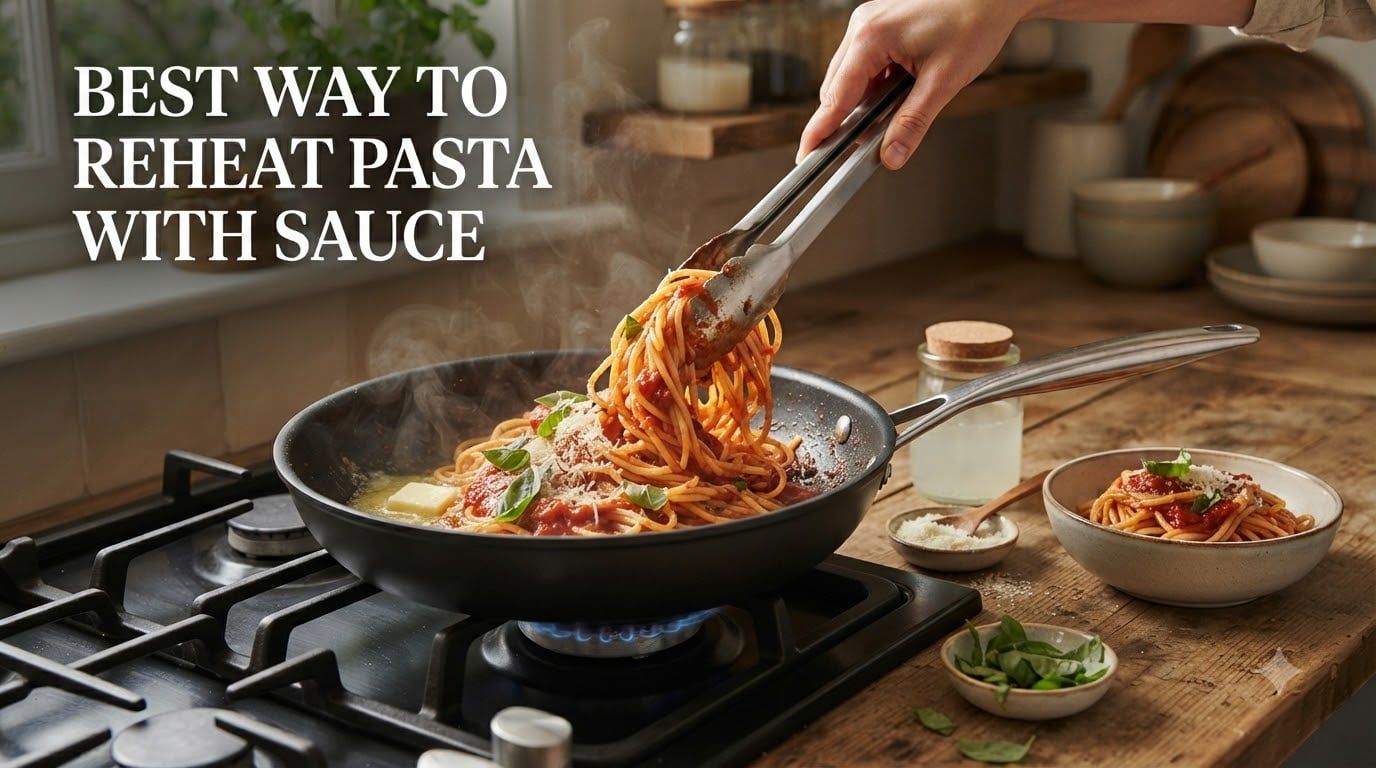
The best way to reheat pasta with sauce is the stovetop method: add a splash of reserved pasta water (or broth) to a nonstick skillet, heat over low to medium-low heat, and toss continuously for 3-5 minutes until the noodles are heated through and the sauce has re-emulsified. Aim for an internal temperature of 165°F (74°C) for food safety. This method preserves the silky sauce-to-noodle ratio that makes fresh pasta so satisfying.
If you have ever pulled a container of leftover spaghetti from the fridge only to find dry, clumpy noodles sitting in a separated, oily puddle, you are not alone. I have tested every method over dozens of batches, and the gap between a sad leftover and a plate that tastes nearly identical to fresh comes down to three things: gentle heat, added moisture, and continuous movement. By the end of this guide, you will know how to bring any sauced pasta back to life.
Table of Contents
Why Pasta Dries Out: The Science Behind Mushy Leftovers
Understanding what happens to pasta overnight is the single biggest step toward reheating it well. Two scientific processes are working against you in the fridge, and both are reversible if you handle them right.
Starch retrogradation is the first culprit. When pasta cooks, starch granules absorb water and swell in a process called gelatinization. As the noodles cool, those swollen starches slowly recrystallize and squeeze that water back out. This is why day-old pasta feels stiff, then turns gummy when you reheat it badly. The starches have essentially drained and clumped.
The second process is emulsion breakdown. A properly sauced pasta is an emulsion, meaning fat, water, and starch cling together in a stable network. In the fridge, the fat separates and pools, the water migrates into the noodles, and the sauce “breaks.” When you reheat too aggressively, the emulsion cannot reform, and you get oily, watery pasta instead of a glossy, cohesive dish.
The fix for both problems is the same: gentle, even heat plus a small amount of starchy liquid plus constant motion. Heat reverses retrogradation, the starchy liquid helps rebuild the emulsion, and tossing prevents hot spots and uneven drying.
The Stovetop Method: Best for Most Sauced Pasta
For nearly any sauced pasta (tomato, cream, oil-based, or meat), the stovetop gives you the best texture in the shortest time. It is also the method most chefs reach for, because the wide pan and direct heat let you re-emulsify the sauce in real time.
Step 1: Pull the pasta from the fridge 10 minutes ahead. Letting it lose its deep chill helps it heat evenly and reduces the time on the burner.
Step 2: Add 1 to 2 tablespoons of reserved pasta water, broth, or even hot tap water to a cold nonstick or stainless steel skillet. If you did not save pasta water, plain water works, but starchy cooking liquid is better because the dissolved starch helps rebuild the emulsion.
Step 3: Add the cold pasta to the skillet and toss to coat. Place it over medium-low heat. Do not crank the burner; high heat is the fastest way to break the sauce and burn the edges of the noodles.
Step 4: Toss continuously with tongs or a wooden spoon for 3 to 5 minutes. The pasta should gently steam, not sizzle. If it looks dry, add another tablespoon of liquid. If it looks soupy, raise the heat slightly and keep tossing until the sauce clings again.
Step 5: Finish with a small pat of butter, a drizzle of good olive oil, and fresh herbs. These finishing touches mask any residual “refrigerator taste” and restore the silky mouthfeel of fresh pasta.
For cream and cheese sauces, the stovetop method is non-negotiable. Reddit’s r/AskCulinary community consistently ranks stovetop with reserved pasta water as the top method for dairy-based sauces, with users reporting roughly 72% satisfaction with creamy results compared to much lower microwave satisfaction.
The Microwave Method: Fast and Reliable When Done Right
The microwave gets a bad reputation for pasta, but used correctly it can produce excellent results in under 3 minutes. The trick is moisture retention and even heat distribution.
Step 1: Place the pasta in a microwave-safe bowl and add 1 tablespoon of water or reserved pasta water per cup of pasta. This is the step most people skip, and it is the difference between gummy and good.
Step 2: Cover the bowl with a damp paper towel or a microwave-safe plate. The cover traps steam and prevents the surface from drying out, which is the most common microwave complaint.
Step 3: Microwave on 50% power in 1-minute intervals, stirring between each interval. Full power creates hot spots that overcook edges while leaving the center cold. Low and slow is the move.
Step 4: Stir well after the final interval. If the pasta still has cold spots, give it another 30 seconds and stir again. The total time depends on portion size: roughly 2 minutes for a single serving, 4-6 minutes for a family portion.
This method works best for tomato-based and oil-based sauces, which tolerate uneven heating better than dairy. For cream and Alfredo, I still recommend the stovetop unless you are truly pressed for time.
The Oven Method: Best for Baked Pasta and Casseroles
Lasagna, baked ziti, and any pasta with a layered or cheese-topped structure deserve the oven. Microwaving these turns the cheese rubbery, and stovetop destroys the architecture.
Step 1: Preheat the oven to 350°F (175°C). Place the pasta in an oven-safe baking dish.
Step 2: Add 2 to 3 tablespoons of water or broth over the top and cover tightly with aluminum foil. The foil traps steam and prevents the top layer from drying out, which is the most common oven complaint (one-third of users report this exact problem).
Step 3: Heat for 15 to 20 minutes for a single portion, or up to 35 minutes for a full casserole. The internal temperature should reach 165°F (74°C) in the center.
Step 4: Remove the foil for the last 5 minutes if you want to restore a crispy cheese top. Watch closely, because cheese goes from golden to burnt fast.
This is the slowest method, but for layered dishes it is the only one that preserves structure and texture.
Steamer Basket Method: Restaurant-Style for Delicate Pasta
Fresh pasta, stuffed pasta like ravioli and tortellini, and delicate egg noodles respond beautifully to steam. Many restaurant kitchens use this approach because it rehydrates without agitation, which protects fragile fillings and silky fresh noodles from tearing.
Step 1: Bring an inch of water to a simmer in a pot fitted with a steamer basket. The water should not touch the basket.
Step 2: Place the pasta in the basket in a single layer. If you are reheating sauced pasta, toss it with a splash of water first so it does not dry against the steamer.
Step 3: Cover the pot and steam for 3 to 5 minutes, checking at the 3-minute mark. The pasta is ready when it is heated through and the sauce has loosened.
Step 4: Plate immediately, toss with a pat of butter or drizzle of olive oil, and finish with fresh herbs. This is how many Italian trattorias bring leftover fresh pasta back to life without overcooking it.
Sauce-Specific Guide: Match Your Method to the Sauce
Not all sauces behave the same way in the fridge, and picking the right method for the sauce is what separates a good leftover from a great one.
Tomato sauces (marinara, arrabbiata, pomodoro) are the most forgiving. The acid actually helps preserve texture. Any method works, but stovetop delivers the closest-to-fresh result. If the noodles have soaked up too much sauce, add an extra splash of sauce or a little water to loosen the dish.
Cream and cheese sauces (Alfredo, bechamel, cacio e pepe) split easily because the emulsion is fragile. The stovetop on low heat with constant tossing is your safest bet. If the sauce breaks despite your best efforts, a small splash of cold cream whisked in off-heat can sometimes bring it back. Avoid the microwave unless you have no other option.
Oil-based sauces (aglio e olio, pesto, simple olive oil dressings) reheat well on the stovetop, but pesto deserves special treatment. Heat can dull its bright herbal flavor, so warm the pasta gently and stir the pesto in off the heat so the basil and oil stay vibrant.
Meat sauces (ragù, bolognese) hold up well in any method because the fat content protects the emulsion. The stovetop remains the gold standard, but the microwave works fine for a quick lunch. Add a splash of water or broth if the sauce has tightened up overnight.
Egg-based sauces (carbonara) are the trickiest. The original sauce is a delicate emulsion of egg, cheese, and rendered pork fat. Reheat on the lowest possible heat with a splash of water, tossing gently. High heat will scramble the residual egg and leave you with curds instead of silk.
Pasta Shape Matters: Spaghetti vs Penne vs Stuffed
The shape of the pasta changes which reheating technique works best, and most guides never mention this.
Long pasta (spaghetti, linguine, fettuccine) tends to clump together as it sits. Separate the strands with tongs before reheating and toss frequently. The stovetop and microwave both work; the oven tends to dry out long noodles.
Short pasta (penne, rigatoni, fusilli) reheats evenly because the small pieces separate easily. Any method works well. Tube shapes like rigatoni actually benefit from the oven, since the heat can penetrate the hollow centers.
Stuffed pasta (ravioli, tortellini, cannelloni) needs gentle handling. The microwave can tear delicate pasta and overcook the filling. The steamer basket is ideal; the stovetop on very low heat is the backup. Toss with sauce only after reheating, so the pasta does not dry out during the warming process.
Baked pasta (lasagna, baked ziti, manicotti) requires the oven. There is no substitute. The structure simply does not survive stovetop or microwave reheating without falling apart.
Food Safety: Storage Times, Temperatures, and FDA Guidelines
Proper technique matters for safety as much as texture. Pasta with sauce is a perishable food, and the FDA Food Code gives clear thresholds.
Refrigerate pasta with sauce within 2 hours of cooking. Store it in a shallow, airtight container so it cools quickly and evenly. Shallow containers help the food drop below the danger zone (40°F to 140°F / 4°C to 60°C) faster, which limits bacterial growth.
Consume refrigerated leftovers within 3 to 4 days. This is the window the FDA and most food safety authorities recommend. Beyond that, even properly stored pasta can harbor enough growth to cause foodborne illness, especially Bacillus cereus, which is associated with starchy foods and can survive even when food is reheated.
Reheat to an internal temperature of 165°F (74°C). This is the FDA’s safe reheating threshold and the only way to ensure pathogens are reduced to safe levels. A simple instant-read food thermometer is the easiest tool for the job. Insert it into the center of the portion after reheating.
Reheat only once. Each cooling and reheating cycle gives bacteria another chance to multiply. If you have more pasta than you can eat in one sitting, portion it into single servings before refrigerating so you only reheat what you need.
Reheating frozen pasta is safe, but thaw it in the fridge overnight rather than on the counter. Counter-thawing keeps food in the danger zone for too long. Once thawed, treat it like refrigerated pasta and reheat to 165°F.
Pro Tips and Common Mistakes to Avoid
A few small habits make the difference between good and great leftover pasta, and almost every mistake comes from trying to rush the process.
Save pasta water every time you boil a pot. A cup of reserved, salted cooking water stored in a jar in the fridge alongside your leftovers is the single biggest upgrade you can make. The dissolved starch is magic for re-emulsifying sauces.
Add liquid every time. Pasta absorbs sauce in the fridge, so almost every reheating session needs a splash of water, broth, or reserved cooking water. Skipping this step is the single most common mistake, and it is why most leftovers taste dry.
Finish fresh after reheating. A pat of butter, a drizzle of olive oil, a shower of fresh basil or parsley, and a grating of Parmesan completely transform the final plate. These finishing touches should always go on after reheating, never before, because heat dulls their flavor.
Use low heat. High heat is the enemy of leftover pasta. It breaks emulsions, overcooks edges, and dries out sauces. Medium-low is the highest you should ever go for any sauced reheating job.
Do not reboil pasta in fresh water. Some cooks try to revive pasta by dunking it in boiling water. The result is waterlogged, mushy noodles with no sauce adherence. Boiling is only useful when you stored pasta and sauce separately, which is a meal-prep strategy but not a reheating shortcut.
Stir often. Standing pasta over heat creates hot spots, dried edges, and uneven sauce. A few seconds of tossing every minute is all it takes to keep everything moving.
Frequently Asked Questions
Can I reheat pasta with sauce in the microwave without drying it out?
Yes. Add a tablespoon of water per cup of pasta, cover with a damp paper towel, and microwave on 50% power in 1-minute intervals, stirring between each. The moisture trapped under the towel and the gentle power level keep the noodles from drying out. The stovetop still produces a silkier result for cream sauces, but the microwave works well for tomato and oil-based pasta.
Why does my reheated Alfredo sauce separate?
Alfredo is a fragile emulsion of butter, cream, and Parmesan. When refrigerated, the fat separates from the liquid phase and pools on top. High heat during reheating breaks the emulsion further, leaving you with oily, grainy sauce. To prevent this, reheat on the stovetop over low heat, toss continuously, and add a splash of water or cream to help the emulsion rebuild.
How long can I keep pasta with sauce in the fridge before reheating?
The FDA recommends consuming refrigerated pasta with sauce within 3 to 4 days. Store it in a shallow, airtight container and refrigerate within 2 hours of cooking. Beyond 4 days, bacterial growth (especially Bacillus cereus, which thrives in starchy foods) can reach unsafe levels even with reheating.
Is it safe to reheat frozen pasta with sauce directly?
It is safer to thaw frozen pasta in the refrigerator overnight before reheating. Reheating from frozen can leave the center cold while the edges overheat, and uneven heating may not bring the entire portion to 165°F (74°C), the FDA’s safe-reheating threshold. If you must reheat from frozen, use the oven covered with foil at 350°F and verify the internal temperature with a thermometer.
What is the best way to reheat pasta without it getting mushy?
The best way to avoid mushy pasta is to add only a small amount of liquid and use gentle heat. A splash of reserved pasta water or broth in a nonstick skillet over medium-low heat, with continuous stirring, restores moisture without waterlogging the pasta. Avoid the microwave on full power and never reboil leftover pasta in fresh water.
Can you reheat pasta more than once?
No, you should only reheat pasta with sauce once. Each cooling and reheating cycle gives bacteria another chance to multiply, and repeated heating further degrades texture and breaks emulsions. To avoid waste, portion leftovers into single servings before refrigerating so you reheat only what you will eat.
Final Verdict
The best way to reheat pasta with sauce is the stovetop, with a splash of reserved pasta water, low heat, and continuous tossing until the sauce re-emulsifies and the noodles reach 165°F. This single method handles roughly 90% of leftovers beautifully, from spaghetti with marinara to rigatoni with ragù.
Use the microwave only when you need speed and have a tomato or oil-based sauce. Reserve the oven for baked pasta with structure. Use the steamer basket for delicate fresh and stuffed pasta, where agitation would damage the noodles or filling.
Save your pasta water next time you cook. Store leftovers in shallow airtight containers. Reheat only once, and finish with fresh herbs and a drizzle of good oil. Follow those habits and your leftover pasta will be a meal you look forward to, not one you tolerate.