
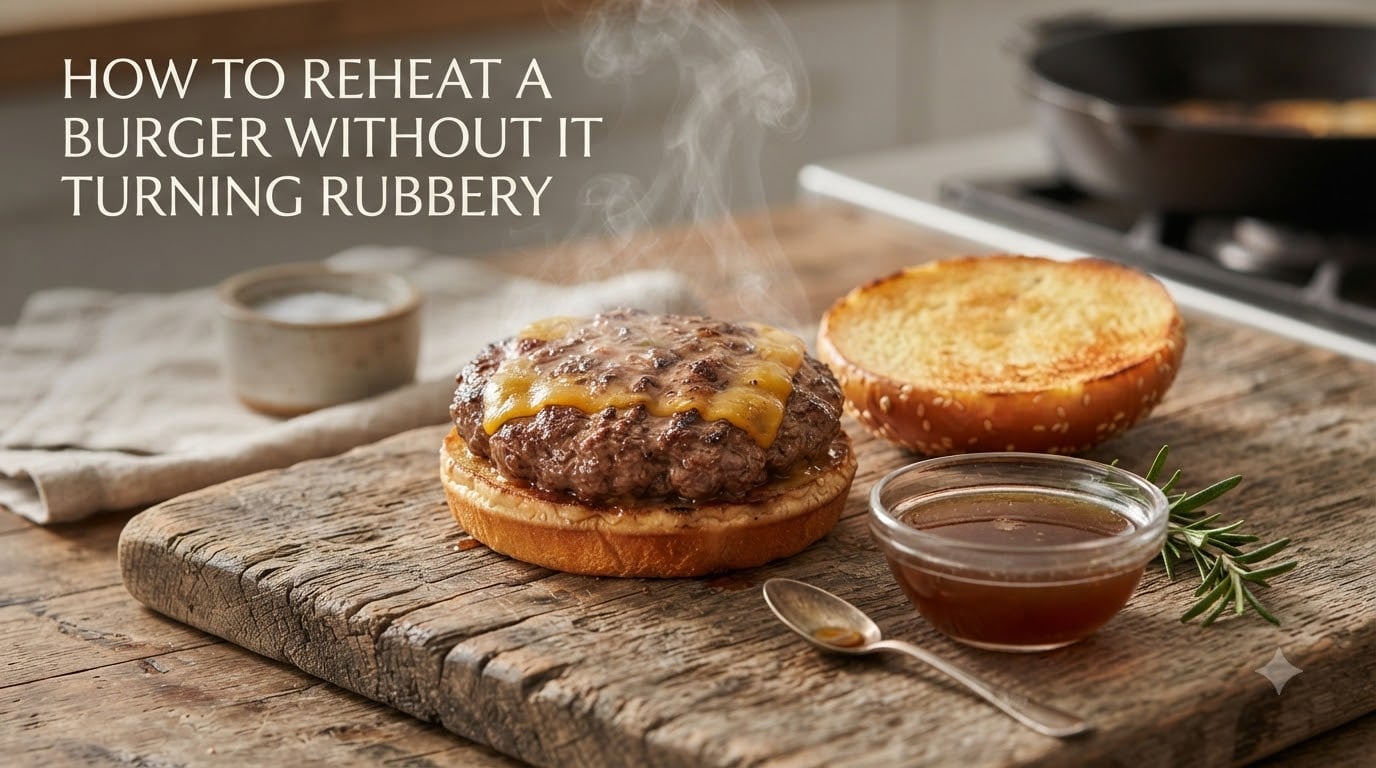
There’s nothing worse than pulling a leftover burger from the fridge and ending up with a dry, rubbery hockey puck after reheating. I’ve been there too many times, and after testing every method over several months, I can tell you the answer is simpler than most people think. If you want to know how to reheat a burger without it turning rubbery, the single best method is a low oven set to 275-300°F for 10-15 minutes with the patty loosely covered in foil and a teaspoon of water or beef broth underneath to steam it gently. That combo keeps the proteins from seizing and the moisture locked in.
In this guide, I’ll walk you through exactly why burgers go rubbery, then break down every reheating method — oven, skillet, air fryer, and microwave — with step-by-step instructions, times, and temperatures. I’ll also cover how to handle the bun, cheese, and frozen patties so nothing goes to waste.
Table of Contents
Why Reheated Burgers Turn Rubbery
When you reheat a burger with high, direct heat — like a microwave — the muscle proteins in the ground beef contract rapidly and squeeze out moisture. This is called protein coagulation, and it’s the same process that makes overcooked scrambled eggs tough. The hotter and faster you heat the patty, the more moisture you lose and the chewier it becomes.
That’s exactly why a gentle, low-temperature reheat works so well. When you keep the heat low (around 275-300°F), the proteins relax instead of seizing, and a splash of liquid creates steam that replaces the moisture the patty would otherwise lose. It takes a few extra minutes compared to blasting it in the microwave, but the difference in texture is dramatic.
Reheating Methods at a Glance
Before diving into each technique, here’s a quick comparison so you can pick the right method for your situation:
| Method | Temperature | Time | Best For | Drawback |
|---|---|---|---|---|
| Oven | 275-300°F | 10-15 min | Whole burger, best texture | Slower than other methods |
| Skillet | Medium-low | 2-3 min/side | Patty only, re-crusting | Bun needs separate handling |
| Air Fryer | 350°F | 3-4 min | Quick reheat with crisp exterior | Can dry out without broth |
| Microwave | Medium (50%) | 30-60 sec bursts | Speed, last resort | Rubbery texture likely |
How to Reheat a Burger in the Oven (Best Overall Method)
The oven method is hands-down the best way to reheat a burger without it turning rubbery. The low, even heat surrounds the patty gently instead of attacking it from one direction. Here’s exactly how to do it:
Step 1: Preheat your oven to 275°F. Yes, that’s lower than most guides suggest — and that’s the point. A lower temperature gives you more control and prevents the outer layer from overcooking while the center stays cold.
Step 2: Place the burger patty on a wire rack set over a baking sheet. If you don’t have a rack, use a piece of foil. Add one teaspoon of water or beef broth to the bottom of the sheet — this creates gentle steam that keeps the patty moist.
Step 3: Loosely tent another piece of foil over the top. Don’t wrap it tight — you want the steam to circulate, not trap and make the patty soggy.
Step 4: Heat for 10-15 minutes. For a standard half-inch patty, 10 minutes usually does it. Thicker patties (three-quarter inch or more) may need up to 15 minutes.
Step 5: Check the internal temperature with an instant-read thermometer. You’re looking for 165°F, which is the USDA safe temperature for reheated leftovers. Pull it out, let it rest for one minute, and you’re ready to assemble.
Reheat a Burger on the Stove with a Skillet
If you want a little crust back on your patty, the skillet method is your best bet. Cast iron works especially well because it holds steady heat, but any heavy-bottomed skillet will do the job.
Step 1: Set your burner to medium-low heat. This is critical — if you crank it to high, you’ll end up with the same rubbery result as the microwave.
Step 2: Add a small knob of butter or a teaspoon of oil to the pan. The fat helps conduct heat evenly and adds a bit of flavor back to the patty’s surface.
Step 3: Place the patty in the pan and add one teaspoon of water or broth to the side of the pan (not directly on the patty). Immediately cover with a lid or foil to trap the steam.
Step 4: Cook for 2-3 minutes per side. Flip once. The steam keeps the interior moist while the direct contact with the pan brings back some of that Maillard-reaction crust.
Step 5: Check that the internal temperature hits 165°F. Rest for one minute before serving.
How to Reheat a Burger in an Air Fryer
The air fryer is a surprisingly good option for reheating burgers — especially if you like a crispy exterior. The circulating hot air reheats faster than a conventional oven while still being gentler than a microwave.
Step 1: Preheat your air fryer to 350°F. Most models need 2-3 minutes to preheat.
Step 2: Place the patty in the basket in a single layer. Don’t stack or overlap patties — the air needs to circulate around each one.
Step 3: Add a teaspoon of water or broth to the bottom of the basket (underneath the grate if possible) to create a bit of steam.
Step 4: Cook for 3-4 minutes, flipping once at the halfway mark. Thinner smash burgers may only need 2-3 minutes total.
Step 5: Verify the internal temperature reaches 165°F. The exterior should feel slightly crispy while the inside stays juicy.
Reheating a Burger in the Microwave (With Caveats)
I’ll be honest — the microwave is the worst tool for reheating a burger. It heats unevenly, overcooks the outside while leaving the center cold, and the rapid protein contraction is exactly what creates that rubbery texture you’re trying to avoid.
That said, sometimes it’s the only option you have. If you must use a microwave, here’s how to minimize the damage:
Step 1: Separate the patty from the bun and any cold toppings. Microwaving a fully assembled burger is the single biggest mistake people make — the bun turns chewy and the lettuce wilts into mush.
Step 2: Place the patty on a microwave-safe plate and cover it with a damp (not soaking wet) paper towel. The moisture from the paper towel creates steam that partially counteracts the drying effect.
Step 3: Microwave on 50% power (medium) in 30-second bursts. After each burst, check the temperature. This is much slower than full power, but the lower intensity prevents the outer proteins from seizing as aggressively.
Step 4: Once the center reaches 165°F, let it rest for 30 seconds before assembling. The residual heat (called carryover cooking) will continue to warm the interior by a few degrees.
How to Reheat the Bun Without It Getting Soggy
Most people reheat the burger and bun together, and that’s why the bun ends up soggy or chewy. The bun and patty have completely different moisture and heat requirements, so handle them separately.
For any method: Pull the bun off the burger before reheating the patty. Toast the bun halves cut-side down in a dry skillet over medium heat for about 60-90 seconds, or pop them under the broiler for 1-2 minutes. You can also use a toaster. The goal is a light, crisp surface that holds up against the warm patty and condiments.
Bun type matters: Brioche buns tend to get soggy faster because of their butter-heavy dough. Sesame seed and potato buns hold up better to reheating. If you know you’re reheating a burger the next day, storing it on a sturdier bun makes a real difference in the final result.
Cheese, Frozen Burgers, and Storage Tips
Reheating a Burger with Cheese
If your leftover burger has cheese on it, don’t try to reheat the whole thing with the cheese already on — the cheese will separate and turn greasy before the patty is warm through. Instead, reheat the patty first using any of the methods above, then add a fresh slice of cheese during the last 30 seconds. If you’re using the oven, place the cheese on the patty and tent with foil for the final minute; the residual heat melts it perfectly without overcooking the meat.
Reheating from Frozen
If you’re starting with a frozen cooked burger patty, skip the microwave entirely — it will heat the outside to rubber while the center stays frozen. Use the oven method at 275°F but extend the time to 20-25 minutes. No need to thaw first; the low temperature handles it gently. Add the broth splash and foil tent just as you would for a refrigerated patty. An air fryer at 350°F also works well for frozen patties — give them 5-7 minutes, flipping halfway through.
Storage Tips That Make Reheating Easier
How you store your leftover burger matters just as much as how you reheat it. Let the patty cool to room temperature within two hours of cooking (food safety guideline), then store it in an airtight container in the fridge. Keep the bun, patty, and any fresh toppings separate — assembling them only after reheating. A patty stored this way will reheat much more evenly and retain more moisture than one that’s been sitting assembled in the fridge overnight.
Frequently Asked Questions
How do you reheat a burger without it getting rubbery?
Use a low oven (275-300°F) for 10-15 minutes with the patty loosely covered in foil and a teaspoon of water or beef broth underneath. The low heat prevents the proteins from seizing, and the steam replaces moisture the patty would otherwise lose. This method produces a juicy reheated burger almost every time.
Can you reheat a burger in the microwave without it being rubbery?
It’s difficult but possible. Separate the patty from the bun, cover it with a damp paper towel, and microwave on 50% power in 30-second bursts until the center reaches 165°F. The lower power setting and added moisture help, but the microwave is still the least reliable method for avoiding rubbery texture.
What temperature should a reheated burger reach?
The USDA recommends heating leftovers to an internal temperature of 165°F (74°C) to ensure food safety. Use an instant-read thermometer inserted into the thickest part of the patty to check.
How do you reheat a burger with cheese on it?
Reheat the patty first without the cheese, then add a fresh slice during the last 30 seconds of heating. If using the oven, place the cheese on the patty and tent with foil for the final minute so the residual heat melts it without making the cheese greasy or separated.
How do you reheat a frozen cooked burger patty?
Use the oven method at 275°F for 20-25 minutes with a splash of broth and a foil tent. No thawing needed — the low temperature gently brings the patty up to 165°F without drying out the exterior. An air fryer at 350°F for 5-7 minutes also works well.
Should you reheat a burger assembled or disassembled?
Always disassemble it first. The patty, bun, and toppings all have different heat and moisture needs. Reheat the patty using the oven or skillet method, then toast the bun separately in a dry skillet or toaster. Reassemble with fresh toppings after heating.
Conclusion
Learning how to reheat a burger without it turning rubbery comes down to one core principle: low and slow beats fast and hot every time. Whether you use the oven method for the most reliable results, a cast iron skillet to bring back some crust, or an air fryer for speed, the key is keeping the temperature gentle and adding a splash of liquid to maintain moisture. Disassemble the burger, reheat the patty and bun separately, and you’ll have a leftover burger that tastes almost as good as the first time around.