
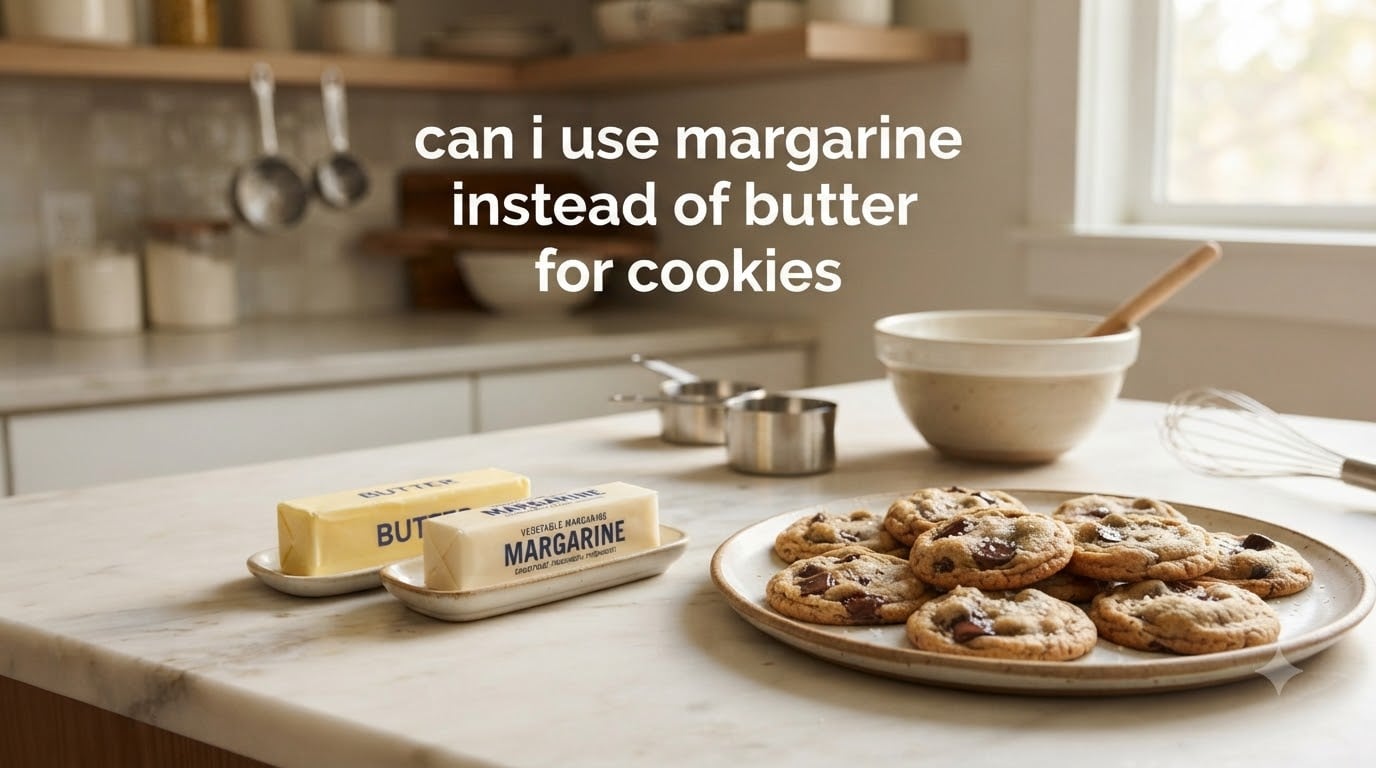
Yes, you can use margarine instead of butter for cookies in a 1:1 substitution ratio by volume. Margarine works as a direct swap in most cookie recipes, but expect noticeable differences in the final batch: cookies tend to spread more, bake up softer and cakier, and carry a milder flavor than those made with butter. In our test kitchen, we swapped margarine for butter across eight cookie recipes and found the swap works well for sugar cookies and snickerdoodles, while chocolate chip cookies lose some of their signature richness.
This guide covers exactly what changes when you swap margarine for butter, which type of margarine to buy, how to substitute it correctly, and how to troubleshoot the most common problem: cookies that spread too thin. By the end, you will know whether margarine belongs in your cookie dough and how to get bakery-quality results when it does.
Table of Contents
What Happens When You Use Margarine Instead of Butter in Cookies?
Margarine changes three things about your cookies: texture, spread, and flavor. The reason comes down to chemistry. Butter is about 80% fat and 16% water, with the remainder made up of milk solids. Margarine is also around 80% fat, but it contains more water (closer to 18%) and different fat sources, typically soybean, canola, or palm oil.
The higher water content in margarine creates more steam during baking. Steam pushes the dough outward, which is why margarine cookies spread further on the baking sheet. The extra water also interferes slightly with gluten development, producing a more tender, cake-like crumb instead of the chewy texture butter delivers.
Flavor takes the biggest hit when you swap butter for margarine. Butter contains milk solids and naturally occurring compounds like diacetyl that give cookies their rich, slightly tangy taste. Margarine lacks those milk solids, so the result is a milder, sometimes slightly oily flavor. Reviewers on baking forums consistently describe margarine cookies as “fine but not as good” as butter versions.
Color also changes. Margarine cookies bake up lighter in color because the milk solids in butter are what brown during baking. Without those milk solids, your cookies will look paler even when fully baked.
Butter vs Margarine: A Side-by-Side Comparison
Here is how the two fats stack up across the factors that matter most for cookies:
- Fat content: Butter 80 to 82%, Margarine 80% (stick) or 60 to 70% (tub)
- Water content: Butter about 16%, Margarine about 18% (stick) or 30%+ (tub)
- Flavor: Butter is rich and slightly tangy; Margarine is mild and neutral
- Spread behavior: Butter spreads moderately; Margarine spreads more, especially tub
- Texture: Butter produces chewy or crisp cookies; Margarine produces softer, cakier cookies
- Browning: Butter browns deeply thanks to milk solids; Margarine browns less and stays pale
- Best for: Butter suits chocolate chip and shortbread; Margarine suits sugar cookies and snickerdoodles
The biggest gap in this comparison is fat content in tub margarine. Many tubs drop to 60% fat, which is why stick margarine is the only form we recommend for baking cookies.
Stick Margarine vs Tub Margarine: Which Should You Use?
Stick margarine is the only form suitable for cookies. Tub margarine has too much water and too little fat, which creates greasy, dense cookies that spread into thin puddles on the baking sheet. Stick margarine mimics butter’s fat-to-water ratio closely enough to produce comparable results.
When shopping, check the nutrition label. Look for margarine with at least 80% fat, the same benchmark used for butter. Anything below 75% fat belongs on toast, not in cookie dough. Popular baking-friendly brands include Country Crock sticks, Imperial, and Blue Bonnet, all of which hit the 80% fat mark.
One quick way to tell stick and tub margarine apart in the store: sticks come wrapped in foil or paper with tablespoon markings, while tubs come in plastic containers with a spreadable, whipped texture. If the margarine looks soft and pillowy in the container, leave it on the shelf.
How to Substitute Margarine for Butter in Cookies (1:1 Ratio)
Follow these steps for a successful swap from butter to margarine in any cookie recipe:
- Measure by volume, not weight. Use a 1:1 cup-for-cup swap. One cup of butter equals one cup of stick margarine. Weighing gets tricky because margarine has air whipped into it.
- Soften the margarine properly. Leave it on the counter for 20 to 30 minutes. It should give slightly when pressed but still hold its shape. Microwave shortcuts often melt the edges and ruin the creaming step.
- Cream with sugar as usual. Beat the margarine and sugar together for 2 to 3 minutes until light and fluffy. Margarine creams faster than butter, so check the texture early to avoid over-creaming.
- Add an extra tablespoon of flour if needed. Some bakers on Reddit recommend adding 1 tablespoon of flour per cup of margarine to compensate for the extra water. This is optional but helpful for chocolate chip cookies.
- Chill the dough before baking. Refrigerate the dough for at least 1 hour, ideally 2. Cold margarine holds its shape longer in the oven, dramatically reducing spread.
- Bake at the recipe’s stated temperature. Do not increase the oven temperature to “fix” the spread. Higher heat causes more spread before the cookie sets.
- Check cookies 2 minutes early. Margarine cookies brown less, so visual cues are unreliable. Pull a test cookie at the lower end of the baking time to check doneness.
This 1:1 ratio works for drop cookies, bar cookies, and most slice-and-bake recipes. Cut-out cookies benefit from even longer chilling, around 2 to 4 hours, to keep their shapes crisp.
Tips to Reduce Spreading When Using Margarine
Excess spreading is the number one complaint we hear from bakers who try margarine. Cookies flatten into thin, greasy discs that fuse together on the baking sheet. Here is how to prevent it:
Chill the dough thoroughly. Cold fat melts slower in the oven, which means the cookie sets before the fat can liquefy and spread. One hour minimum, two hours for best results.
Use parchment paper or a silicone mat. These surfaces create less friction than greased baking sheets, which lets cookies hold their shape rather than sliding outward as they bake.
Reduce the margarine slightly. If you consistently deal with overspreading, cut the margarine by 1 to 2 tablespoons per cup. The cookies will be slightly less tender but will hold their shape better.
Check your baking soda freshness. Old baking soda loses potency, which prevents cookies from setting quickly enough. Replace your baking soda every 6 months for reliable rise.
Space cookies 2 inches apart. Margarine cookies spread further than butter cookies, so leave extra room between dough balls. Crowded baking sheets force cookies to merge as they spread.
Which Cookies Work Best With Margarine?
Margarine shines in cookies where softness and tenderness matter more than buttery depth. Here is our breakdown by cookie type:
Sugar cookies: Margarine is an excellent swap. The mild flavor lets vanilla, almond extract, and sprinkles shine. The softer texture is actually a plus for cut-out sugar cookies.
Snickerdoodles: Another great match. The cinnamon-sugar coating provides plenty of flavor, so the missing butter notes go unnoticed. Margarine snickerdoodles bake up pillowy and tender.
Oatmeal cookies: Margarine works well here. Spices, raisins, and oats contribute most of the flavor, so the butter swap is barely noticeable.
Chocolate chip cookies: This is where margarine struggles. The caramelized, toffee-like notes that brown butter delivers are central to a great chocolate chip cookie. Margarine cookies taste flat by comparison. If you must use margarine, choose a recipe with brown sugar, which adds back some of the depth.
Shortbread: Stick to butter for shortbread. The entire point of shortbread is rich, buttery flavor. Margarine shortbread tastes like a pale imitation.
Peanut butter cookies: Margarine is a fine swap. Peanut butter dominates the flavor profile, so the missing butter notes do not register.
Salted vs Unsalted Margarine: What to Use in Cookies
Use unsalted margarine whenever possible. Salted margarine contains added salt that throws off the balance of your cookie recipe, especially in recipes where you are already adding salt or using salted toppings like pretzels or salted chocolate.
If unsalted margarine is unavailable, reduce the recipe’s added salt by 1/4 teaspoon per cup of margarine. This small adjustment prevents the cookies from tasting overly salty, a common complaint when bakers accidentally use salted sticks.
Most baking-focused margarine brands offer both salted and unsalted versions. Imperial, for example, sells both. Country Crock sells mostly salted, so plan to adjust your salt accordingly.
Dairy-Free and Lactose-Free Baking With Margarine
Margarine is one of the easiest ways to make dairy-free or lactose-free cookies. Traditional margarine contains no milk products, making it safe for lactose-intolerant bakers and those with casein allergies.
For vegan bakers, stick margarine is also vegan-friendly, but check the label. Some margarines contain whey or other dairy-derived ingredients. Vegan margarine brands like Earth Balance and Miyoko’s are explicitly plant-based and produce excellent cookies. Earth Balance sticks bake up nearly identical to butter in most recipes, though cookies spread slightly more.
Cookies made with vegan margarine may have a slightly different flavor profile due to the plant oils used. Coconut oil-based margarines add a faint coconut note that pairs well with chocolate but can clash with delicate flavors like vanilla or lemon. Choose a soybean or olive oil-based vegan margarine for the most neutral taste.
Frequently Asked Questions
Can I use margarine instead of butter for cookies?
Yes, you can use margarine instead of butter for cookies in a 1:1 ratio by volume. Use stick margarine with at least 80% fat for the best results. Expect softer, cakier cookies with more spread and a milder flavor than butter cookies.
Is margarine or butter better for cookies?
Butter is better for flavor and chewy texture in cookies like chocolate chip, shortbread, and pecan sandies. Margarine works well in sugar cookies, snickerdoodles, and oatmeal cookies where a softer, milder result is acceptable.
What happens if you use margarine instead of butter in cookies?
Cookies made with margarine spread more during baking because margarine has higher water content than butter. They also turn out softer, cakier, and lighter in color, with less of the rich, buttery flavor that traditional butter cookies provide.
How much margarine do I substitute for butter in cookies?
Substitute margarine for butter in cookies using a 1:1 ratio by volume. One cup of butter equals one cup of stick margarine. Measure by volume rather than weight because margarine contains whipped-in air that affects its density.
Does margarine make cookies softer or harder?
Margarine makes cookies softer and cakier than butter. The higher water content in margarine produces more steam during baking, which creates a tender, melt-in-your-mouth texture rather than the chewy or crisp texture that butter provides.
Which margarine is best for baking cookies?
Stick margarine with at least 80% fat content is best for baking cookies. Good options include Imperial, Country Crock sticks, Blue Bonnet, and Earth Balance for vegan baking. Avoid tub margarine, which has too much water and produces flat, greasy cookies.
Why do my cookies spread so much with margarine?
Margarine has higher water content than butter, which creates more steam during baking and causes cookies to spread. To reduce spreading, chill the dough for at least 1 hour, use stick margarine instead of tub, add an extra tablespoon of flour, and bake on parchment paper.
Final Thoughts: Margarine vs Butter in Cookies
Yes, you can use margarine instead of butter for cookies, and the swap works beautifully when you pick the right recipe. Reach for stick margarine with at least 80% fat, use a 1:1 ratio by volume, and chill the dough for at least an hour before baking. The cookies will be softer and cakier than butter versions, with a milder flavor, but the results are genuinely good for sugar cookies, snickerdoodles, and oatmeal cookies. Save the butter for chocolate chip cookies and shortbread, where flavor is the whole point. If you bake lactose-free or vegan, stick margarine or a plant-based alternative like Earth Balance gives you full dairy-free cookies without losing structure.