
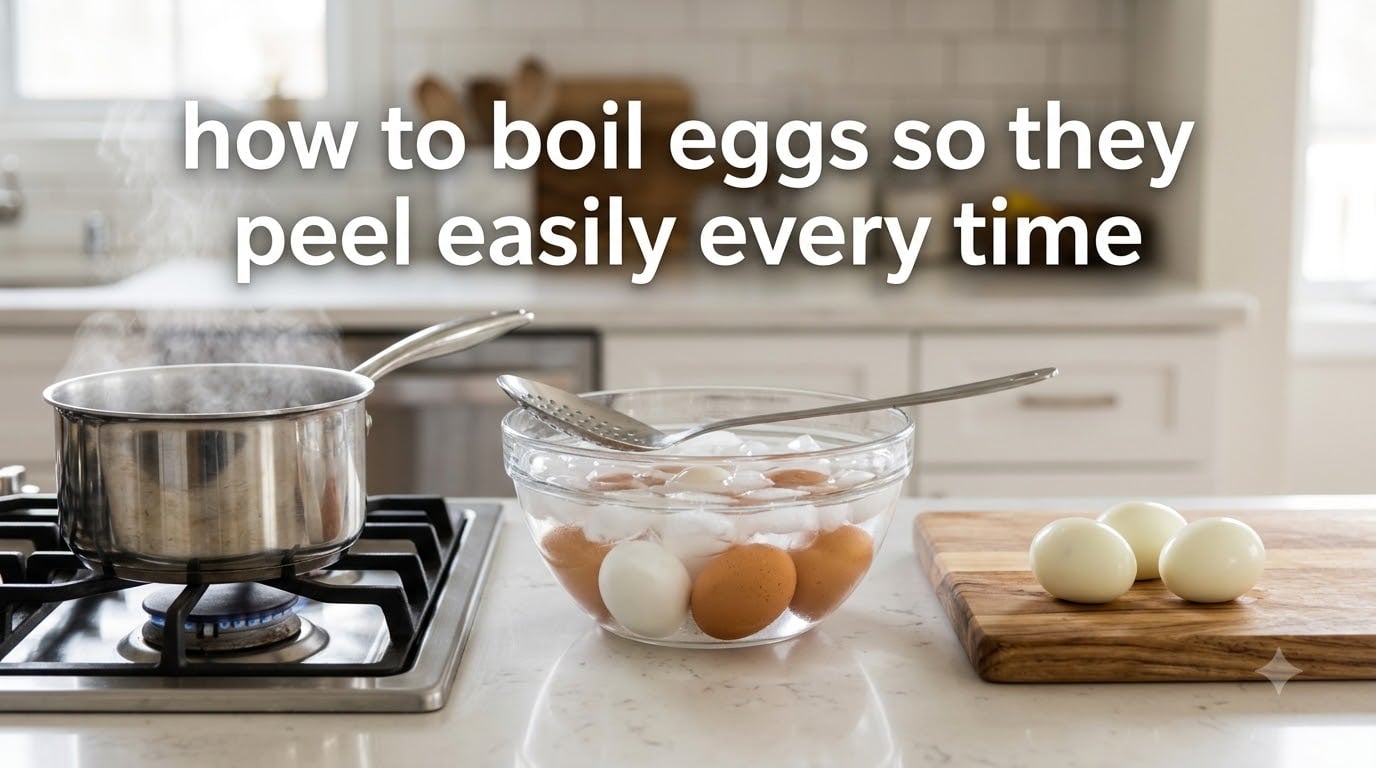
I’ll be honest with you. For years, I ruined perfectly good eggs because the shells would not cooperate. I’d stand at the sink picking shell fragments off a torn-up white for what felt like an eternity, swearing off deviled eggs forever. Then I learned how to boil eggs so they peel easily every time, and I haven’t fought a stubborn shell since.
If you’ve ever chipped away at a boiled egg only to lose half the white with the shell, this guide is for you. I’m sharing the exact hot-start method I use in my home kitchen, plus the science behind why it works, the famous 5-5-5 trick, and the one mistake I see almost everyone making.
Table of Contents
Why Hard Boiled Egg Shells Stick in the First Place
Before we get to the fix, it helps to know why eggs misbehave. A raw egg has two thin membranes sandwiched between the shell and the white (the albumen). When the egg cooks, those proteins coagulate and the inner membrane tends to glue itself to the albumen, which is why fresh-from-the-grocery-store eggs are notoriously painful to peel.
Eggs that are a few days old develop a tiny air pocket at the wider end. That pocket pushes a small gap between the membrane and the shell, giving you a place to start. This is why older eggs almost always peel better than farm-fresh ones. The pH of the egg white also rises as the egg ages, which makes the membrane less sticky. So freshness, ironically, works against you here.
Cooking temperature matters too. Drop cold eggs into already-boiling water and the albumen firms up quickly without bonding as tightly to the membrane. That’s the foundation of the hot-start method we’re about to use.
How to Boil Eggs So They Peel Easily Every Time: Step-by-Step Method
To get easy peel hard boiled eggs every single time, bring a pot of water to a full rolling boil, lower cold eggs in carefully with a spoon, cook for 11 minutes, then transfer to an ice bath for 10 minutes. That’s the whole method in one line. Here’s the detailed walkthrough.
Step 1: Set up your station. Fill a large pot with about an inch of water above the eggs and bring it to a full rolling boil. While that heats, fill a bowl with cold water and plenty of ice. Have a slotted spoon ready. This setup matters because once the eggs are cooked, you want zero delay before the ice bath.
Step 2: Use cold eggs straight from the fridge. Don’t let them warm up first. Cold eggs into boiling water create the thermal shock that helps separate the membrane from the albumen. If you start with room-temp eggs, you’ll get more sticking.
Step 3: Lower the eggs gently. Use your slotted spoon to lower each egg into the rolling boil one at a time. Dropping them in risks cracking the shell, which lets water seep in and creates that rubbery white texture nobody wants.
Step 4: Boil for exactly 11 minutes. Set a timer the moment the last egg goes in. For large eggs straight from the fridge, 11 minutes gives you a fully set yolk with no green ring. Medium eggs need 10 minutes; extra-large need 12. Anything past that and you’ll overcook the white, which makes it chewy and harder to peel cleanly.
Step 5: Move straight to the ice bath. Pull the eggs out one by one and drop them into the ice water. Don’t drain the hot water first. Don’t let them sit on the counter “for a minute.” That minute is the difference between a clean peel and a disaster. Leave them in the ice bath for a full 10 minutes.
Step 6: Peel right away or refrigerate. Peel within an hour for best results, or store unpeeled eggs in the fridge for up to 5 days. Never freeze them in the shell.
The 5-5-5 Method Explained
The 5-5-5 method is one of those viral kitchen tricks that actually works. It stands for 5 minutes of boiling, 5 minutes of resting, and 5 minutes in an ice bath. I tested it side-by-side with my standard 11-minute method, and both produce excellent results, but the 5-5-5 is great if you’re new to timing.
Here’s how it goes. Bring water to a boil, gently lower cold eggs in, and boil for 5 minutes. Then turn off the heat, cover the pot with a lid, and let the eggs sit in the hot water for 5 more minutes. Move them to an ice bath for a final 5 minutes. The total cook time is gentler than a full 11-minute boil, which means a more tender white and almost zero green ring around the yolk.
The trade-off? The 5-5-5 method gives you a slightly softer yolk that’s not quite as firm as a fully boiled egg. For deviled eggs and egg salad, that’s perfect. For sliced egg on a sandwich where you want clean, defined layers, stick with the 11-minute boil.
Why the Ice Bath Is Non-Negotiable (The Thermal Shock Secret)
The ice bath does two things, and skipping it ruins everything. First, it stops the cooking immediately. Eggs carry residual heat that continues solidifying the yolk long after you pull them from the stove. Without an ice bath, you get overcooked yolks with that dreaded greenish-gray ring around the outside.
Second, and more importantly for peeling, the rapid temperature change creates steam between the shell and the membrane. That steam acts like a little air cushion, gently separating the layers. This is what people mean by thermal shock, and it’s the secret weapon behind easy peel hard boiled eggs.
When I first started boiling eggs, I used to just run them under cold tap water for a minute. Big mistake. Tap water isn’t cold enough and the stream isn’t steady enough to do the job. A real ice bath for a full 10 minutes is what makes the shell practically fall off.
The Foolproof Peeling Technique
Even with a perfect cook, your peeling technique matters. Here’s what works every time for me. Take one egg out of the ice bath, give it a gentle tap on the counter to crack the shell all over, then roll it back and forth under light pressure with the palm of your hand. The shell should look like a cracked mosaic with the membrane still intact.
Start peeling at the wider end of the egg, where that air pocket lives. Slip your thumb under the membrane and lift. The shell and membrane should peel off together in large pieces. If you meet resistance, peel the egg under cold running water. The water slips under the membrane and helps it release.
For really stubborn eggs, peel them while submerged in a bowl of cold water. It feels weird at first, but it works. The water pressure between your fingers pushes the shell away from the white.
Does Adding Baking Soda Really Help With Peeling?
Yes, baking soda can help, with a caveat. Adding about half a teaspoon of baking soda per quart of water raises the pH of the cooking water, which in turn raises the pH of the egg white. A higher pH makes the membrane less likely to bond to the albumen, so the shell peels off more cleanly.
The downside is that baking soda can give the eggs a slight sulfur smell and a softer, almost chalky texture. If you’re making deviled eggs or potato salad, you might not love the flavor. For meal-prep eggs you’ll season heavily anyway, it’s a fine trick. Personally, I prefer the ice bath method because it gives the same easy peel without changing the taste.
What about vinegar? People add vinegar thinking it will soften the shell. It doesn’t really. Vinegar helps if an egg cracks during cooking, because the egg white solidifies faster in acidic water and seals the crack. But for peeling, skip the vinegar.
Common Mistakes That Make Eggs Hard to Peel
I’ve made every one of these mistakes at some point, so learn from me. Number one is using ultra-fresh eggs. If you know you’ll be boiling eggs, buy them at least a week ahead. Two is skipping the ice bath. Three is overcooking. Anything past 12 minutes for large eggs starts producing that rubbery, hard-to-peel texture.
Another common mistake is boiling the water too gently. You want a true rolling boil, not a lazy simmer. The vigorous bubbling action helps separate the membrane from the egg white as the eggs cook. A fourth mistake is skipping the cold water at the start. Some recipes tell you to bring cold eggs and cold water to a boil together. That works, but it’s less consistent and harder to time for that perfectly creamy, fully set yolk.
Finally, don’t peel eggs before they’ve fully cooled. A warm egg white is more likely to tear and stick to the shell. Wait at least 10 minutes in the ice bath, longer if you’ve boiled a big batch.
Steaming vs Boiling: Which Method Works Better?
Steaming is a popular alternative, especially for big batches like Easter. To steam eggs, bring an inch of water to a boil in a pot with a steamer basket, place cold eggs in the basket, cover, and steam for 12 minutes. Then transfer to an ice bath for 10 minutes.
In my experience, steaming produces slightly easier-to-peel eggs because the heat is more even and gentler than a rolling boil. The shells practically slide off, and the yolks come out creamier. The downside is timing. It takes longer and the window between perfect and overcooked is narrower.
For everyday meal prep, I still default to boiling because it’s faster and more forgiving. For holiday projects when I’m dyeing or peeling dozens of eggs, steaming wins every time.
Frequently Asked Questions
How long to boil eggs for the perfect peel?
Boil large eggs straight from the fridge for exactly 11 minutes in a rolling boil, then transfer immediately to an ice bath for 10 minutes. Medium eggs need 10 minutes and extra-large need 12. The ice bath is what makes the shells peel off cleanly.
What is the 5 5 5 rule for boiled eggs?
The 5-5-5 method means boiling eggs for 5 minutes, letting them rest in the hot water off the heat for 5 minutes, then transferring them to an ice bath for 5 minutes. It produces a softer, creamier yolk with no green ring and shells that peel easily.
How do I stop egg shells from sticking to boiled eggs?
Use the hot-start method with cold eggs dropped into a rolling boil, cook for 11 minutes, then shock the eggs in an ice bath for 10 minutes. The thermal shock creates steam between the shell and the membrane, which separates the layers and prevents sticking.
Does adding vinegar or baking soda to the water make eggs easier to peel?
Baking soda raises the pH of the egg white and can make peeling easier, but it can also add a slightly sulfurous taste and chalky texture. Vinegar does not improve peeling, but it can help seal cracks if an egg breaks during cooking.
Are fresh eggs harder to peel than older eggs?
Yes, very fresh eggs are noticeably harder to peel. As eggs age, the pH of the white rises and a small air pocket forms at the wider end, both of which help separate the membrane from the shell. For the easiest peel, use eggs that are at least 5 to 7 days old.
Should I peel eggs immediately or wait?
Peel hard boiled eggs soon after the ice bath, ideally within an hour. Letting them sit unpeeled in the fridge is fine for up to 5 days, but never try to peel a fully cooled egg that has been in the fridge overnight without rewarming it slightly in hot water first.
The Foolproof Method Recap
That’s the full breakdown of how to boil eggs so they peel easily every time. Bring water to a rolling boil, lower in cold eggs, cook for 11 minutes, then ice bath for 10 minutes. Crack, roll, and peel under cold running water starting at the wider end. Skip the freshest eggs if you can, and don’t be afraid to try the 5-5-5 method for creamier yolks.
Once you’ve nailed the technique, you’ll never dread deviled eggs again. Try it this week and let me know how your shells turn out. A clean peel really does change everything.