
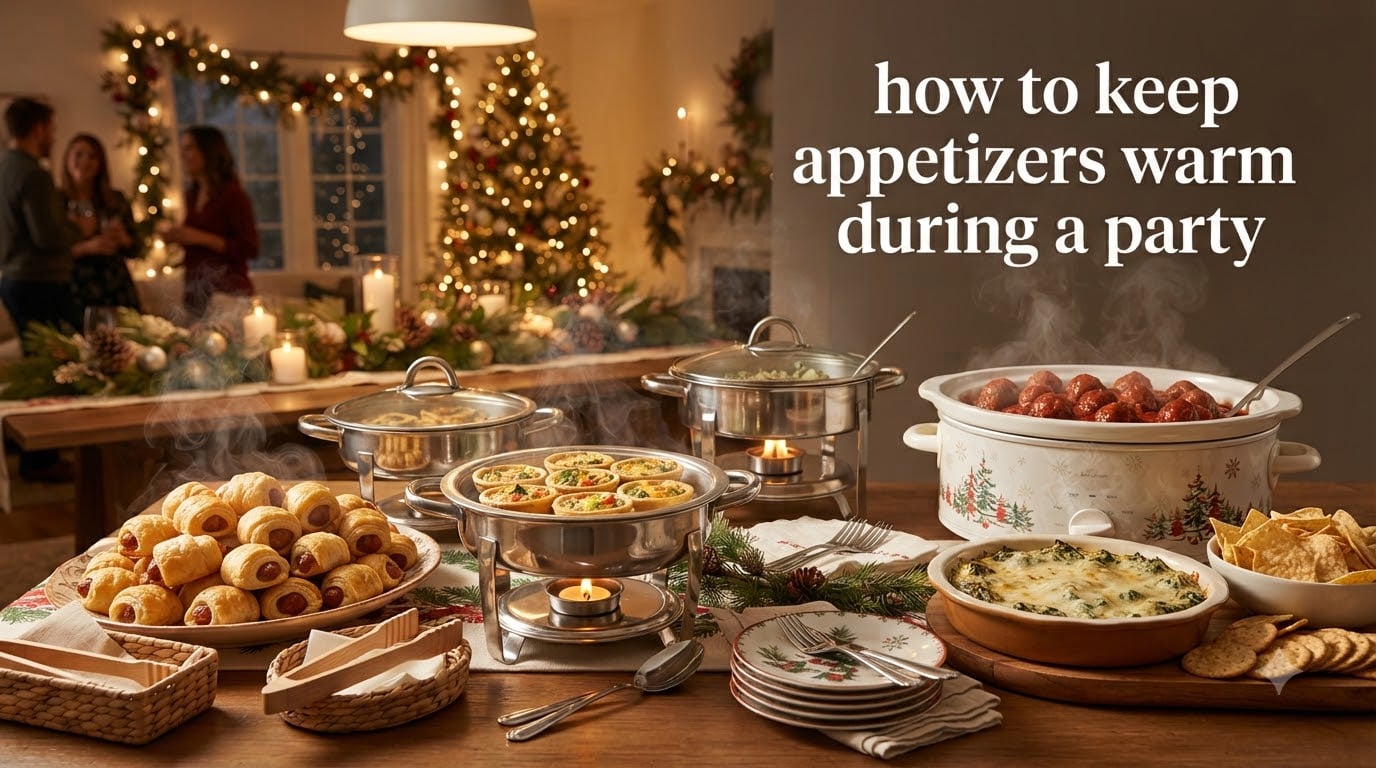
Hosting a party means juggling a dozen details at once, but few things ruin a spread faster than lukewarm meatballs, congealed spinach dip, or pastry-wrapped bites that have gone cold and soggy. The good news: learning how to keep appetizers warm during a party is less about fancy gear and more about matching the right method to the right food.
I have run holiday open houses, backyard cookouts, and catering shifts for friends, and I have tested almost every warming method out there. In this guide I will walk you through the seven approaches that actually hold temperature reliably, the cheapest DIY tricks when you need to improvise, and the food safety rules that decide when a buffet needs to be refreshed. Whether you are planning a sit-down dinner for eight or a cocktail party for fifty, the strategy stays the same: hold above 140°F, refresh the platter in waves, and pick the right tool for the food you are serving.
Table of Contents
Quick Answer: How to Keep Appetizers Warm at a Party
The three most reliable ways to keep appetizers warm during a party are a slow cooker on the “warm” setting for dips and saucy bites, an electric warming tray for finger foods arranged on platters, and a chafing dish with Sterno fuel for larger buffets or outdoor events. Combine one active heat source with a holding method (foil-covered sheet pan in a 170°F oven, or an insulated serving bowl) and refresh the platter every 30 to 60 minutes so every bite lands hot.
For most hosts, a layered approach works best: keep backups in the oven at 170 to 200°F, and pull smaller trays to the front at a time. This “wave” strategy is what professional caterers do, and it is the difference between a buffet that looks and tastes fresh versus one where the first guests get hot food and everyone else gets a cold tray.
Why Appetizers Go Cold (And Why It Matters)
Appetizers cool faster than main courses for three simple reasons: they are small, they are usually plated on wide open surfaces, and guests tend to graze rather than eat them all at once. A platter of stuffed mushrooms loses heat roughly three times faster than a covered casserole in the oven, because each individual piece exposes its own surface area to the air. Sauces and dips cool even faster because they have high water content and a large surface-to-volume ratio.
Cold appetizers are not just unappetizing; they can be unsafe. The FDA calls the range between 40°F and 140°F the “danger zone,” because bacteria like Staphylococcus aureus and Bacillus cereus double in number every 20 minutes in that range. A cheese-filled pastry that sat out for 90 minutes is no longer just sad, it is a food safety concern.
Beyond safety, texture is the real reason guests lose interest. Cheese goes rubbery when it cools, pastry loses its flake, and meat glazes seize up and turn tacky. Keeping food warm protects the snap of a fresh spring roll, the creaminess of a warm dip, and the gloss on a teriyaki-glazed meatball. That is why experienced hosts treat temperature as seriously as seasoning.
Top 7 Methods to Keep Appetizers Warm During a Party
These are the seven approaches I trust, ordered from most beginner-friendly to most professional. I have included the hold temperature, the best appetizer type for each, and the rough cost tier so you can pick the right one for your event.
1. Slow Cooker or Instant Pot
A 1.5 to 4 quart slow cooker on the “warm” setting holds food at about 165°F for hours, which makes it the single easiest tool for keeping appetizers warm during a party. It is ideal for dips (spinach artichoke, queso, buffalo chicken), saucy meatballs, lil’ smokies, and any bite that lives in sauce. The “keep warm” function on an Instant Pot or multi-cooker works the same way and adds pressure-sealed moisture that prevents the dreaded “skin” forming on top of dips.
Use the smaller 1.5 or 2 quart size for one dip, the 3 to 4 quart for two dips or saucy bites. Give the cooker at least 30 to 60 minutes to come up to temperature on “warm” before you serve. Stir once mid-party to redistribute heat, especially in the corners where cooler spots tend to form.
2. Warming Tray or Electric Warming Plate
Electric warming trays are flat heated surfaces that sit under a serving platter, holding plated finger foods (mini quiches, pigs in a blanket, crostini, warmed tortillas) at 130 to 160°F depending on the model. They cost a bit more upfront than the cheapest options but they look elegant on a buffet and handle a dozen different foods at once, which is why you see them at every professional tasting event.
Preheat the tray for 10 to 15 minutes before plating. Use ceramic or stoneware platters; they hold heat better than thin metal trays. Don’t put raw vegetables or anything that needs to stay crisp under the tray; the gentle heat is fine for cooked bites but it will wilt garnishes. A silicone mat between the tray and platter helps when you want indirect heat.
3. Chafing Dishes with Sterno
Chafing dishes (also called chafers) are the buffet-line standard. They use a Sterno or “Lava Gel” fuel can under a water pan, with the food pan sitting above the steam bath. The cans burn about 45 minutes to 2 hours each, so plan on one to two cans per hour of party. Sterno is by far the most popular no-electricity option for keeping appetizers warm outside, and the fuel is widely available at grocery stores and restaurant supply shops.
Use chafing dishes for anything that benefits from indirect steam heat: mini quiches, dumplings, potstickers, seafood, vegetables, and saucy dishes. Match the chafer size to the food; a full-size chafer is overkill for a tray of jalapeño poppers. Always keep a backup fuel can on hand because, as Reddit hosts consistently point out, fuel running out mid-party with no replacement on site is a classic catering disaster.
4. Low Oven Holding (170 to 200°F)
Your oven is the cheapest “warming drawer” you already own. Set it to its lowest setting (most ovens bottom out between 170 and 200°F) and use it as a holding cabinet. Cover baking sheets or oven-safe platters with foil to keep moisture in and arrange food in a single layer so heat reaches every piece. This method is especially strong for tray-style foods: puff pastry bites, mini tartlets, sheet-pan nachos, and roasted vegetable skewers.
Pull a fresh tray to the buffet every 20 to 30 minutes and let guests graze from smaller portions rather than a single massive platter. This is the “wave refresh” trick that high-end caterers use, because it keeps every bite tasting just-baked. If your oven does not go below 200°F, crack the door open an inch and prop it with a wooden spoon to drop the temperature.
5. Insulated and Thermal Serveware
Thermal bowls, double-walled serving dishes, and preheated stoneware hold food at serving temperature for 30 to 60 minutes with no electricity. They are the best choice when you need to set down a hot dip and walk away to mingle, or when you are bringing something to a potluck and want it to arrive hot. Insulated coffee carafes work the same way for any liquid dish or sauce.
The trick is to preheat the vessel: fill it with boiling water for 5 to 10 minutes, dump the water, then add hot food. Reddit hosts consistently swear by this preheat step; cold stoneware sucks heat out of your food in the first five minutes and undoes all your careful cooking. Many catering-grade insulated servers keep food above 140°F for over 2 hours, but you should still check with a thermometer if the event runs long.
6. Fondue Pot or Small Saucepan on Low
A fondue pot, a small ceramic slow-server, or even a saucepan on the lowest burner setting is perfect for keeping cheese dips, chocolate fountains, and hot sauces at serving temperature. Ceramic fondue pots hold 145 to 160°F on a tea light, while saucepans on low can hold at a rolling simmer for hours. Use them at the front of the buffet as the visual centerpiece and have a ladle or small tongs nearby.
Watch for scorching on the bottom of metal pots, especially with cheese. A double boiler (a heatproof bowl set over a pot of simmering water) is the gentlest option for cheese and chocolate because indirect heat is far less likely to break the sauce. If the fondue pot runs dry, remove it from heat immediately; burnt cheese or chocolate smells will reach your guests faster than you think.
7. Rice Cooker or Thermal Cooker (Hay Box)
A rice cooker’s “keep warm” function holds at about 140 to 150°F, which is right at the FDA safe-holding threshold. It works beautifully for saucy dishes, soups you are serving as shooters, and any bite that can be served in a cup. Thermal cookers (also called hay boxes) are non-electric insulated containers that finish cooking food using retained heat and then keep it warm for several hours; they are great for keeping stews, chili, or congee at temperature for an outdoor tailgate.
If you already own a rice cooker for weeknight dinners, it doubles as a buffet warmer with zero extra equipment. Use the cup-size inserts (small ceramic ramekins set inside the cooker) to keep individual portions separate and easy to refill.
Best Method by Appetizer Type
Matching the warming method to the food is where most hosts go wrong. The same slow cooker that rescues a creamy dip will turn puff pastry into a soggy mess. Use this quick guide to pick the right tool for what you are actually serving.
Dips and saucy bites (spinach artichoke, queso, cocktail meatballs, lil’ smokies): Slow cooker on “warm,” fondue pot, or chafing dish with Sterno. The moisture in these foods holds heat naturally, and the gentle uniform temperature prevents the skin that forms on top of a dip left out uncovered.
Pastry-wrapped bites (pigs in a blanket, mini quiches, jalapeño poppers, spanakopita): Low oven at 170°F covered lightly with foil, warming tray, or chafing dish. Avoid slow cookers for these because the steam will destroy the flake. Refresh from the oven every 20 to 30 minutes for the crispiest texture.
Cheese-based appetizers (cheese boards with warm brie, baked brie en croûte, cheese-stuffed mushrooms): Oven at 170 to 200°F is best for baked items; slow cooker keep-warm setting works for cheese fondue. Cheese is the food that suffers most from cooling, both in texture (it goes tough and rubbery) and in flavor (the fats congeal), so it deserves the most reliable heat source you have.
Meat-based bites (buffalo wings, teriyaki chicken skewers, crab cakes, mini sliders): Warming tray or chafing dish with Sterno. Direct steam from a slow cooker is too much for breaded items, but a warming tray keeps the exterior crisp. For wings specifically, hold in a 170°F oven on a wire rack so air circulates under each piece.
Vegetable crudités with warm dips: Keep the veggies cold (in ice or refrigerated until serving) and warm only the dip. Room-temperature vegetables with hot dip is the classic combination because the contrast in temperatures actually makes both taste better.
Transporting Appetizers and Keeping Them Warm Outside
Transporting hot appetizers is one of the trickiest parts of party hosting because heat loss accelerates the moment food leaves the stove. The standard pro move is to preheat a cooler or insulated bag with boiling water for 10 minutes, dump the water, line it with a folded kitchen towel, load the hot food wrapped in foil, and tuck another towel on top. This setup holds food above 140°F for 45 to 90 minutes depending on the cooler quality.
For outdoor parties with no electricity, the three best options are Sterno-fueled chafing dishes (the same cans used in buffets), insulated coolers packed with hot bricks wrapped in foil (a classic catering trick that costs almost nothing), and warming trays that run on a small propane tank or a long outdoor extension cord. Hot bricks in a cooler are the cheapest no-electricity method there is, and they are surprisingly reliable for up to 2 hours.
For tented or covered outdoor setups, remember that wind will strip heat faster than still air. Anchor chafing dishes away from breezy table edges and use the chafer lids whenever the buffet is unattended for more than a few minutes. If you have access to a grill at the party site, you can also use it as a closed hot box: turn off the burners, leave the lid closed, and place foil-wrapped trays inside to hold at residual heat.
Food Safety: The 140°F Rule and the 2-Hour Rule
The single most important number in this entire article is 140°F. The FDA’s food code specifies that hot food must be held at 140°F or above to stay out of the bacterial danger zone (40°F to 140°F). Anything that drops below 140°F for more than 2 hours total at room temperature is considered unsafe and should be discarded, not saved for later.
In practical terms, that means three habits will keep every guest safe: preheat every warming vessel (bowls, slow cookers, warming trays) before adding food; use a probe thermometer at the start of the party to confirm your method is actually hitting 140°F; and refresh the platter every 30 to 60 minutes so newly plated food stays in the safe range even if the older pieces have started cooling. These habits cost nothing extra and prevent the most common causes of party-related foodborne illness.
Cheapest Ways to Keep Food Warm (Budget DIY)
If you would rather not buy new equipment, these are the methods that cost almost nothing and use supplies you probably already have. The classic “hot bricks in a cooler” trick is what I lean on for last-minute potlucks and outdoor cookouts when I do not have time to set up a warming station.
Hot bricks in a cooler: Wrap two to three bricks in foil, bake at 300°F for 30 minutes, line the bottom of a cooler with thick towels, place the bricks in, set a foil-covered tray of food on top, and tuck another towel over the food. Holds above 140°F for 1 to 2 hours. Cost: a few dollars for bricks if you do not already have them.
Hot water bottles under a tray: Fill rubber hot water bottles with boiling water, wrap them in towels, and place them under a serving platter on a heat-safe surface. Provides gentle radiant heat for about an hour. Cost: the price of a couple of hot water bottles, which most hosts already own.
Foil + heavy towel wrap: Wrap hot food in several layers of foil, then a thick folded towel, then place inside a paper grocery bag. Holds heat for 30 to 45 minutes; perfect for short car rides to a friend’s house.
Top of a toaster oven or slow cooker lid: The residual heat on top of an idle toaster oven or the lid of a slow cooker can keep small plates warm for 15 to 30 minutes. It is a “good enough” trick when you have a small handful of bites and no other setup.
Frequently Asked Questions
How long can you safely keep appetizers warm at a party?
Hot appetizers should be held at 140°F or above and refreshed every 30 to 60 minutes. The FDA 2-hour rule means any hot food that drops below 140°F for more than 2 hours total should be discarded. In practice, keep active heat going throughout the party and rotate smaller trays to the front so every bite lands hot.
What is the cheapest way to keep food warm for a party?
The cheapest method that actually works is hot bricks wrapped in foil inside a cooler lined with thick towels, which holds food above 140°F for 1 to 2 hours. Other low-cost options include preheated insulated bowls, hot water bottles under serving trays, and a low oven set to 170 to 200°F used as a holding cabinet.
What do caterers use to keep their food warm?
Professional caterers rely on chafing dishes with Sterno fuel cans, full-size warming trays, heat lamps for buffets, hotel pans in heated holding cabinets, and insulated transport carriers. They also use a wave-refresh strategy, keeping backup trays in a 170 to 200°F oven and rotating smaller portions to the front so guests always eat just-cooked food.
How do you keep appetizers warm outside without electricity?
Outside without electricity, the best options are chafing dishes with Sterno fuel cans, hot bricks in an insulated cooler, a covered grill used as a hot box with the burners off, or propane-powered warming trays. Sterno cans burn about 45 minutes to 2 hours each, so plan on one to two cans per hour of party and always keep a backup can on hand.
How do you keep dip warm at a party?
The best way to keep dip warm at a party is a slow cooker on the ‘warm’ setting or a fondue pot with a tea light underneath. Both hold dips at 145 to 165°F without scorching. Stir every 30 minutes to redistribute heat and prevent a skin from forming on top. For larger gatherings, a chafing dish with Sterno fuel works just as well.
How do you keep food warm for 2 hours during transport?
Preheat an insulated cooler or thermal bag with boiling water for 10 minutes, dump the water, line it with a thick folded towel, wrap hot food in foil, load it in, and tuck another towel on top. This method holds food above 140°F for 45 to 90 minutes. For a full 2 hours, use hot bricks wrapped in foil placed under and around the food tray inside the cooler.
Final Thoughts
Learning how to keep appetizers warm during a party comes down to three habits: pick a warming method that matches the food you are serving, hold the temperature above 140°F at all times, and refresh the platter in waves rather than trusting one massive tray to last. Whether you go high-end with chafing dishes and warming trays or budget with hot bricks and a low oven, the goal is the same: every guest who picks up a bite should get one that tastes like it just came out of the kitchen.
Start with what you already own. Most hosts can run a full party on a 170°F oven, a preheated insulated bowl, and one or two chafing dishes or slow cookers. Build out from there as your hosting grows, and you will never again serve cold spinach dip to a guest who just arrived hungry.