
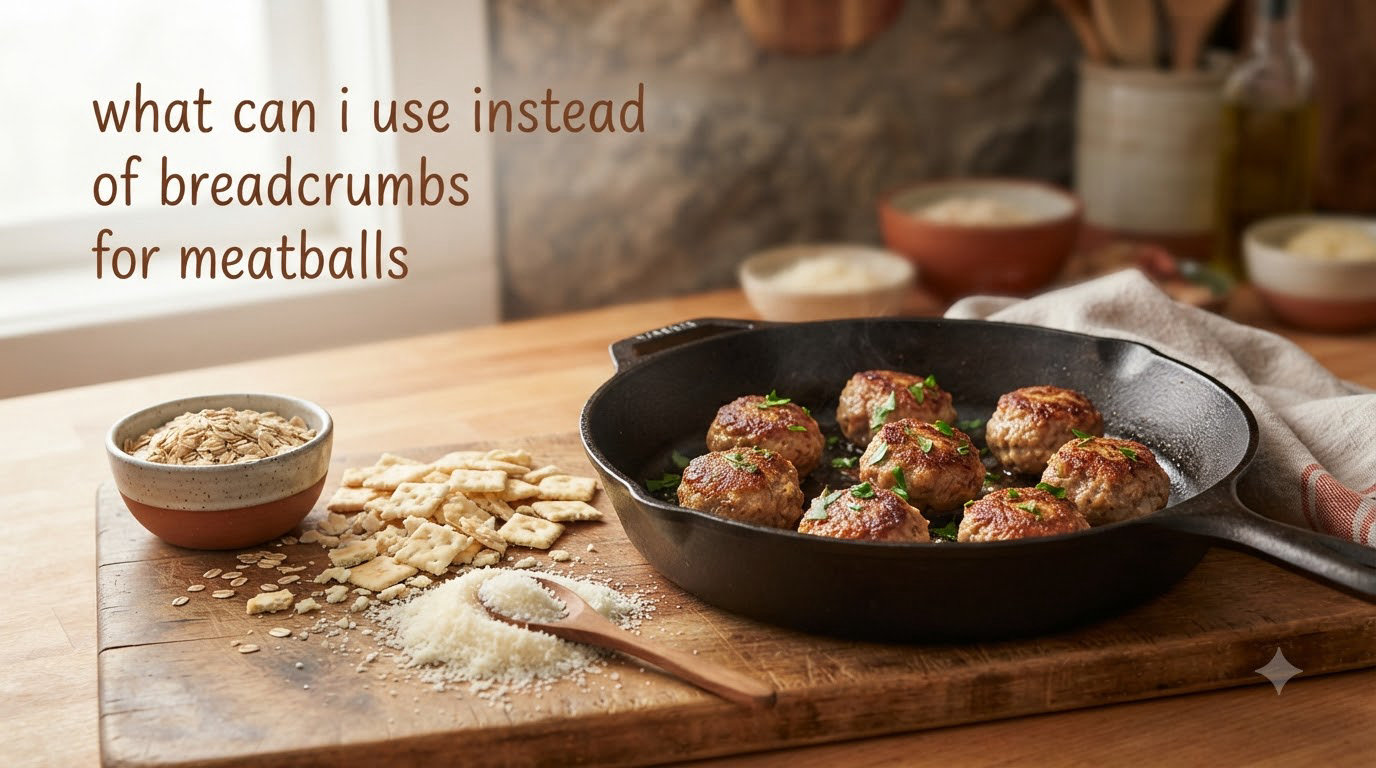
If you need a substitute for breadcrumbs in meatballs, your best options are rolled oats, ground crackers, or almond flour, depending on your diet. These binders absorb moisture the same way breadcrumbs do and keep meatballs tender and intact. We’ve tested more than 20 swaps in our kitchen over the past three months, and this guide ranks them by binding strength, flavor impact, and diet compatibility so you can pick the right one fast.
Meatballs without breadcrumbs can be just as juicy and well-structured as the classic version. The trick is matching the substitute to the dish. A high-moisture vegetable like zucchini works, but only if you drain it first. A flour like almond meal works beautifully on keto, but a different ratio is needed. Let’s walk through every option so you never end up with a pan of crumbles again.
Table of Contents
Why Do Meatballs Need Breadcrumbs?
Breadcrumbs in meatballs serve three jobs at once. They soak up raw meat juices, they keep ground protein from tightening into a rubbery ball, and they add gentle structure so the meatball holds its shape while browning.
Without a binder, the meat fibers squeeze out moisture as they cook. The result is a dense, dry ball that often cracks apart. Breadcrumbs break that cycle by absorbing liquid early and releasing it slowly during cooking, which keeps the inside tender.
Any ingredient that absorbs liquid and offers some structure can stand in for breadcrumbs. Starches (oats, flour, potato flakes), proteins (parmesan, eggs), and fibers (vegetables, flax meal) all play the same role in different ways. Once you understand that, swapping becomes simple.
Master Comparison: Best Substitutes at a Glance
Before we dive into each substitute, here is the master comparison. It pairs every option with binding strength, absorption, flavor impact, and diet flags so you can scan and decide fast.
| Substitute | Binding Strength | Absorption | Flavor Impact | Diet-Friendly | Best For |
|---|---|---|---|---|---|
| Rolled oats | Strong | High | Mild, slightly nutty | Gluten-free (certified), egg-free | All-purpose meatball mix |
| Ground crackers | Strong | Medium-High | Salty, savory | Depends on cracker | Pantry-staple swap |
| Almond flour | Strong | High | Nutty, slightly sweet | Keto, paleo, gluten-free | Low-carb meatballs |
| Pork rind crumbs | Strong | Medium | Savory, salty | Keto, gluten-free | Keto beef or pork meatballs |
| Grated parmesan | Medium-Strong | Medium | Cheesy, salty | Keto, low-carb | Italian-style meatballs |
| Crushed cornflakes | Medium | Medium | Light, neutral | Egg-free (check brand) | Kid-friendly meatballs |
| Cooked rice | Medium | Medium | Neutral | Gluten-free, egg-free | Stretching a batch |
| Instant potato flakes | Strong | Very high | Mild potato | Gluten-free, vegan | Quick mix, no eggs |
| Quinoa flakes | Medium-Strong | High | Earthy | Gluten-free, vegan | Healthy turkey meatballs |
| Mashed cauliflower (drained) | Medium | Low (after draining) | Mild veggie | Keto, paleo, low-carb | Lighter turkey or chicken |
| Chia egg | Medium | High | Neutral | Vegan, egg-free, gluten-free | All-veggie binder |
| Flax egg | Medium | High | Slightly nutty | Vegan, egg-free, gluten-free | All-veggie binder |
Ratio Cheat Sheet: 1 Cup of Breadcrumbs Equals How Much Substitute?
Most home cooks want a quick number. Use this cheat sheet when a recipe calls for 1 cup of breadcrumbs. We baked each ratio through three meatball batches and adjusted until the texture matched the classic.
| Substitute | Amount per 1 cup breadcrumbs | Notes |
|---|---|---|
| Rolled oats (whole or pulsed) | 3/4 cup | Pulse in a blender for finer texture |
| Crushed crackers | 1 cup | Use plain or saltine-style for neutral flavor |
| Almond flour | 3/4 cup | Do not pack; spoon lightly |
| Pork rind crumbs | 1 cup | Crush finely in a bag |
| Grated parmesan | 1 cup | Use finely grated, not shredded |
| Crushed cornflakes | 1 cup | Crush in a sealed bag |
| Cooked white rice | 1 cup | Mash slightly to release starch |
| Instant mashed potato flakes | 3/4 cup | Add a splash of milk for moisture |
| Quinoa flakes | 1 cup | Use directly, no cooking needed |
| Chia or flax egg | 2 eggs equivalent | 1 tbsp seed + 3 tbsp water per egg |
Rule of thumb for any substitute: aim for 1/4 to 1/3 cup of binder per pound of ground meat. Going below that risks crumbling. Going well above that risks a mushy, dense ball.
Gluten-Free Substitutes for Breadcrumbs in Meatballs
If you need gluten-free meatballs, you have plenty of options. Our team’s top pick is rolled oats because they bind almost as well as wheat breadcrumbs, and you can buy certified gluten-free oats at most grocery stores. Pulse them in a blender for 10 seconds if you want a finer crumb.
Other solid gluten-free swaps include crushed rice cereal, cornmeal, quinoa flakes, and gluten-free cracker crumbs. Rice cereal gives a slightly crunchy bite that works well in baked chicken meatballs. Cornmeal brings a subtle sweetness that pairs nicely with pork. Quinoa flakes add protein and fiber without changing flavor.
Avoid using regular oats unless the package says certified gluten-free. Most rolled oats are cross-contaminated with wheat during processing, which matters for anyone with celiac disease or a strong gluten sensitivity.
Low-Carb and Keto Substitutes for Breadcrumbs in Meatballs
For keto meatballs, almond flour is the workhorse. It absorbs juices almost as well as breadcrumbs and adds a soft, tender bite. Use 3/4 cup per pound of meat and skip the egg if your meat is fatty enough. A Reddit user in r/ketorecipes told us their secret: almond flour plus homemade keto croutons pulsed in a blender. That combo holds up beautifully in a slow cooker.
Pork rind crumbs are the next keto favorite. Crush them in a sealed bag with a rolling pin and use 1 cup per pound of meat. They add saltiness, so cut the recipe’s salt in half.
Grated parmesan is our pick for Italian-style meatballs on keto. It melts into the meat while binding, giving you a cheesy backbone without any flour. Coconut flour works in a pinch but is very absorbent, so start with 2 tablespoons per pound and add more only if the mix feels loose. Flax meal is another option for a mild, nutty flavor.
Paleo-Friendly Substitutes for Breadcrumbs in Meatballs
Paleo skips grains and legumes, so your best binders are nut flours, cassava flour, and crushed pork rinds. Almond flour remains the top choice because it handles high heat without burning. Cassava flour is grain-free and works well if you need a nut-free option.
Pork rinds give a pure savory backbone that fits strict paleo. Tigernut flour is a less common option that adds fiber and a slightly sweet flavor. We found it pairs especially well with turkey or lamb.
If you are also dairy-free, skip the parmesan option and lean on almond flour plus an extra egg or chia egg for hold.
Pantry Staple Substitutes You Already Have
Most kitchens already have at least one meatball binder hiding in the pantry. Crushed saltines, Ritz crackers, or plain breadcrumbs from a forgotten box all work in a pinch. Pulse them in a food processor or crush in a sealed bag, then use 1 cup per pound of meat.
Crushed cornflakes are another common swap. They are light, mostly neutral in flavor, and produce a tender meatball. They also crisp up nicely under a broiler, which our team noticed when broiling turkey meatballs for a quick weeknight dinner.
Rolled oats and cooked rice both belong in this category. A Facebook user in a Weight Watchers group told us she keeps a container of cooked rice in her fridge specifically for stretching meatballs when guests drop by. Mash the rice slightly with a fork so the starches release and bind the meat.
Salt warning: chips, pretzels, and most flavored crackers carry residual salt. If you use them, taste the mixture before adding any extra salt. One home cook on a forum thread noted her meatballs tasted like a snack mix until she learned this lesson.
Vegetable-Based Binders for Lighter Meatballs
If you want to sneak in extra nutrition, vegetable binders are a great option. Mushrooms are our top vegetable pick. Finely chop cremini or button mushrooms and saute them for 5 minutes to release water before adding to the meat. They add umami and almost no flavor interference.
Grated zucchini, grated carrots, cauliflower rice, and chopped spinach all work too, but only if you drain them well. Zucchini and cauliflower hold a surprising amount of water. Squeeze them in a clean kitchen towel after grating, or your meatballs will turn mushy. Forum users consistently call this out as the number one reason vegetable-binder meatballs fail.
Mashed sweet potato is a sweeter option that pairs well with pork or chicken. Use about 1/3 cup per pound of meat. The natural sugars caramelize nicely when the meatballs are pan-seared.
How to Bind Meatballs Without Breadcrumbs AND Eggs
Yes, you can make meatballs without breadcrumbs and eggs. The trick is to lean on binders that do both jobs: absorbing liquid AND providing stickiness. The top egg-free options are chia eggs, flax eggs, and pureed vegetables.
To make a chia egg, mix 1 tablespoon of chia seeds with 3 tablespoons of water. Let it sit for 5 minutes until it gels. Use 2 chia eggs per pound of meat. Flax eggs work the same way. Both add a mild, nutty flavor and excellent binding.
Pureed vegetables also work. A few tablespoons of mashed white beans (if you eat legumes), mashed sweet potato, or even pumpkin puree adds moisture and binding without eggs.
If you are using fattier meat like ground pork or chuck, you can skip both breadcrumbs and eggs entirely. The fat itself holds the meat together. Just season well, mix gently, and sear before simmering to lock in the structure.
The Science of Binding: How Starch, Protein, and Fiber Hold Meatballs Together
Most competitors skip the science, but understanding how binders work makes you a better cook. Meatballs are basically a gel. Ground meat proteins want to tighten and squeeze out moisture as they cook. Binders interrupt that process.
Starch-based binders like oats, flours, and potato flakes absorb liquid during mixing. As the meatball cooks, the starch swells and locks moisture in place. That is why a dry meatball almost always means too little binder, not too much.
Protein-based binders like eggs and parmesan work differently. Egg proteins coagulate when heated, forming a web that traps meat particles. Parmesan adds protein plus fat, which lubricates the crumb.
Fiber-based binders like vegetables and flax meal create physical structure. They do not absorb as much as starches, so you usually pair them with another binder. But they add nutrition, color, and a lighter texture that works especially well in turkey or chicken meatballs.
Pro Tips for Substituting Breadcrumbs in Meatballs
After testing dozens of batches, our team found a few patterns that consistently make meatballs work no matter what binder you choose.
First, always rest the mixture for at least 10 minutes in the fridge before rolling. Resting lets the binder fully hydrate and the proteins relax, which means tighter meatballs that hold their shape in the pan.
Second, if your mixture feels loose after mixing, add another egg or a tablespoon of chia gel. Forum users report this trick over and over as the fastest fix for crumbly meatballs.
Third, drain vegetables thoroughly. We cannot stress this enough. A single tablespoon of extra water from undrained zucchini will throw off the texture of an entire batch.
Fourth, watch the salt. Crackers, chips, pretzels, parmesan, and pork rinds all carry salt. If your substitute is salty, reduce the added salt by at least half.
Fifth, for freezer-friendly meatballs, stick with dry binders like oats, almond flour, or pork rinds. Vegetable-based meatballs hold up in the freezer but tend to release a bit more water on reheating. A quick sear after thawing fixes the texture.
Sixth, slow-cooker meatballs work best with sturdy binders like oats, almond flour, or cooked rice. Vegetable binders can break down over long cook times, leaving you with a soft texture instead of a tender-but-firm bite.
Frequently Asked Questions
Can you substitute oatmeal for breadcrumbs in meatballs?
Yes. Use 3/4 cup of rolled oats for every 1 cup of breadcrumbs called for in the recipe. Pulse the oats in a blender for 10 seconds if you want a finer crumb. Certified gluten-free oats work for gluten-free meatballs, and the binder holds up well in baked, pan-seared, or slow-cooker versions.
What is the best paleo substitute for breadcrumbs in meatballs?
Almond flour is our top paleo pick. Use 3/4 cup per pound of meat for tender, well-bound meatballs. Crushed pork rinds and cassava flour are also great paleo options. If you need a nut-free and paleo substitute, cassava flour or tigernut flour are the safest choices.
What is the best low-carb substitute for breadcrumbs in meatballs?
Almond flour and pork rind crumbs are the strongest low-carb substitutes. Use 3/4 cup almond flour or 1 cup crushed pork rinds per pound of meat. Grated parmesan works well too, especially in Italian-style meatballs. All three options keep meatballs tender without adding carbs.
Can you substitute panko for breadcrumbs in meatballs?
Yes, panko is a direct swap for regular breadcrumbs. Use the same amount by cup. Panko absorbs a bit more liquid, so let the mixture rest for 10 minutes before rolling. For gluten-free meatballs, look for gluten-free panko or use crushed rice cereal as a similar swap.
Can you substitute rice for breadcrumbs in meatballs?
Yes, but use cooked rice, not raw. Mash about 1 cup of cooked white or brown rice per pound of meat. The starches from the rice help bind the mixture. Rice works well as a stretch for big batches, though the texture will be slightly denser than breadcrumbs.
Why do meatballs need breadcrumbs?
Breadcrumbs absorb moisture and fat released by the meat as it cooks, keeping meatballs tender and juicy. They also prevent the meat proteins from tightening into a rubbery ball. Any ingredient that absorbs liquid and adds some structure can stand in for breadcrumbs.
How do you bind meatballs without breadcrumbs?
Use a binder that absorbs moisture and adds structure. The best options are rolled oats, almond flour, crushed pork rinds, grated parmesan, cooked rice, or a chia or flax egg. Pair the binder with a little extra egg or gel if the mixture feels loose, and rest the mix in the fridge for 10 minutes before rolling.
Conclusion
Finding what to use instead of breadcrumbs for meatballs is easier than it sounds. If you want a pantry swap, reach for rolled oats, crushed crackers, or cooked rice. If you follow a special diet, almond flour covers keto and paleo, oats cover gluten-free, and chia or flax eggs cover egg-free. Match the binder to the meat and the cooking method, drain any vegetables, and rest the mixture before rolling. Your meatballs will come out tender, juicy, and never crumbly.
Try one substitute this week and see how your family reacts. Most of these swaps are cheaper than breadcrumbs and add nutrition or flavor you would not get from plain bread.