
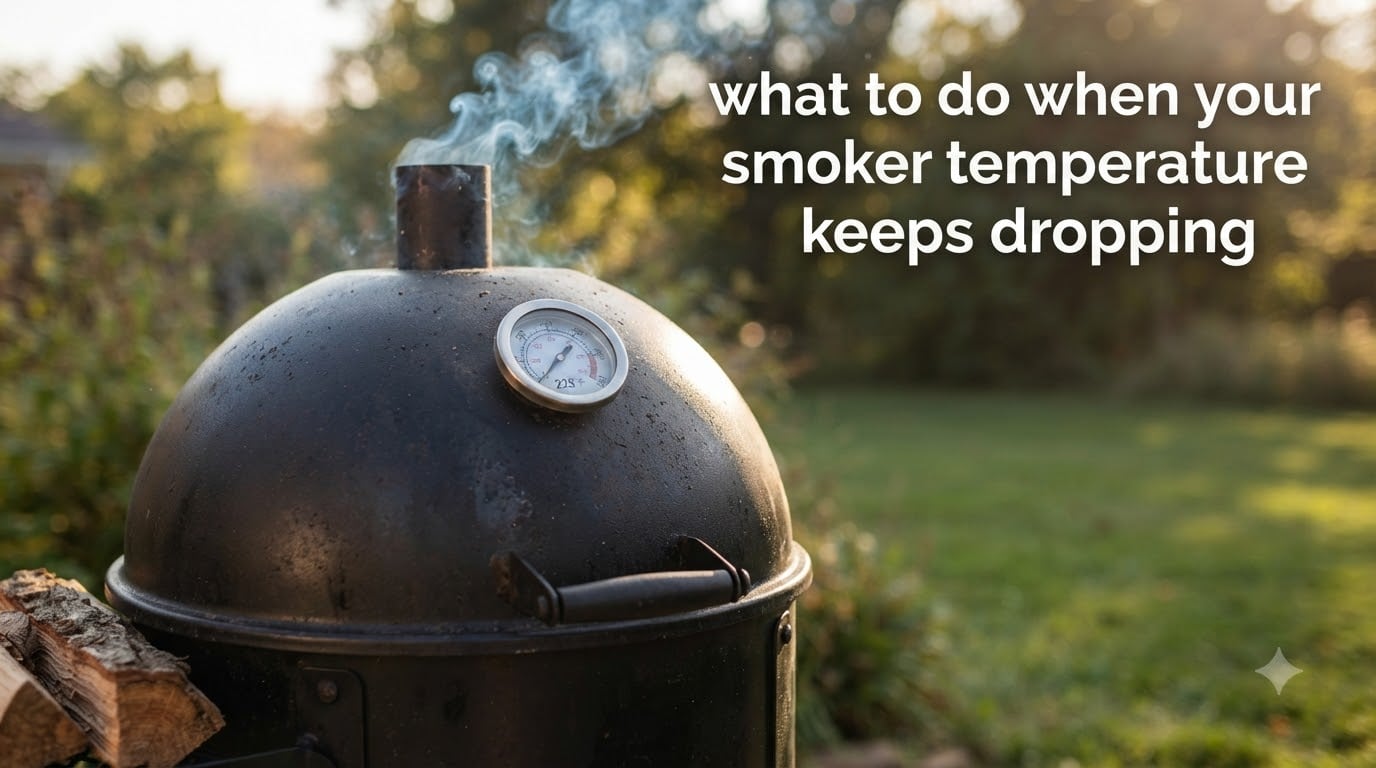
You set your smoker to 225°F, walk away for 20 minutes, and come back to find the temperature has tanked to 175°F. Sound familiar? If your smoker temperature keeps dropping at the worst possible moments, you’re dealing with one of the most common frustrations in outdoor cooking.
Temperature consistency is the foundation of great barbecue. When your smoker can’t hold heat, your brisket stalls for hours, your ribs dry out, and your cook times blow up. The good news? Most temperature problems have simple fixes once you understand what’s causing them.
I’ve spent years troubleshooting smokers of every type, and I’ve narrowed down the root causes to a handful of issues anyone can diagnose and fix. This guide walks you through each one, starting with the fastest checks first.
Table of Contents
Quick Troubleshooting Checklist
When your smoker temperature drops, work through these seven checks in order. Most problems resolve within the first four steps.
Step 1: Open your intake vent wider to increase oxygen flow to the fire. This is the number one cause of temperature drops.
Step 2: Check your exhaust vent and make sure it’s at least halfway open. A choked exhaust kills airflow and smothers the fire.
Step 3: Add more fuel. Charcoal burns down over time, and most temperature drops happen when the fuel bed gets too low.
Step 4: Inspect your door and lid seals for gaps. Even a small leak lets heat escape and cold air rush in.
Step 5: Verify your thermometer is accurate by testing it in boiling water. A miscalibrated gauge gives false readings that lead to bad adjustments.
Step 6: Shield your smoker from wind. A gusty day can drop your temperature 30°F or more in minutes.
Step 7: Check for creosote buildup on the inside walls and vents. Thick black residue restricts airflow and insulates the firebox from the cooking chamber.
Check and Manage Your Airflow
Airflow is the single most important factor in smoker temperature control. Without adequate oxygen, your fire dies down. With too much airflow, temperatures spike and fuel burns out fast.
Intake Vents
The intake vent feeds oxygen to your fire. When your smoker temperature keeps dropping, your intake vent is almost always partially to blame. Open it wider to raise the temperature, and close it gradually to bring it down.
Most smokers perform best with the intake vent open between one-quarter and three-quarters of the way. The exact position depends on your smoker’s design, the outside temperature, and how much fuel you’re running. Experiment during a test cook before you commit to a long brisket session.
Exhaust Vents
A common beginner mistake is closing the exhaust vent to trap heat. This actually backfires. When the exhaust is choked, smoke and hot gas stagnate inside the cooking chamber. The fire gets starved of fresh oxygen, and your temperature craters.
Keep your exhaust vent open at least halfway at all times. Many experienced pitmasters leave it fully open and control temperature entirely with the intake vent. This creates consistent draft and clean combustion that produces thin blue smoke instead of thick white billows.
Finding the Balance
The relationship between intake and exhaust is a balancing act. Open intake plus open exhaust equals high heat. Closed intake plus open exhaust equals a dying fire. Think of your smoker like a fireplace — it needs air flowing in from the bottom and out through the top to burn properly.
Make small adjustments and wait 10 to 15 minutes before making another change. Smokers respond slowly, and chasing the temperature by constantly fiddling with vents creates wild swings that are worse than a steady temperature that’s slightly off target.
Fuel Management and Charcoal Quality
Running out of fuel mid-cook is one of the most preventable causes of temperature drops. The quality of your fuel matters just as much as the quantity.
Choosing the Right Charcoal
Lump charcoal lights faster and burns hotter than briquettes, but it also burns less evenly. Briquettes provide more consistent heat over longer periods, which makes them better for low-and-slow smoking sessions.
If you use lump charcoal, sort through the bag before loading your smoker. Remove dust and tiny debris that smother the fire and restrict airflow. With briquettes, avoid brands that produce excessive ash, which chokes the fire over time.
The Minion Method
The Minion method is a fire management technique designed for long cooks. Fill your charcoal basket with unlit briquettes, then add a small number of lit coals on top. The fire spreads slowly through the unlit fuel, providing steady heat for 8 to 12 hours without major temperature fluctuations.
This method works exceptionally well in kamado-style smokers and bullet smokers like the Weber Smokey Mountain. It takes the guesswork out of fuel management and eliminates the temperature drops that happen when you add fresh charcoal to a running fire.
The Charcoal Snake Method
For kettle grills and similar smokers, arrange unlit briquettes in a C-shaped line around the perimeter of the charcoal grate. Place wood chunks on top at intervals, and light one end of the snake. The fire crawls along the line at a controlled pace, maintaining a consistent 225°F to 250°F for up to 10 hours.
Adding Wood Chunks
Wood chunks add smoke flavor but can also cause temperature dips if you add them wrong. Large cold chunks placed directly on the fire absorb heat before they start producing smoke. Pre-warm your wood chunks by keeping them on top of the smoker or near the firebox before adding them.
Temperature Monitoring and Thermometer Calibration
You can’t control what you can’t measure accurately. Built-in smoker thermometers are notoriously unreliable, and many people chase phantom temperature problems caused by bad readings.
The Problem with Built-In Gauges
Most factory-installed thermometers are positioned in the lid, where they read ambient air temperature rather than the temperature at grate level where your food sits. They’re also frequently off by 25°F to 50°F. If your gauge reads 225°F but the actual grate temperature is 190°F, you’ll spend hours wondering why your meat isn’t cooking.
Invest in a Dual-Probe Thermometer
A dual-probe digital thermometer gives you grate temperature and meat internal temperature simultaneously. Clip one probe at grate level near your food and insert the other into the thickest part of the meat. This eliminates guesswork and lets you make vent adjustments based on real data.
Forum members across smoking communities consistently recommend brands like ThermoWorks and FireBoard for reliable, accurate readings. The investment pays for itself in one perfectly cooked brisket.
Calibration Check
Test your thermometer in boiling water. At sea level, water boils at 212°F. If your thermometer reads higher or lower, note the offset and adjust your target temperature accordingly. At higher elevations, water boils at a lower temperature, so account for altitude when calibrating.
Smoker Maintenance and Seal Inspection
A well-maintained smoker holds temperature effortlessly. A neglected one fights you on every cook. Regular maintenance prevents most temperature control issues before they start.
Inspect Gasket Seals
Rubber or felt gaskets around the lid and door create an airtight seal that keeps heat inside the cooking chamber. Over time, these gaskets compress, crack, or fall off entirely. Even a small gap lets cold air leak in and hot air escape.
Run your hand around the seal while the smoker is running. You’ll feel drafts at leak points. Replacement gasket kits are inexpensive and take about 20 minutes to install. Forum members recommend checking gaskets first when troubleshooting temperature issues — they’re the cheapest and easiest fix.
The Biscuit Test
Place cheap biscuits or slices of white bread across your cooking grate and run the smoker at a set temperature. Check for uneven browning to identify hot spots and cold spots. This tells you where your smoker’s temperature is inconsistent so you can position food accordingly or address the underlying issue.
Clean Creosote Buildup
Creosote — the black, tar-like residue that accumulates on the inside walls and vents — acts as an insulator that disrupts heat transfer and restricts airflow. A thin layer of seasoning is normal and even desirable, but thick buildup needs to be scrubbed off.
Run a hot, clean burn after every few cooks. Open all vents wide and let the smoker reach 350°F to 400°F for 30 minutes. This burns off grease and light creosote deposits. For heavy buildup, use a stiff brush and warm soapy water after the clean burn.
Weather and Environmental Factors
Outdoor conditions have a massive impact on smoker performance. Cold, wind, and rain all pull heat away from your smoker faster than it can produce it.
Cold Weather Smoking
When the ambient temperature drops below 40°F, your smoker works overtime just to maintain cooking temperature. The metal walls radiate heat into the cold air, and the fire has to burn hotter to compensate.
Start with more fuel than usual and allow 45 minutes to an hour for the smoker to preheat fully. Extend your expected cook times by 20% to 30% in cold conditions. Many pitmasters use insulated smoker blankets specifically designed for cold weather cooking.
Wind Protection
Wind is the silent killer of smoker temperature. A steady breeze strips heat off the smoker’s exterior faster than the firebox can replace it. Gusts can drop the temperature 20°F to 30°F in under a minute.
Position your smoker in a sheltered spot, or build a simple wind barrier using plywood sheets or a portable windscreen. Never place your smoker inside a garage or enclosed space due to carbon monoxide hazards. A three-sided shelter works perfectly.
Rain and Humidity
Rain cools the smoker exterior and can cause temperature drops similar to cold weather. Use a canopy or popup tent to keep rain off while maintaining ventilation. High humidity affects combustion efficiency slightly, but the bigger issue is water getting into your fuel. Keep charcoal and wood stored in a dry location until you’re ready to use them.
Altitude Effects
At higher elevations, the air is thinner and contains less oxygen. This means fires burn less intensely, and you need to compensate by opening vents wider or using more fuel. Above 5,000 feet, expect to run your intake vent more open than you would at sea level.
Smoker-Specific Temperature Tips
Different smoker types have unique temperature control characteristics. Understanding your specific smoker’s quirks helps you troubleshoot faster.
Charcoal Smokers
Charcoal smokers give you the most direct control over temperature through vent adjustments and fuel management. The downside is that they require more hands-on attention. Plan to check vents and fuel every 30 to 45 minutes during a long cook.
The key with charcoal is patience. When you open the lid, you lose heat instantly. Every lid opening can cost you 10°F to 15°F and 5 to 10 minutes of recovery time. Resist the urge to peek.
Pellet Smokers
Pellet smokers use an auger-fed system that automatically maintains temperature. When a pellet smoker’s temperature drops, the problem is usually a jammed auger, empty hopper, or poor-quality pellets that produce excessive ash.
Store pellets in a sealed container to prevent moisture absorption. Wet pellets swell, clog the auger, and cause temperature crashes. Clean the firepot before every long cook to remove ash buildup that can snuff out the flame.
Electric Smokers
Electric smokers rely on heating elements rather than combustion. Temperature drops usually indicate a failing element, a tripped high-limit switch, or a faulty control board. Check that the element glows evenly and that the wiring connections are tight.
Cold weather affects electric smokers more than any other type. The heating element has a fixed power output, so extremely cold ambient temperatures can overwhelm its ability to maintain target heat. Use an insulating blanket in winter conditions.
Offset Smokers
Offset smokers are notorious for temperature challenges because the firebox sits to one side, creating natural hot and cold zones. Learning to manage an offset smoker takes practice and patience.
Build a smaller, hotter fire rather than a large smoldering one. A clean fire with good airflow produces better smoke flavor and more consistent temperatures. Use tuning plates or a water pan in the cooking chamber to even out temperature distribution from end to end.
Common Mistakes That Kill Your Temperature
Avoid these pitfalls and you’ll eliminate the majority of your temperature problems immediately.
Opening the Lid Too Often
Every time you open the lid, heat escapes and the temperature drops. The lid acts like a chimney when removed — hot air rushes out and cold air floods in. If you must check the meat, do it quickly. Have a plan: open, check, close. No lingering.
Adding Cold Fuel to a Hot Fire
Dumping a chimney full of cold charcoal into a burning fire steals heat from the existing coals. The new fuel absorbs energy before it starts burning, creating a temperature dip that can last 15 to 20 minutes. Pre-light new charcoal in a chimney starter before adding it to the smoker.
Skipping the Preheat
A cold smoker takes much longer to reach and stabilize at target temperature. Preheat your smoker for at least 30 minutes before adding food. In cold weather, extend this to 45 minutes or an hour. The smoker’s metal mass needs time to absorb and radiate heat evenly.
Using the Wrong Amount of Water in the Pan
A water pan helps stabilize temperature by adding thermal mass and humidity. But an overfilled water pan creates steam that cools the cooking chamber, while an empty pan is just a metal slab. Fill the pan halfway to two-thirds and refill when it drops below one-quarter.
Frequently Asked Questions
Why does my smoker temperature keep dropping?
The most common cause is restricted airflow. Check that your intake and exhaust vents are open enough to feed oxygen to the fire. Other causes include low fuel, leaky seals, cold weather, wind exposure, and creosote buildup blocking vents.
How do I maintain 225°F in my smoker?
Balance your intake and exhaust vents to control airflow. Use the Minion method or charcoal snake method for steady fuel burn. Preheat for 30 to 45 minutes, avoid opening the lid unnecessarily, and use a dual-probe thermometer to monitor grate-level temperature accurately.
Why does my charcoal smoker keep cooling down?
Your charcoal is either burning out, the ash is choking the fire, or your vents are too restricted. Shake the grate to clear ash buildup, add pre-lit charcoal to maintain the fuel bed, and open the intake vent to increase oxygen flow to the coals.
What causes temperature fluctuations in a smoker?
Temperature swings happen from opening the lid, adding cold fuel, wind gusts, changing weather conditions, inconsistent charcoal quality, or vent adjustments that overshoot the target. Small adjustments with 10 to 15 minute wait times between changes help smooth out fluctuations.
How do I control temperature in an offset smoker?
Build a small, hot, clean fire instead of a large smoldering one. Adjust the intake vent on the firebox and keep the exhaust stack fully open. Use tuning plates or a water pan to even out heat distribution across the cooking chamber.
Does cold weather affect smoker temperature?
Yes, significantly. When ambient temperatures drop below 40°F, your smoker loses heat faster through the walls and lid. Use more fuel, allow longer preheat times, consider an insulated smoker blanket, and shield the unit from wind.
Conclusion
When your smoker temperature keeps dropping, the fix is almost always one of three things: airflow, fuel, or maintenance. Start with the quick troubleshooting checklist at the top of this guide and work your way through the more detailed sections as needed.
Consistent temperature comes down to understanding how your specific smoker works and giving it what it needs. Check your seals, calibrate your thermometer, manage your fuel with proven methods like the Minion or snake technique, and respect the impact of weather. Once these fundamentals are dialed in, you’ll hold 225°F for entire cooks without breaking a sweat.