
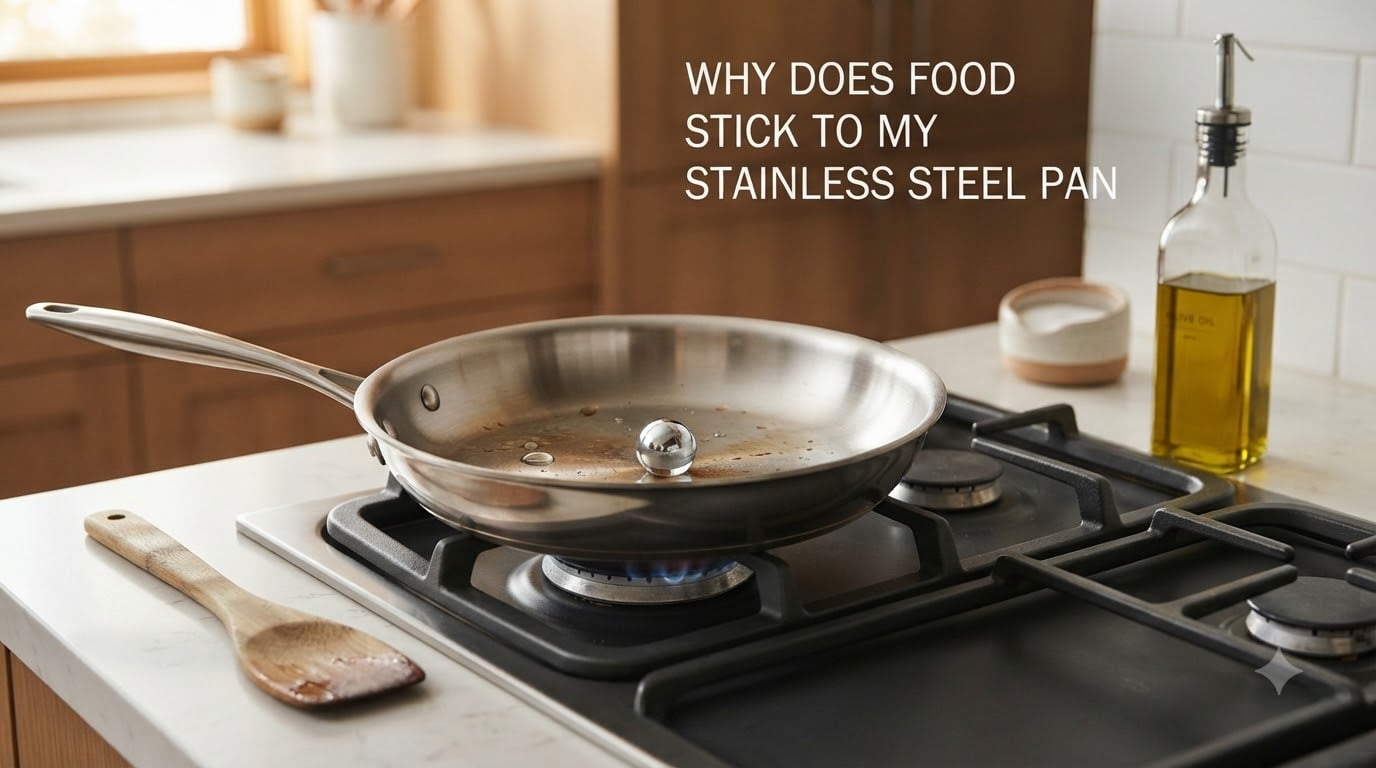
Food sticks to a stainless steel pan when the pan is too cold or too dirty when food hits it, allowing proteins and starches to bond directly with the metal surface. The fix is simple once you understand the science: preheat properly, use the right oil at the right moment, and let food release on its own. Below, I break down exactly why this happens and how to prevent it every time.
Why does food stick to my stainless steel pan? It is one of the most common frustrations home cooks face. Stainless steel cookware is built to last a lifetime, but it does not behave like nonstick. The good news? Once you understand what is actually happening at the surface level, cooking on stainless steel becomes second nature.
Table of Contents
The Science Behind Why Food Sticks to Stainless Steel
Stainless steel looks smooth to the naked eye, but under a microscope the surface is covered in tiny pores and crevices. When the pan is cold, those pores are wide open. Proteins in food — especially eggs, fish, and chicken — seep into those gaps and form direct chemical bonds with the metal. That bond is what you feel when food welds itself to the pan.
Heat changes everything. As stainless steel heats up, the metal expands and those microscopic pores close. The surface becomes smoother and tighter, leaving fewer places for proteins to grab hold. This is why preheating is the single most important step in preventing sticking.
There is a common misconception that stainless steel is supposed to be nonstick. It is not. Unlike coated pans, stainless steel has no barrier between food and metal. What you can do is create the right conditions — proper heat, proper fat, proper timing — so that food sears cleanly and releases without a fight.
The Preheat Step: How to Get Your Pan Ready
Preheating is the foundation of every successful stainless steel cook session. Place your pan on the burner over medium to medium-high heat for two to three minutes before adding anything. The goal is to get the entire surface evenly hot — not just the center where the flame hits.
The Mercury Ball Test (Leidenfrost Effect)
The best way to know your pan is ready is the water test, also called the mercury ball test. Flick a few drops of water into the pan. Here is what to look for:
- Cold pan: Water sizzles and evaporates immediately — not ready.
- Getting warmer: Water forms small beads that skitter around before disappearing — almost there.
- Ready: Water forms a single, cohesive ball that glides across the surface like mercury without evaporating — this is the Leidenfrost effect. Add oil now.
- Too hot: Water explodes into steam instantly or the ball breaks apart and spits — let the pan cool slightly before adding fat.
The Leidenfrost effect occurs when the pan surface is hot enough (around 350°F / 175°C) that the water droplet floats on a thin cushion of its own steam. At this temperature, the metal pores have closed and the surface is ready to receive oil without bonding to food.
Adding Oil or Fat at the Right Moment
Timing matters as much as temperature. Add your fat to a hot pan, not a cold one. Pouring oil into a cold stainless steel pan allows it to settle into the open pores before the surface seals, creating the very stickiness you are trying to avoid.
Choose an oil with a high smoke point. Avocado oil (520°F / 270°C), refined peanut oil (450°F / 230°C), and ghee (450°F / 230°C) all perform well. Extra virgin olive oil and butter have lower smoke points and can burn before the pan is hot enough to prevent sticking. Use them only when you are cooking at lower temperatures or finish with them after searing.
Add enough oil to coat the surface — roughly one to two tablespoons for a 12-inch pan. Tilt the pan to spread it evenly. The oil should shimmer and flow easily. If it smokes immediately, the pan is too hot.
Patience: Letting Food Release on Its Own
This is where most home cooks go wrong. You place a chicken thigh or a piece of fish in the pan, and within seconds you try to flip it. It sticks. You force it. The skin tears. Frustration sets in.
The solution is patience. When food hits a properly heated and oiled stainless steel pan, it initially bonds to the surface. But as the bottom sears and caramelizes, that bond breaks on its own. The food releases cleanly when it is ready — usually 60 to 90 seconds for most proteins.
Try lifting a corner gently with a spatula. If it resists, leave it alone. If it slides freely, it is time to flip. This is not a technique reserved for professional kitchens. It is basic physics — the seared crust is smoother than the raw surface, so it lets go of the metal.
Troubleshooting Sticking by Food Type
Different foods behave differently in a stainless steel pan. What works for a steak will destroy an egg. Here is a food-by-food breakdown:
Eggs
Eggs are the hardest food to cook on stainless steel because their proteins are especially reactive with metal. Use medium-low heat (not medium-high), add extra fat — at least a full tablespoon of butter or ghee — and do not touch the eggs until the edges are fully set. Scrambled eggs need constant gentle stirring to prevent bonding.
Fish
Fish is thin and delicate, so it cooks fast. Use medium-high heat, a generous layer of high-smoke-point oil, and resist the urge to flip early. Skin-on fish should go skin-side down first. The skin crisps and releases naturally in about three to four minutes. Pat the fish dry before cooking — surface moisture causes steam, which delays searing and promotes sticking.
Chicken
Chicken skin sticks hard if you try to move it too soon. Preheat the pan thoroughly, place the chicken skin-side down, and leave it alone for at least five to seven minutes. The skin will render its fat, crisp up, and release on its own. Do not crowd the pan — overlapping pieces steam instead of sear.
Potatoes
Starchy foods like potatoes are notorious for sticking. Cut them into uniform pieces, pat them completely dry, and use medium-high heat with enough oil to coat every surface. Do not move them for at least four to five minutes so a proper crust forms. Parboiling potatoes before pan-frying also helps reduce surface starch.
The Hidden Cause: Residue and Food Film
Even if you preheat perfectly and use the right oil, a sticky residue from previous cooking sessions can cause food to bond to your pan. This invisible film builds up over time — it is a thin layer of polymerized oil and protein residue that never fully washed off.
You can feel it by running a dry hand across the pan surface. If it feels slightly tacky or grippy, that is residue. To remove it, scrub with a paste of baking soda and water, or use a dedicated stainless steel cleaner like Bar Keepers Friend. A quick vinegar rinse (equal parts white vinegar and water, heated in the pan for two minutes) also dissolves the film.
After every cook, wash your stainless steel pan with hot soapy water and a non-abrasive sponge. Dry it completely before storing. A clean, dry pan performs better every single time.
How to Rescue Food That Has Already Stuck
It happens to everyone. You followed the steps, but the fish tore or the chicken skin is cemented to the surface. Here is how to recover:
- Do not scrape while hot. Forcing stuck food off a hot pan scratches the surface and leaves residue behind.
- Deglaze immediately. Pour a splash of water, white wine, or vinegar into the hot pan. The liquid lifts the stuck bits (called fond) within seconds. Use a wooden spoon to gently nudge anything remaining.
- Hot water soak. If deglazing does not get everything, fill the pan with hot water and let it sit for ten to fifteen minutes. The residue softens and wipes away easily.
- Bar Keepers Friend. For stubborn burnt-on food, sprinkle Bar Keepers Friend onto the damp pan, let it sit for one minute, and scrub with a soft sponge. Rinse thoroughly.
Once the pan is clean, check for any remaining film. If it feels sticky, repeat the cleaning process. Starting with a clean pan next time makes a noticeable difference.
Stainless Steel vs Cast Iron vs Nonstick: A Quick Comparison
Each type of cookware has strengths. Knowing when to use which pan helps you avoid sticking problems altogether.
Stainless steel excels at high-heat searing, deglazing for pan sauces, and oven-to-stove cooking. It is virtually indestructible but requires proper technique. Best for meats, vegetables, and anything you want to develop a fond on.
Cast iron retains heat extremely well and develops a natural nonstick seasoning over time. It is heavier, slower to respond to temperature changes, and requires maintenance to prevent rust. Best for searing steaks, cornbread, and anything cooked at high heat for a long time.
Nonstick is the easiest option for eggs, delicate fish, and low-fat cooking. The coating wears out over time (typically two to five years) and cannot handle high heat. Best for eggs, crepes, and when convenience outweighs searing ability.
Many experienced cooks keep all three. Use stainless steel for searing and sauces, cast iron for deep browning and baking, and nonstick for eggs and quick tasks. There is no shame in reaching for the right tool for the job.
Frequently Asked Questions
Why does food stick to my stainless steel pan even with oil?
Oil alone is not enough. If the pan is not hot enough when you add the oil, the oil settles into the open pores of the metal instead of forming a barrier on top. Preheat the pan first, then add oil to the hot surface.
How long should I preheat a stainless steel pan?
Two to three minutes over medium to medium-high heat. Use the water test: when a few drops of water form a single ball that glides across the surface (the Leidenfrost effect), the pan is ready for oil.
Is stainless steel supposed to be non stick?
No. Stainless steel is not inherently nonstick. Unlike coated pans, it has no barrier between the food and the metal. Proper preheating, oil, and technique create conditions where food releases cleanly, but the pan itself is not nonstick.
How do I keep eggs from sticking to a stainless steel pan?
Use medium-low heat, add a generous amount of butter or ghee (at least one tablespoon), and wait until the edges are fully set before attempting to move or flip. Eggs are the most protein-reactive food and need gentler heat than other foods.
Why is my stainless steel pan sticky after washing?
A sticky or tacky surface after washing indicates a buildup of polymerized oil and protein residue. Clean the pan with Bar Keepers Friend or a paste of baking soda and water to dissolve the film. Rinse with equal parts white vinegar and water for a thorough clean.
How do I remove burnt food from a stainless steel pan?
Deglaze the hot pan with water, white wine, or vinegar to lift the stuck bits. For stubborn residue, fill with hot water and soak for fifteen minutes. If needed, use Bar Keepers Friend on the damp surface and scrub gently with a soft sponge.
So, why does food stick to my stainless steel pan? It comes down to physics and chemistry — cold metal, open pores, and reactive proteins. Preheat the pan until water dances on the surface, add oil to the hot metal, and let food sear undisturbed until it releases on its own. With practice, stainless steel becomes one of the most versatile tools in your kitchen.