
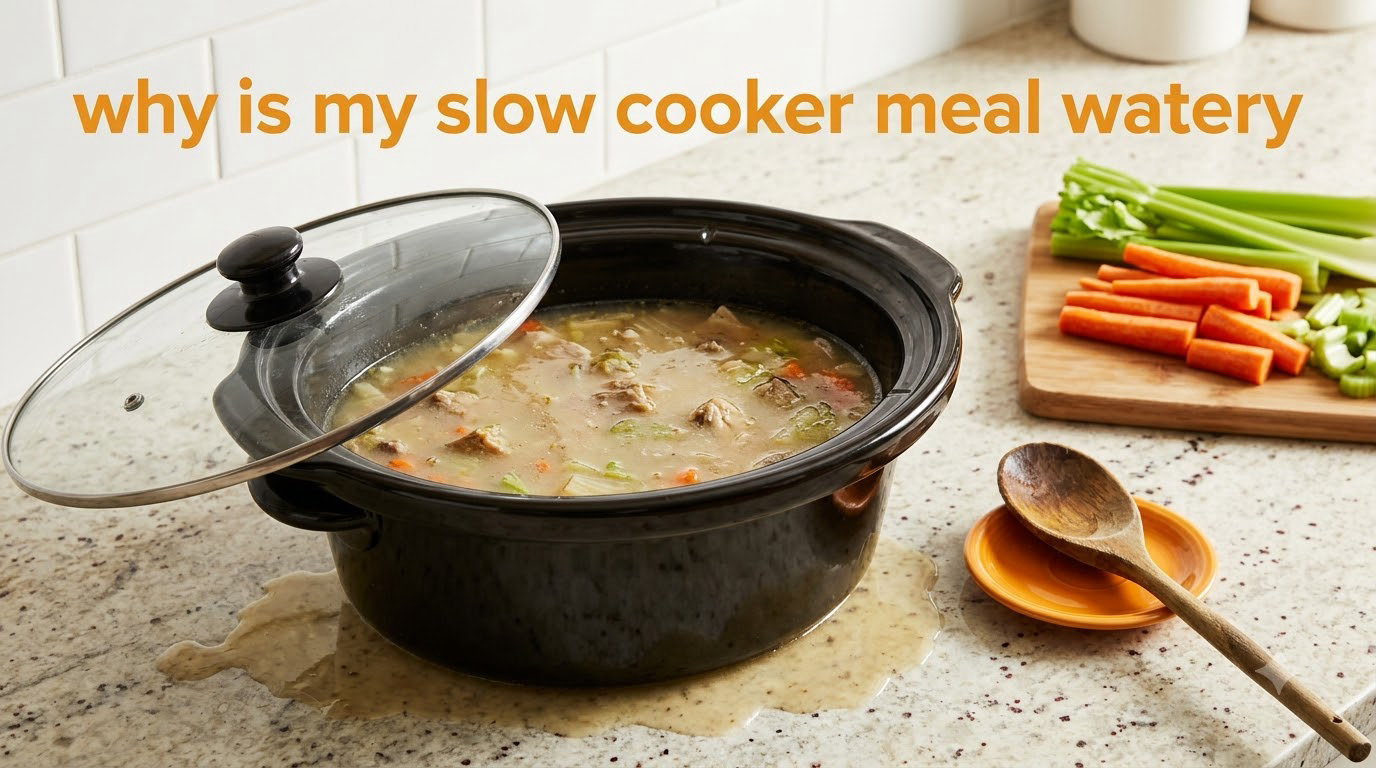
Your slow cooker meal is watery because the sealed lid traps steam and condensation, which drips back into the food instead of evaporating. This is the number one reason home cooks end up with thin, bland sauces—and the fix is simpler than you think.
I’ve been cooking with slow cookers for over a decade, and I’ve heard every version of this complaint. Reddit threads, Facebook groups, and even our own readers all ask the same thing: why does my crockpot food come out looking like soup? The good news is that once you understand how moisture works inside a slow cooker, you’ll never have a watery meal again.
In this guide, I’ll break down exactly why liquid builds up in your slow cooker, share quick fixes you can use tonight, and give you prevention strategies that actually work. Whether you’re making pulled pork, chicken stew, or beef roast, these tips will help you achieve rich, concentrated flavors every time.
Table of Contents
Why Is My Slow Cooker Meal Watery?
A slow cooker meal becomes watery because of condensation. Unlike cooking on a stovetop where steam escapes, a slow cooker’s sealed lid traps moisture inside. As your food heats up, it releases steam that hits the lid, cools, and drips right back into the pot. This cycle repeats for hours, adding liquid that never evaporates.
There are three main culprits behind watery slow cooker meals:
Too much liquid at the start. Many recipes are written for stovetop cooking where liquid reduces over time. In a slow cooker, that liquid has nowhere to go. As one Reddit user in r/slowcooking put it: “I’d say 1 – too much liquid, 2 – too long on high.” They’re right on both counts.
Frozen ingredients releasing water. When you add frozen chicken, vegetables, or anything with ice crystals, that ice melts and adds extra liquid to the pot. Food52 recommends always defrosting ingredients first—not just for food safety, but to prevent watery results.
Vegetables releasing moisture. Onions, tomatoes, mushrooms, and zucchini are loaded with water. Over a 6-8 hour cook, they break down and release all that liquid into your sauce. If you’re heavy on the veggies, you’ll end up with more liquid than you started with.
The sealed environment is both the slow cooker’s strength and its weakness. It creates tender, fall-apart meat—but it also prevents the natural reduction that makes stovetop sauces thick and concentrated.
Quick Fixes for Watery Slow Cooker Meals Tonight
If you’re staring at a watery slow cooker meal right now, don’t panic. These fixes work in 15-30 minutes and can save your dinner.
1. Remove the lid and cook on high for 30 minutes. This is the fastest way to evaporate excess liquid. Prop the lid slightly ajar to let steam escape. You’ll lose some heat, but the high setting will compensate. This trick comes up constantly in slow cooker forums—and it works.
2. Make a cornstarch slurry. Mix 1-2 tablespoons of cornstarch with an equal amount of cold water. Stir it into your slow cooker and cook on high for 15-20 minutes. The starch thickens the sauce without changing the flavor. This is America’s Test Kitchen’s go-to method for thin slow cooker sauces.
3. Mash some of the ingredients. If your dish has beans, potatoes, or soft vegetables, use a potato masher to break some down. The released starch naturally thickens the liquid. This works especially well for chili and stews.
4. Transfer liquid to a pot and reduce. Ladle out the excess liquid into a saucepan and simmer it on the stove until it thickens. Then pour it back into the slow cooker. It’s extra work, but you get restaurant-quality results.
5. Add instant tapioca. Sprinkle 1-2 tablespoons of minute tapioca over the surface and cook on high for 20 minutes. The tapioca absorbs liquid and becomes translucent. The 365 Days of Crockpot blog specifically recommends this method, and their readers swear by it.
6. Stir in tomato paste. For tomato-based dishes, a tablespoon or two of tomato paste adds body and concentrates flavor. It won’t make your sauce gluey, but it will give it that rich, thick consistency you’re after.
How to Prevent Watery Slow Cooker Meals
Prevention is always easier than fixing. These strategies will keep your slow cooker meals perfectly thick from the start.
Cut Your Liquid by Half
Here’s the golden rule: use about 50% less liquid in a slow cooker than you would on the stovetop. If a stovetop recipe calls for 2 cups of broth, start with 1 cup in the slow cooker. You can always add more later, but you can’t easily remove it.
For most slow cooker recipes, the food itself releases enough moisture. Meat, vegetables, and canned tomatoes all add liquid as they cook. Trust the process—you rarely need as much added liquid as you think.
Sauté Your Aromatics First
Food52, citing James Beard-nominated chefs, recommends sautéing onions, garlic, and other aromatics before adding them to the slow cooker. This does two things: it develops deeper flavor through the Maillard reaction, and it drives off some of the water content that would otherwise end up in your sauce.
It takes 5-10 extra minutes, but the difference in flavor concentration is dramatic. The aromatics caramelize instead of just sweating and releasing water.
Never Use Frozen Ingredients
This one is non-negotiable. Frozen chicken, frozen vegetables, even frozen broth—all of it adds water you don’t want. Always thaw ingredients completely before they go into the slow cooker. Your meal will cook more evenly, and you won’t end up with a watery surprise at the end.
Know Your Liquid Ratios by Protein
One thing no competitor covers is how liquid needs vary by protein type. Here’s what I’ve found works best:
Chicken breasts or thighs: ½ to ¾ cup liquid per pound. Chicken releases a lot of moisture, so go easy on added liquid.
Beef roast or chuck: ¾ to 1 cup liquid per pound. Beef is leaner and needs a bit more liquid to stay moist.
Pork shoulder (for pulled pork): ½ cup liquid per pound. Pork shoulder is marbled with fat that renders down, adding plenty of moisture.
Ground meat: ¼ to ½ cup liquid per pound. Ground meat releases significant fat and moisture during cooking.
Use the Right Slow Cooker Size
A slow cooker should be one-half to two-thirds full. If it’s too small, liquid has nowhere to go and accumulates faster. If it’s too large, food spreads thin and may overcook on the edges while staying watery in the middle.
How to Thicken Slow Cooker Sauces
When prevention isn’t enough, these thickening methods will save any slow cooker sauce. Each has its strengths depending on what you’re making.
Cornstarch Slurry
Mix cornstarch with cold water (never hot—it’ll clump) at a 1:1 ratio. For a typical slow cooker meal, 1-2 tablespoons of each is plenty. Stir it in during the last 30 minutes of cooking. Cornstarch creates a glossy, clear thickening that works for Asian-inspired dishes, gravies, and stews.
Tapioca
Minute tapioca is America’s Test Kitchen’s preferred slow cooker thickener. It absorbs liquid without becoming gummy and holds up well during long cooking. Add 1-2 tablespoons at the start of cooking for best results. It’s particularly good for fruit-based dishes and pies.
Roux
A roux (equal parts butter and flour cooked together) adds richness along with thickening power. Make it separately on the stovetop, then whisk it into your slow cooker liquid during the last hour. This method is ideal for creamy soups and chowders where you want that velvety texture.
Flour or Cornstarch Coating
Tossing meat in seasoned flour before browning creates a built-in thickener. As the meat cooks in the slow cooker, the flour releases into the liquid and thickens it naturally. This is an old-school technique that works beautifully for stews and pot roasts.
Reduce on the Stovetop
Sometimes the best fix is the simplest: transfer the liquid to a saucepan and simmer until it reduces by half. This concentrates flavors and creates a thick, glossy sauce. It takes 10-15 minutes but delivers restaurant-quality results.
Frequently Asked Questions
How do I thicken up my Crockpot meal?
The fastest way to thicken a Crockpot meal is to make a cornstarch slurry. Mix 1-2 tablespoons of cornstarch with an equal amount of cold water, stir it into your slow cooker, and cook on high for 15-20 minutes. Other options include adding minute tapioca, mashing some of the ingredients to release starch, or transferring liquid to a stovetop pot to reduce.
How to make a meal less watery?
To make a slow cooker meal less watery, start by using 50% less liquid than a stovetop recipe calls for. Sauté aromatics before adding them to drive off moisture, and never use frozen ingredients. If your meal is already watery, remove the lid and cook on high for 30 minutes to evaporate excess liquid, or stir in a cornstarch slurry to thicken the sauce.
Should food be covered with liquid in a slow cooker?
No, food does not need to be covered with liquid in a slow cooker. The sealed lid traps steam and condensation, which keeps food moist. For most recipes, you only need enough liquid to create steam—typically ½ to 1 cup depending on the protein. The food itself releases moisture as it cooks, so too much added liquid leads to watery results.
Can you overcook a slow cooker meal?
Yes, you can overcook a slow cooker meal. While slow cookers are forgiving, cooking on high for too long or leaving food on warm for extended periods can break down proteins too much, making meat mushy and vegetables overly soft. Follow recipe times and use the warm setting only for short holding periods—typically no more than 2-4 hours after cooking is complete.
Conclusion
Understanding why your slow cooker meal is watery comes down to one thing: condensation. The sealed lid traps steam that drips back into the pot, and when you add too much liquid at the start, you’re fighting a losing battle. But once you know the tricks—cutting liquid in half, sautéing aromatics, using cornstarch slurry for quick fixes—you’ll get perfectly thick, flavorful meals every time.
Next time you fire up your slow cooker, remember the 50% liquid rule and let the ingredients do the work. Your meals will taste richer, look better, and have that concentrated flavor that makes slow cooking worth the wait. If you found this guide helpful, share it with a friend who’s tired of watery crockpot dinners—they’ll thank you later.