
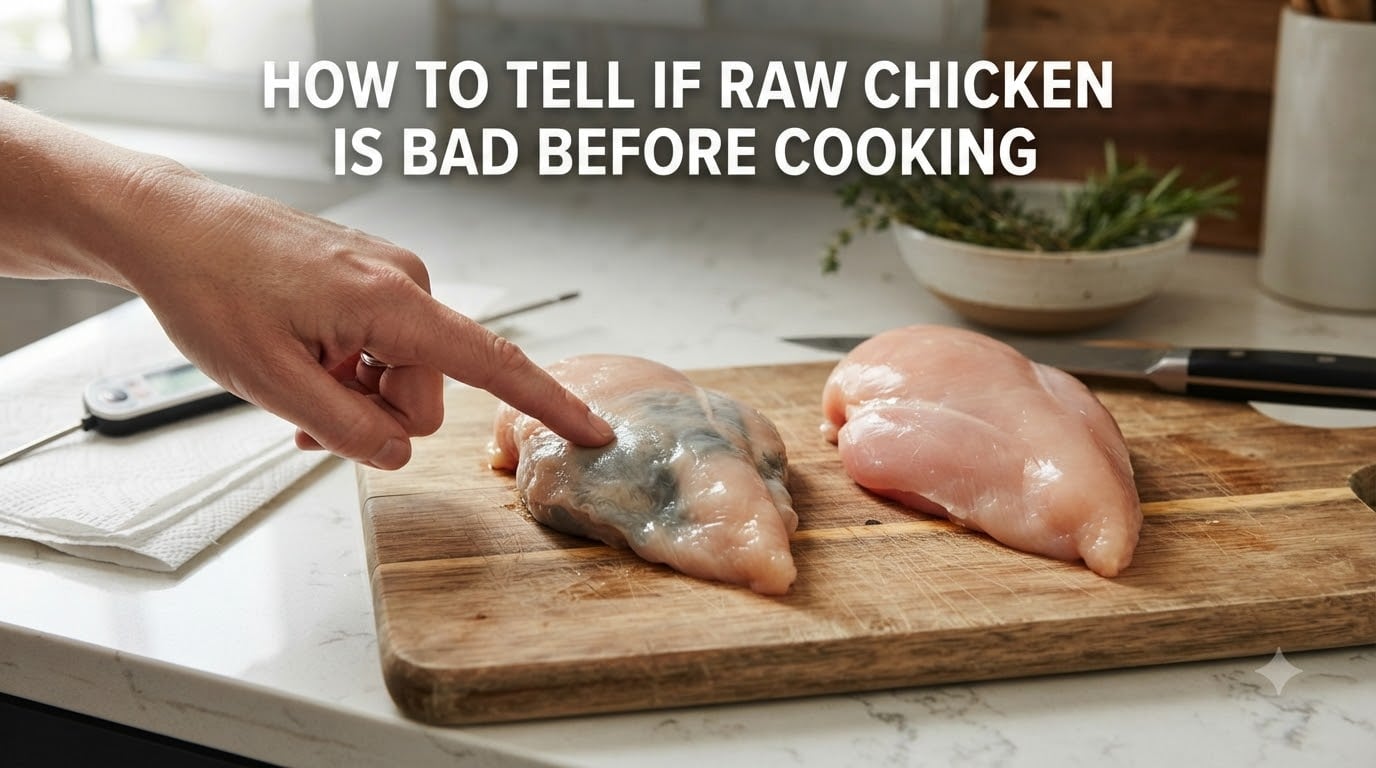
Knowing how to tell if raw chicken is bad before cooking can save you from a miserable bout of food poisoning. After years of home cooking and more than a few close calls, I have learned that your senses are the best tools you own. The three key signs of spoiled chicken are a sharp sour or sulfur smell, a slimy or sticky texture, and a gray, green, or yellow discoloration. If you notice any of these, toss the chicken immediately.
In this guide, I will walk you through exactly what to look for, how long raw chicken stays safe in your fridge, and what happens if you accidentally eat bad chicken. I have pulled tips from USDA guidelines, food safety research, and real advice from home cooks on Reddit to give you the most practical breakdown possible.
Table of Contents
How to Tell If Raw Chicken Is Bad Before Cooking
Raw chicken goes bad when bacteria like Salmonella and Campylobacter multiply to unsafe levels. You can catch this before cooking by running through three quick checks every time you pull chicken from the fridge:
- Smell – A sour, sulfur, or ammonia-like odor means the chicken is spoiled.
- Texture – A slimy, sticky, or tacky film on the surface signals bacterial growth.
- Color – Gray patches, green tints, or yellow spots on the fat mean it is time to throw it out.
Fresh raw chicken should be pale pink with white fat, feel moist but not slippery, and have almost no smell or a very faint, clean scent. If even one of those three signs is off, do not cook it.
Sign #1: Check the Smell
Your nose is the single most reliable tool for detecting spoiled chicken. Fresh raw chicken has a very mild scent or none at all. Bad chicken will hit you with a sharp, sour odor that is impossible to miss.
Here is what to watch for:
- Sour or tangy smell – Similar to spoiled milk. This is the most common sign.
- Sulfur or rotten egg smell – Indicates advanced bacterial breakdown.
- Ammonia-like odor – A strong chemical smell means the chicken has been spoiling for a while.
One common point of confusion: vacuum-packed chicken often has a funky smell when you first open the packaging. This is normal and caused by the trapped gases. As home cooks on r/Cooking recommend, pat the chicken dry with a paper towel, let it rest for 5 to 15 minutes, and then smell it again. If the odor dissipates and the texture looks normal, the chicken is likely fine. If the smell is strong and does not go away, throw it out immediately.
As one Reddit user put it: “If it smells like rotten eggs or vinegary or just any strong smell that instantly hits you without actively having to sniff it, toss it.”
Sign #2: Look at the Color
Fresh raw chicken breast should be a consistent pale pink color with white or cream-colored fat. When chicken starts to spoil, the color changes because a protein called oxymyoglobin (which gives fresh meat its pink hue) oxidizes into metmyoglobin, which turns gray or brown.
Watch for these color changes:
- Gray or dull patches – The most common spoilage indicator. Fresh chicken looks vibrant; bad chicken looks washed out.
- Green tint – Even a slight greenish sheen means bacterial growth has started. Toss it.
- Yellow spots on the fat – Fat should be white or pale cream. Yellow or dark spots indicate the chicken has gone bad.
- Dark spots or discoloration – Random dark patches suggest uneven spoilage or freezer damage.
A slight darkening in the refrigerator over 1 to 2 days can be normal aging. But if the chicken looks noticeably grayer than when you bought it, or if you see any green or yellow, it is not safe to eat.
Sign #3: Feel the Texture
Touch is the third essential check. Raw chicken should feel moist and slightly cool, but it should never be slippery or sticky. Bacteria produce a biofilm as they multiply, and that film creates the slimy texture you feel on spoiled chicken.
Here is how to tell the difference:
- Slimy film – If you run your finger across the surface and it feels like a thin layer of mucus, the chicken is bad.
- Sticky or tacky feel – Even without full-on sliminess, a tacky or sticky surface suggests bacterial growth.
- Excessive moisture – Pooled liquid in the package that feels slippery can be a warning sign.
Some slight moisture is normal for raw chicken, especially if it was packaged with liquid. The key difference is that fresh chicken moisture feels watery, while spoiled chicken has a thicker, more viscous quality. Combine this check with the smell test for the most accurate read.
How Long Does Raw Chicken Last in the Fridge?
According to the USDA, raw chicken should be stored in the refrigerator at 40°F (4°C) or below and used within 1 to 2 days of purchase. Cooked chicken lasts 3 to 4 days refrigerated. These timelines apply regardless of the “use-by” date on the package.
Key storage rules to remember:
- Raw chicken (refrigerator) – 1 to 2 days maximum
- Cooked chicken (refrigerator) – 3 to 4 days
- Raw chicken (freezer) – Up to 9 months for whole chicken, 9 months for pieces
- Room temperature – Never leave chicken out for more than 2 hours (1 hour if above 90°F)
The “use-by” date and the “pack date” are different things. The pack date tells you when the chicken was processed. The use-by date is the last date the manufacturer guarantees peak quality. Neither date accounts for how the chicken was handled after you bought it. Always trust your senses over printed dates.
If your chicken has been in the fridge for 3 or more days, even if it is before the use-by date, check it carefully using the three sensory tests described above. When in doubt, throw it out.
What Happens If You Eat Bad Chicken?
Eating spoiled chicken can cause food poisoning from bacteria like Salmonella and Campylobacter. Symptoms typically begin 6 to 72 hours after ingestion, though they can appear as quickly as 2 hours or as late as 6 days.
Common symptoms include:
- Nausea and vomiting – Often the first symptoms to appear.
- Diarrhea – Can be severe and may contain blood in serious cases.
- Stomach cramps – Abdominal pain and tenderness.
- Fever – Low-grade to moderate fever as your body fights the infection.
- Headache and body aches – General malaise and fatigue.
Most healthy adults recover within 4 to 7 days without medical treatment. Stay hydrated and rest. However, you should seek medical attention if you experience a fever above 102°F, bloody stools, signs of dehydration, or if symptoms last longer than 3 days. Young children, elderly adults, pregnant women, and immunocompromised individuals are at higher risk for serious complications and should contact a doctor sooner.
The CDC estimates that Salmonella alone causes about 1.35 million infections annually in the United States, with poultry being one of the primary sources. This is exactly why learning how to tell if raw chicken is bad before cooking matters so much.
How to Store Chicken Safely
Proper storage is your best defense against spoilage. A few simple habits can extend chicken freshness and keep your kitchen safe.
- Refrigerate immediately – Get chicken into the fridge within 2 hours of purchasing (1 hour in hot weather).
- Use airtight containers – Keep chicken in its original packaging or transfer to a sealed container on the bottom shelf to prevent cross-contamination and drips.
- Keep your fridge at 40°F or below – Use a fridge thermometer to verify. Bacteria multiply rapidly between 40°F and 140°F (the “temperature danger zone”).
- Freeze for longer storage – If you will not use chicken within 1 to 2 days, freeze it. Wrap tightly in freezer-safe packaging to prevent freezer burn.
- Thaw safely – Defrost chicken in the refrigerator (allow 24 hours for a whole breast), in cold water (change every 30 minutes), or in the microwave (cook immediately after). Never thaw chicken on the counter at room temperature.
After thawing frozen chicken, use it within 1 to 2 days. Do not refreeze raw chicken that has been fully thawed unless you cook it first.
When in Doubt, Throw It Out
This is the golden rule repeated by every food safety authority and experienced home cook. If you are asking yourself “is this chicken bad?” the answer is probably yes. The cost of replacing a chicken breast is nothing compared to a trip to the emergency room.
You now know exactly how to tell if raw chicken is bad before cooking: check the smell for sour or sulfur odors, look for gray, green, or yellow discoloration, and feel for a slimy or tacky texture. Trust your senses, store chicken properly, and follow the 1 to 2 day refrigerator rule. Stay safe in the kitchen.
Frequently Asked Questions
What happens if you cook bad raw chicken?
Cooking bad chicken does not make it safe. While high heat kills many bacteria, some toxins produced by bacteria like Staphylococcus aureus are heat-stable and cannot be destroyed by cooking. You can still get food poisoning from chicken that was spoiled before it was cooked, even if it reaches 165°F internally.
Is raw chicken ok if it doesn’t smell?
A lack of smell is a good sign, but it is not a guarantee. Always check color and texture as well. Fresh chicken should be pale pink with white fat and feel moist but not slimy. If the chicken looks gray or feels sticky despite having no odor, it may still be past its prime.
How do I know if my raw chicken in the fridge is bad?
Run through three checks: smell it for sour or sulfur odors, look for gray or green discoloration, and feel for a slimy or sticky texture. Also check how long it has been in the fridge – raw chicken should be used within 1 to 2 days of purchase according to USDA guidelines.
Is raw chicken ok after 5 days in the fridge?
No. The USDA recommends using raw chicken within 1 to 2 days of refrigeration. After 5 days, even if the chicken looks and smells normal, bacterial growth may have reached unsafe levels. When in doubt, throw it out.
What does bad raw chicken smell like?
Bad raw chicken smells sour, tangy, or like rotten eggs. Some describe a sulfur or ammonia-like odor. The smell is usually strong enough that you notice it without actively sniffing. If the odor does not dissipate after patting the chicken dry and waiting 5 to 15 minutes, discard it.
What are the chances of getting sick from eating bad chicken?
The risk is significant. The CDC estimates 1.35 million Salmonella infections per year in the U.S., with poultry as a leading source. Symptoms of food poisoning from bad chicken typically appear within 6 to 72 hours and include nausea, vomiting, diarrhea, and fever. Most healthy adults recover within a week.